Most case studies follow a familiar format: problem, solution, results.
Senior decision makers expect and appreciate it. They can jump in, understand the impact of your solution, and continue the buying process.
The downside? It neglects the buyers who initially sparked the search for a solution. They need stories (not just stats).
What B2B buyers really need from social proof
Potential customers want case studies that share how their peers solved the same problems they now face.
By making your customers the “hero” of the story, other buyers in similar positions immediately relate.
Gallup research shows that 70% of buying decisions are based on emotion and justified with logic.
Your case studies must help purchasers invest emotionally and build trust, setting you apart from competitors.
For example, Grizzle write introductions for Smart Panda Labs’ case studies that drop you straight into their client’s shoes:
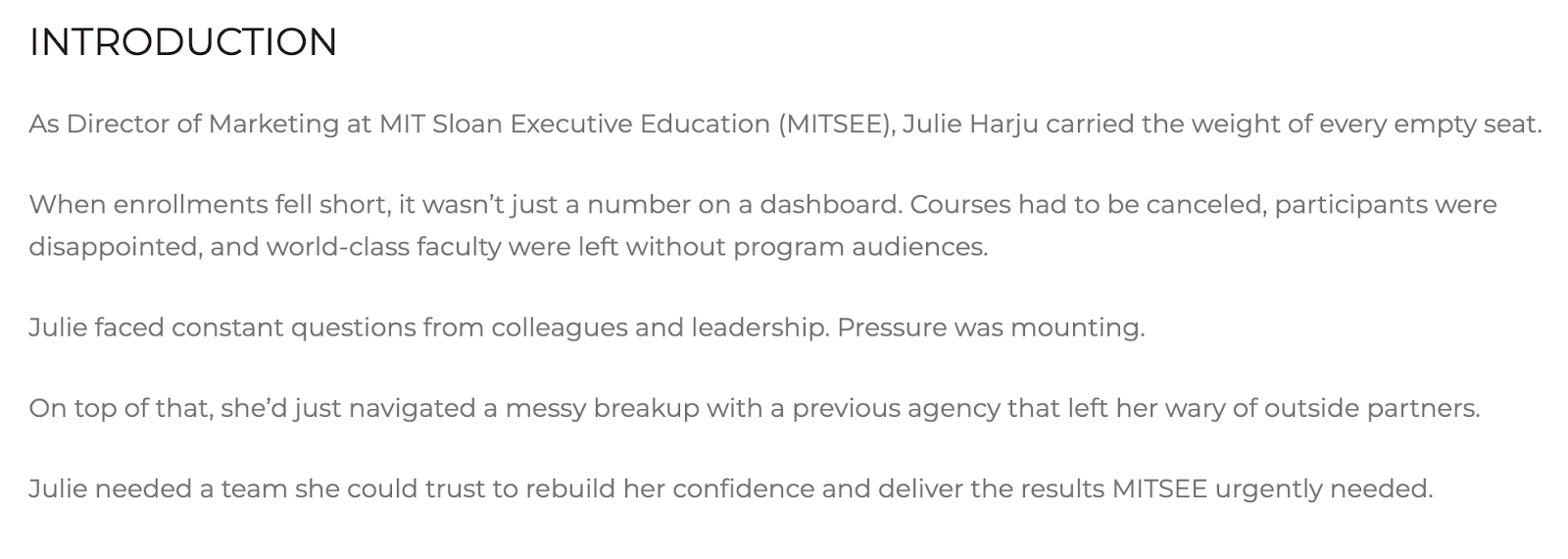
Engaging openers for the technical marketing agency’s case studies include:
- “As Director of Marketing, Julie Harju carried the weight of every empty seat”
- “SVP of Marketing Andrea Kazanjian inherited a premium brand with almost no digital presence”
- “CEO Mary-Lynn Clark was building up to a career-defining moment”
Buyers feel the stakes, relate to the challenges, and imagine achieving similar success—carving the path to faster purchasing decisions.
What is a hero-led case study?
A hero-led case study tells a compelling customer story while giving busy buying committees the snapshot they need to select you as a vendor.
It adds a deeper narrative layer to the tried-and-tested “problem → solution → results” framework.
Think of it as a pyramid:
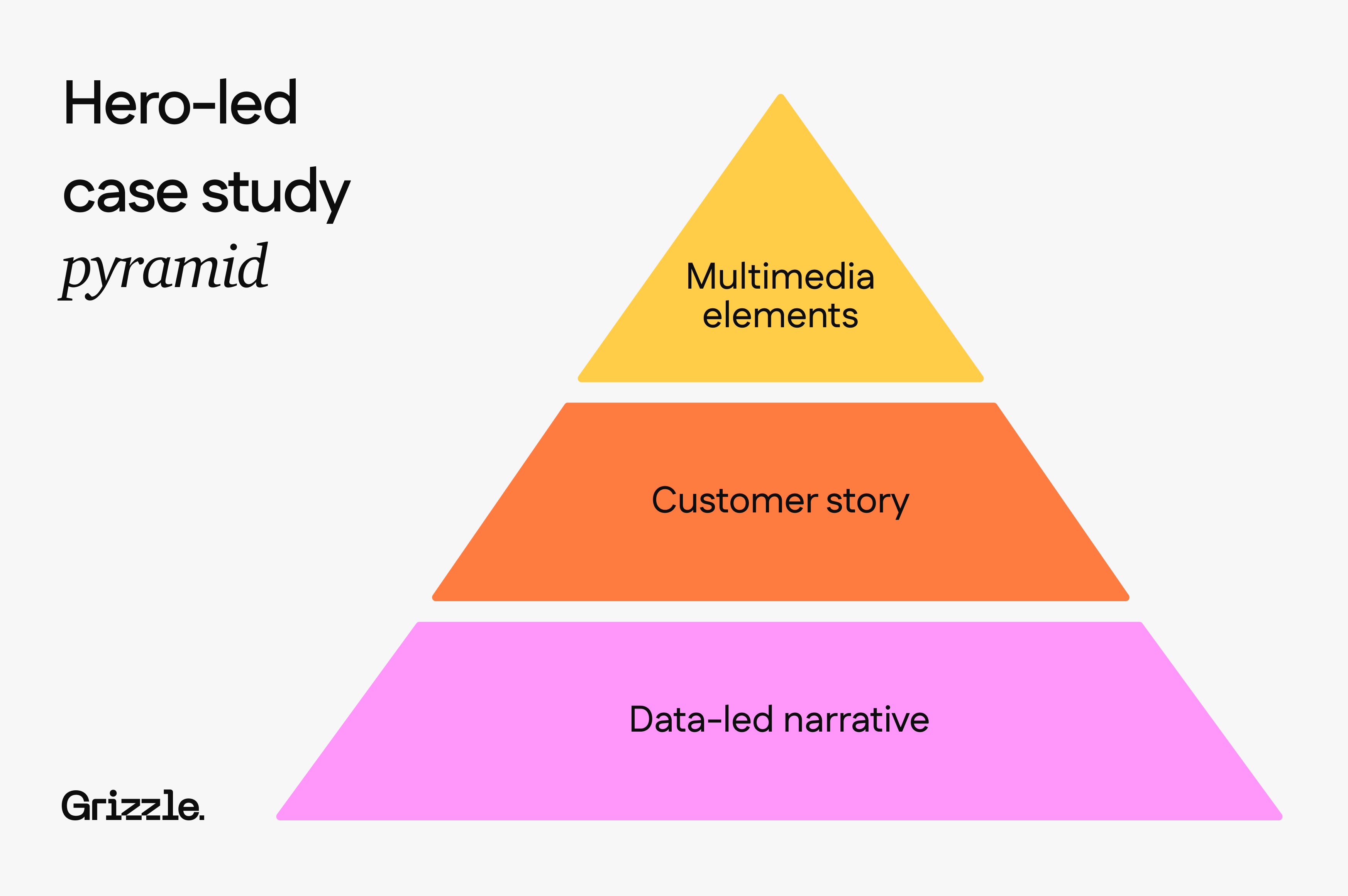
- Data-led narrative (base tier). Share the challenge, how you solved it, and the ROI. Think broad brushstrokes for time-starved leaders.
- Customer story (middle tier). Explain why the data matters, how it made someone’s life easier, and why others evaluating your product should care.
- Multimedia elements (top tier). Build credibility with testimonial videos, graphs, and visuals. Help buyers connect with the story and overcome scepticism.
Together, these elements engage champions and make it easier for B2B buyers to make confident decisions.
Follow this eight-step process to create hero-led case studies that convert:
1. Tell the story from a human’s perspective
While your solution benefits an organization, speaking to your potential customer like a human with stresses and ambitions makes your message resonate more deeply.
Explain how you’ve made the person in the story’s job easier and how.
“Driving revenue” is great for business. But “securing a promotion” because of it is even better for the hero.
A human challenge (e.g. “I had to increase profitability without extra spend”) that you solve instantly heightens your product or service’s value.
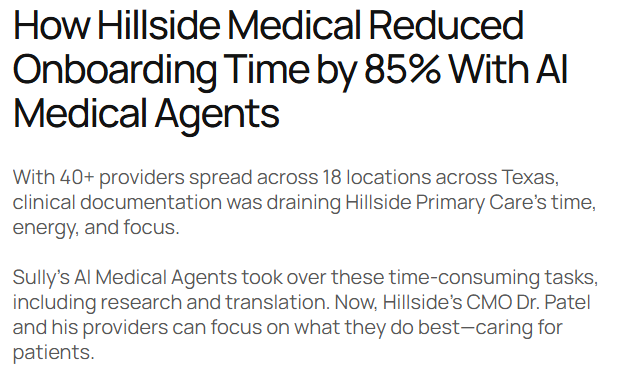
For example, Grizzle put CMO Dr. Patel at the heart of this Sully.ai case study.
Instead of focusing on Sully’s agentic AI, we built the narrative around what their customer wanted most: to improve patient care.
In another example, AdRoll’s case studies let customers describe their own challenges and wins:
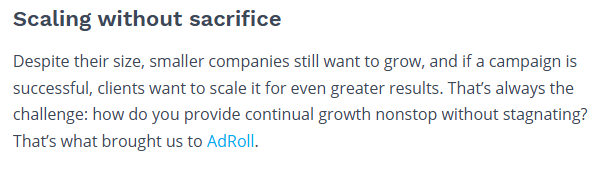
This first-person narrative is more engaging, credible, and trustworthy.
People buy from people. A story that shares someone’s struggles and successes is more memorable than one brand talking about another.
2. Find the right hero for your story
Find someone who genuinely loves your product and can speak to its real impact to create an authentic, persuasive case study.
In B2B, that isn’t always the final buyer. Sometimes it’s the end user or internal champion.
Here’s where to find them:
- Customer reviews. Search G2 or Capterra for glowing write-ups that could become interviews.
- Net Promoter Score (NPS) surveys. Reach out to customers who scored you a nine or 10.
- Social media. Use social listening to spot fans praising you on LinkedIn and X.
- Product usage data. Look for power users with high adoption or daily activity.
Once you’ve found your hero, make it easy for them to say yes.
- Ease concerns: Share sample stories and promise review rights before publishing.
- Respect time: Be clear on the process and minimize effort by handling the heavy lifting.
- Offer value: Highlight the exposure they’ll get or sweeten it with a simple incentive.
Counter objections upfront to speed up approvals.
3. Specify the struggle so it’s relatable
Describe specific, human details that build tension and pull people into the story. Future buyers won’t care about your hero’s success unless they feel their pain first.
This is why it’s crucial to capture emotions in customer interviews. When frustration sounds genuine, it resonates more naturally.
Take Sully’s Hillside case study.
We could’ve written, “The staff were overworked and needed to boost productivity.” But that’s forgettable.
Instead, we focused on the human-led facts and struggles.
Dr. Patel’s team spent 3–4 hours a night catching up on work from home. The business was growing. Onboarding was becoming a burden. Staff were at breaking point.
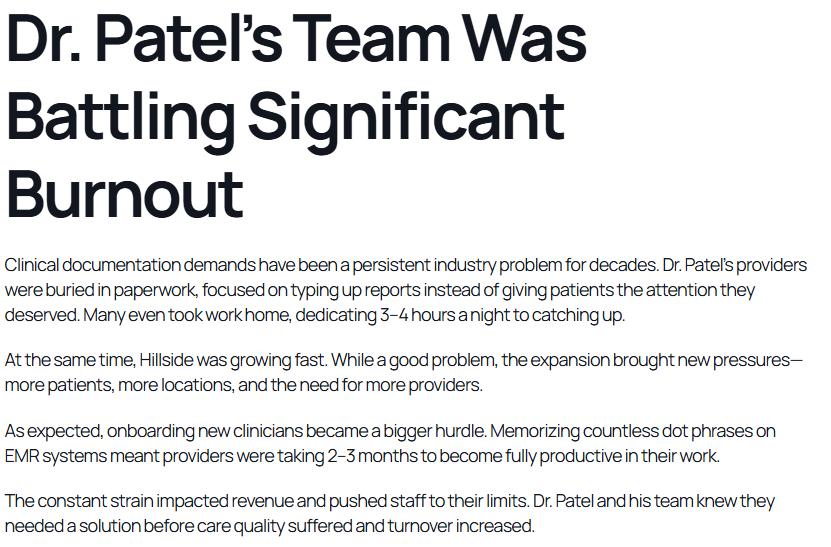
Now, the story feels more personal. You can picture the exhaustion, pressure, and urgency to fix the problem.
If potential customers recognize themselves in your case studies, they’ll stick around to see how it gets solved.
4. Get the story before the stats
Start by uncovering what led to the “X hours saved” or “Y% increase”—what the customer was facing, feeling, and fighting for when they chose your product.
In hero-led case studies, numbers hit harder when you wrap them in a relatable narrative.
For example, we ask questions in our interviews like:
“What was happening in your day-to-day before things changed?”
This wording prompts the customer to reveal the frustration, pressure from leadership, and how finally finding a solution felt like relief.
It teases a commentary before the conclusive, “How much time did you save?”.
Here are some more examples of questions that draw that story out:
- What problem or pressure pushed you to find a solution?
- What wasn’t working before?
- What stood out about our product in your search?
- What’s changed for you or your team since adopting it?
- What moment made you realize it was working?
Send these questions in advance so customers have time to reflect.
You’ll get richer insights and a case study that connects on both emotional and business levels.
5. Bridge the problem and your solution
Always include the most persuasive point in your case study—the customer’s “aha!” moment of realization.
This turning point (when they knew something had to change) transforms pain into purpose, driving the story forward.
It also helps potential buyers connect the customer’s challenge to their own and see why your product or service makes sense.
For example, Dr. Patel needed a solution before care quality suffered and turnover increased:

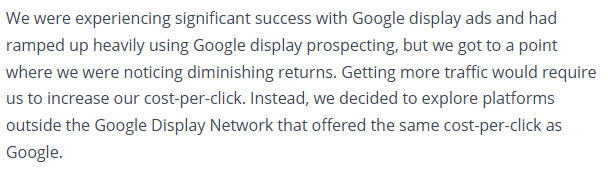
AdRoll’s team hit a wall with Google display ads and knew they’d plateaued:
Holiday Inn Club Vacations trusted Smart Panda Labs from a past engagement, and leaned on that partnership when new goals emerged:

Each of these crossroad moments helps future buyers see themselves in the narrative.
Use them to reveal:
- What triggered the change
- Why your solution stood out
- The key factor that made a customer say “yes”
It’s subtle selling and differentiation, told through the hero’s perspective.
6. Explain exactly how your solution works
Walk through your solution step by step, so future buyers clearly see where the value lies.
Other SaaS brands merely summarize the outcome and results.
To stand out, show how your features, use cases, and solutions drive success. This keeps people engaged and builds trust in your approach.
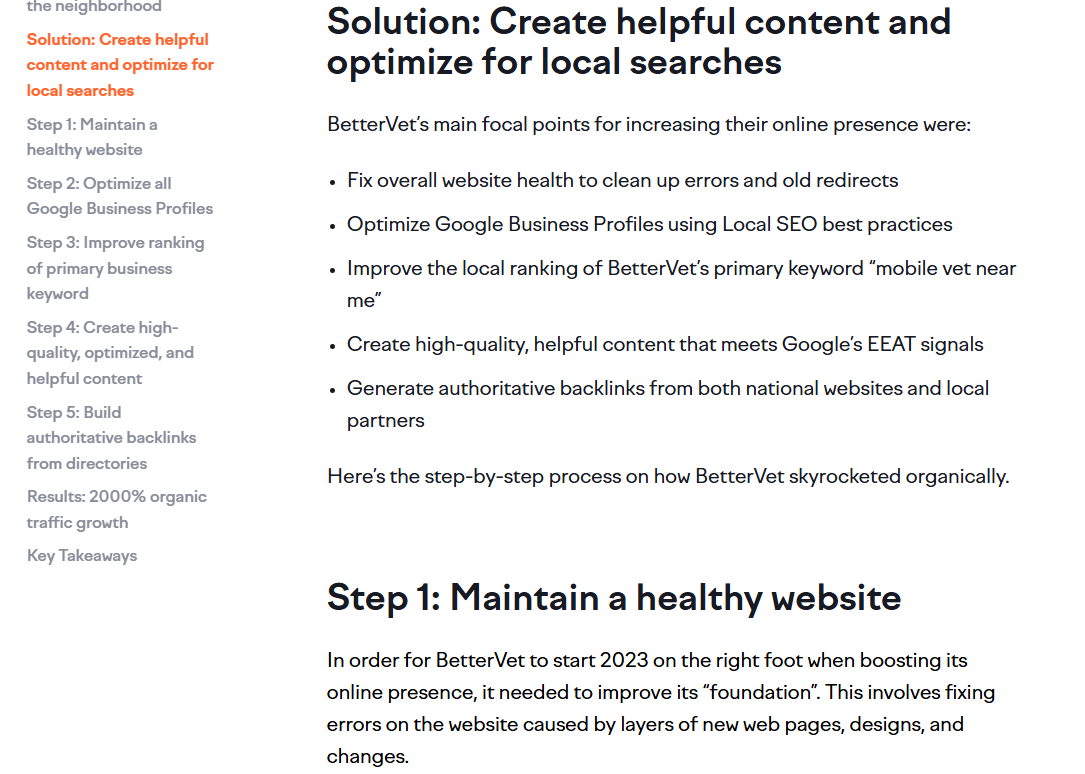
For example, Semrush breaks down exactly how they increased BetterVet's traffic:
- Key focus area: “Fixing overall website health”
- Specific tactics: “Cleaning up errors and old redirects”
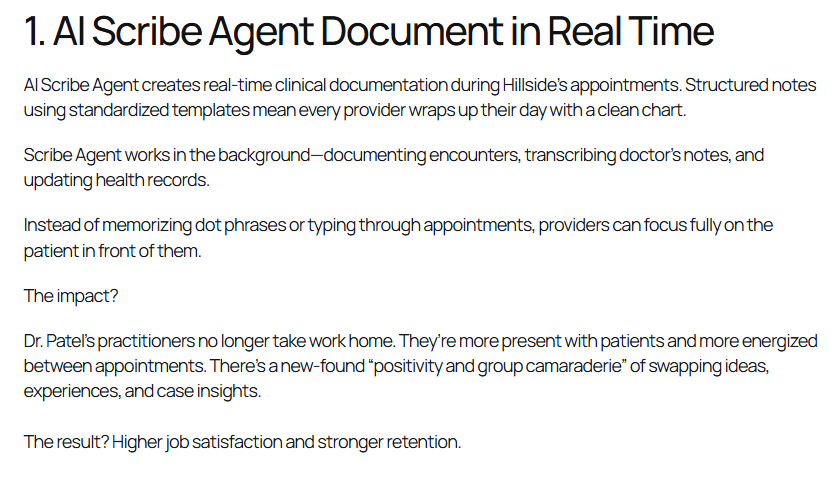
While Sully details how agentic AI eases Dr. Patel’s workflow:
- Action: “AI Scribe Agent creates real-time clinical documentation during appointments.”
- Outcome: “Dr. Patel’s practitioners no longer take work home. They’re more present and energized.”
The clearer your process, the easier it is for buyers to picture themselves experiencing it (and decision-makers to sign off on it).
7. Connect metrics to real impact
Pair every metric with the benefit it delivered to make results meaningful and finish the story you’ve got people invested in.
This small tweak turns raw data into evidence that your solution drives outcomes that future buyers care about.
Here are a couple of examples of how Grizzle ends Sully’s case studies:
Now, you should still include results and data in your headings to catch the buying committee’s eye.
For example, Pipedrive puts their most impressive numbers front and center:
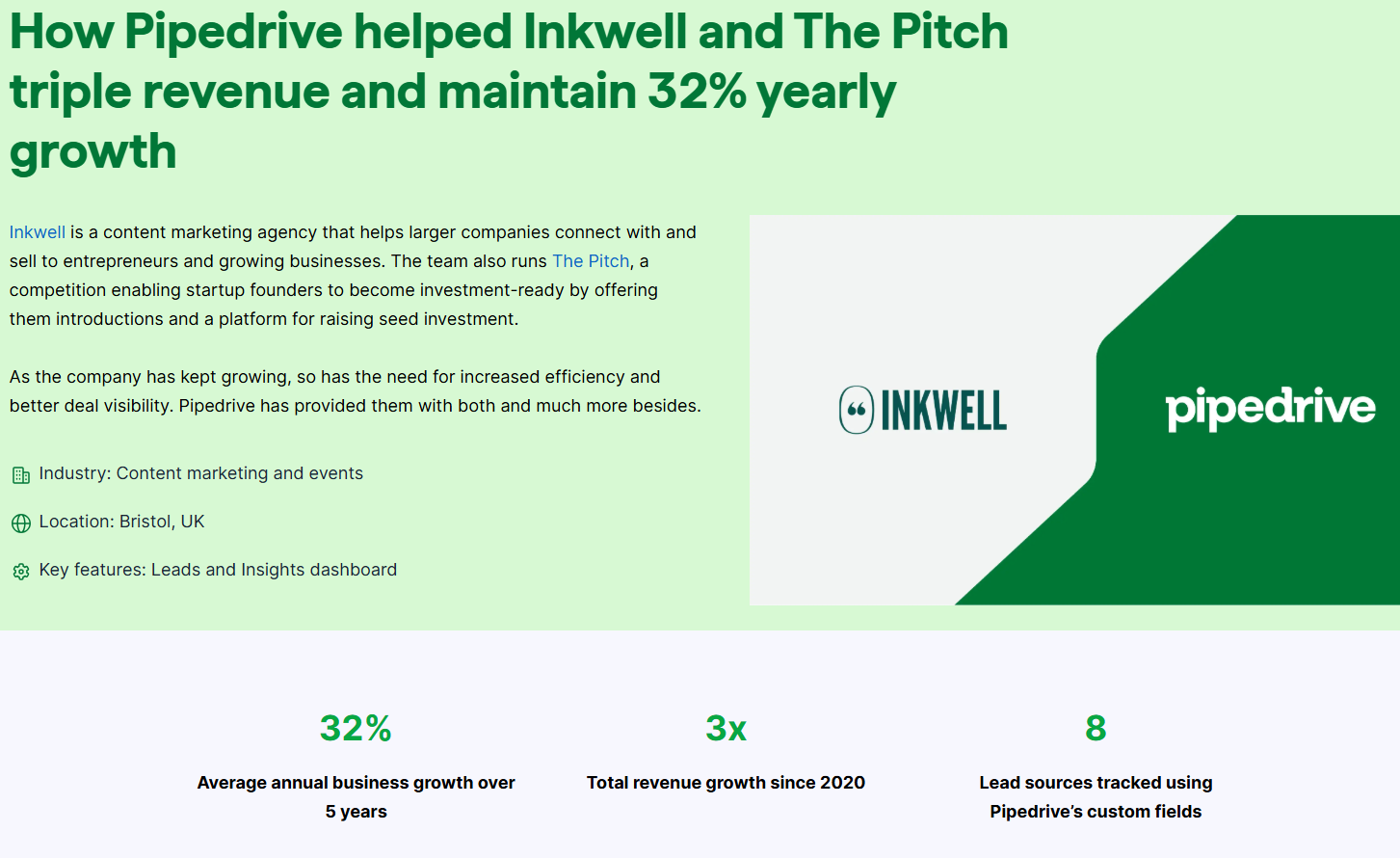
But the sales software provider also ties data into the narrative to give it meaning:
“In the past five years, the business has grown at an average rate of 32% year-on-year, and revenue has tripled. Pipedrive has played a key role in this—not least by helping to develop a consistent number of leads and providing clear representation of each lead source.”
Finally, don’t overlook small wins.
For example, Airtable saving Taylor Guitars 4–5 hours weekly might seem modest. But for marketers, that time reclaimed is tangible and motivating.
8. Reinforce your story with testimonial videos
Testimonial videos make your case study more engaging, authentic, and trustworthy—letting future buyers see and hear your hero’s experience firsthand.
In fact, Wyzowl research suggests that 87% of people have been convinced to buy a product or service after watching all forms of video content.
For example, Grizzle produced this video testimonial of Nile Women’s Healthcare founder Dr. Hughan Frederick:
Our expert-led editing and production turn simple Riverside interviews into high-end testimonials.
You don’t need to arrange travel or complex shoots—our team can coordinate your customer from anywhere.
Similarly, data platform Census create compelling user stories from video calls:
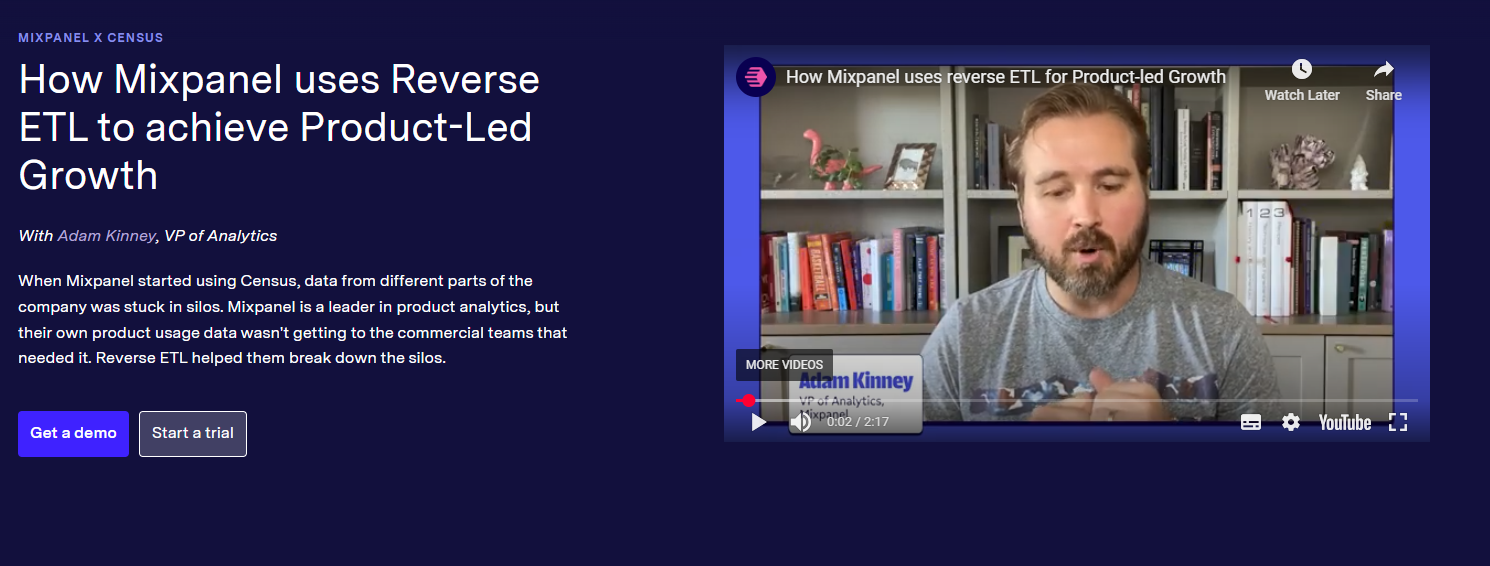
These remote recordings deliver the same human connection and emotional credibility as on-site productions (without the hassle).
Here are some quick tips for more impactful testimonial videos:
- Prep the customer. Share framing, background (e.g., plants or a bookcase), and lighting tips. Reassure that pausing or redoing answers is fine—you’ll fix when editing.
- Prioritize good video and audio quality. Send equipment to customers if needed.
- Prepare before recording. Test lighting, audio, and framing before you start.
- Keep it conversational. Use questions as prompts, not scripts.
- Edit for brevity. Aim for ~2 minutes and focus on key soundbites.
- Make it inclusive. Add captions and annotations for clarity and accessibility.
- Add motion design and contextual B-roll. Use simple graphics and supporting visuals to keep the story engaging and dynamic.
- Prioritize satisfaction. Let the interviewee review the final video before publishing.
- Reuse the content. Recycle pull quotes and soundbites in social posts, blogs, email campaigns, landing pages, and retargeting ads.
This visibility helps your hero’s story spread further, build trust, and create internal champions.
Make your hero shine to inspire future buyers
A hero-led narrative puts your customer’s achievements front and center—showing how they used your solution (and guidance) to solve problems and deliver results.
In making them look good, you position yourself as the trusted sidekick.
Future buyers see the path to success clearly, making internal sign-off and adoption simple.
Want help creating hero-led case studies? Book a demo today and let’s talk.