Playbooks and guides by Grizzle


In this article, we’ll share the content optimization methodology we used to help an enterprise software company get the following results by optimizing their existing content:
- 269.98% increase in organic traffic
- 202.41% increase in overall traffic
- 110% increase in user-sign ups
Let’s dive in.
🤫 We’ve included anonymized client data throughout this article. While we love a good breakdown, client confidentiality must come first.
What is content optimization?
Content optimization is the process of auditing and updating your existing library of blog posts, articles and case studies to increase organic traffic, engagement and conversions.
When conducting content optimization for the first time, it’s important to take a site-wide approach. Treat it as a project to maximize and capitalize on your existing content assets over a shorter period of time.
This article will show you the methodology to do this, along with advice on how to build an ongoing process as part of your broader content strategy.
Identifying optimization opportunities
It all starts with a content audit. By taking stock of your existing library of content, you can identify and prioritize the opportunities available to you.
Typically, we look for content optimization opportunities that sit within two lanes:
- Content that can be optimized to increase rankings in Google
- Conversion rate optimization (CRO) opportunities from content that generates sufficient traffic
For the former, the biggest opportunities are those ranking on page two or three for critical keywords. At Grizzle, we use data from Google Search Console, Ahrefs and various other sources to identify these:

Using a scoring system, analyze each opportunity based on volume and keyword difficulty (KD) to evaluate how quickly you can improve results.
Each piece of content then goes through an evaluation process. This starts with the content asset itself, identifying areas that are outdated, gaps that need addressing and ways content can be improved for depth and originality.
Compare each article against your content competitors. Analyze top-performing articles, what they have in common and their weaknesses. We usually score content competitors against three categories:
- Content Competition: How comprehensive is the content? Does it include proprietary assets we don’t have access to? What can we add that they can’t?
- Backlink Competition: How many domains are linking to them? How fierce is the competition?
- Content Opportunities: What do we need in order to create the best piece of content on this topic and overcome the competition?
Clearscope is another tool we use at this stage, which provides data that drives what information to include in our updated content.
Re-distributing content is a critical part of the optimization process. However, backlink acquisition is not always necessary. If our content provides a better experience (and is more comprehensive in nature), then it’s possible to beat the competition simply by making our content stronger.
In fact, this is exactly what we did for another client that was stuck at the bottom of page 1 for a competitive broad term in the marketing space. After updating the content and optimizing it for this specific keyword, we ended up increasing organic traffic by 287%:

In another example, this article we created for Sales Hacker outranks the likes of HubSpot for a keyword that’s hard to rank for. Even though it has far fewer backlinks than other results, we still outrank them:
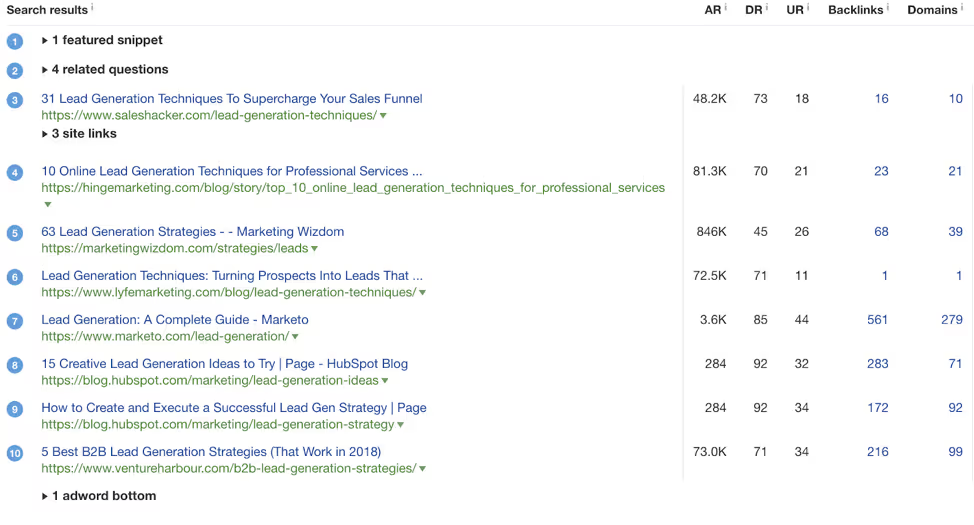
Finally, decide whether your content simply needs something extra (two or three paragraphs here and there) or a complete overhaul. If all it needs is some additional value, we’ll usually edit the content and fill any necessary gaps. However, outdated or shallow content often needs producing from scratch.
Planning and producing optimized content
With your optimization opportunities revealed, create a content brief to define your goals and create a detailed outline.
This brief should include competitor information (detailed above), SEO data and influencer marketing requirements. Thorough planning will improve the likelihood of success. To do this, you must aim for a delicate balance between giving Google what it wants, writing for people and making the content as original as possible. Luckily, you can have your cake and eat it too.
Use the data uncovered in the previous step to direct your content outline, ensuring it covers all bases while providing an original and value-driven narrative.
At Grizzle, we do this by collaborating with subject matter experts and content creators. They lend their insights, expertise and stories to provide a fresh perspective. This journalistic approach to content creation builds credibility, and helps distribute content through existing audiences.
While there are dozens of ways you can make your content original and valuable, some of our favourites include:
- Taking a fresh approach: Don’t follow the SERPs. Instead, look at what people care about right now, and tailor your content to those immediate needs.
- Adding depth: Provide additional advice and takeaways on granular ideas. Expand upon threads wherever possible.
- Collect proprietary data: Tap into your audience and use owned data to conduct research or uncover trends.
- Experience & design: One thing I still love about Brian Dean’s content is his use of design (like in this example). Can you create a bespoke experience for critical and strategic content pieces?
- Contributions & citations: Involve other thought leaders and experts in the content creation process. Not only does this enhance your content, but it provides access to a new audience.
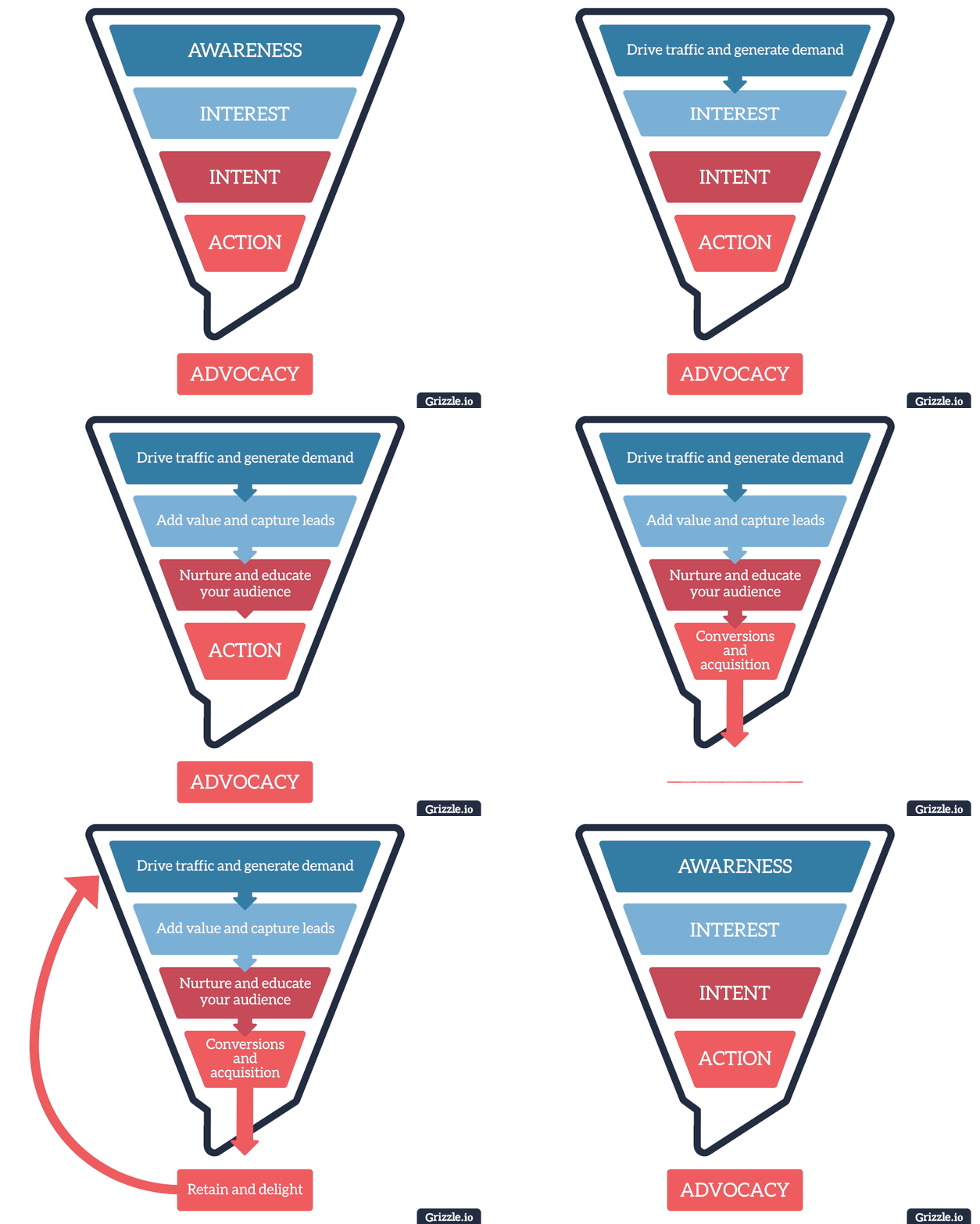
You can also tap into visual content and video to enhance your content experience. For example, in the first section of this article, you saw an animation we created describing the optimization process. You can also create something as simple as an animated gif, like we’ve done for this article on bottom of funnel content:
Most importantly, ensure that your existing content aligns with your current content strategy. For example, if you’re currently attracting new audience segments, moving upmarket or pivoting your distribution strategy, some articles and blog posts may no longer be relevant.
During the auditing process, focus on and prioritize the content that aligns with your current priorities.
Grouping together and merging similar themes
On top of optimizing individual blog posts, keep an eye out for content with overlapping topics. As part of the auditing process, group together content that covers similar themes.
For example, you may have recently created an article that provides in-depth and up-to-date advice on writing great ad copy. During your audit, you find the following complimentary articles:
- “How to Write Ad Headlines”: The term “ad headlines” generates 250 searches a month, and warrants its own article. Instead of merging this with your latest piece, update it and include an internal link.
- “X Principles of Great Ad Copy”: Upon inspection, this article might be several years old and extremely thin. Therefore, take relevant elements for your updated content and create a 301 redirect.
- “How to Write Ad Copy To Generate Leads”: While this may first seem like an overlapping topic, you may find it’s a common customer challenge. Make sure you exclude content that serves a specific purpose (conversions, sales enablement etc.) from the merging process.
Look at each blog post through a discerning lens. Check your analytics data to see how it’s performing across the entire funnel. Check-in with other teams to uncover the content that makes up their own toolkit.
This will help you increase your traffic, demand and acquisition efforts while maintaining the integrity of your growth engine.
Optimizing content for conversions
The second optimization lane involves taking a conversion rate optimization (CRO) approach. These are identified by identifying content assets that are generating a high amount of traffic, but can be improved for conversions.
To find these right experiments to run, ask yourself the following questions:
- Does the offer match the information the audience is looking for?
- Are we offering something of true value?
- What calls-to-action (CTAs) are being used?
- What CTAs is most appropriate for this audience?
For example, most senior decision-makers are looking for strategic advice. Therefore, it’s unlikely they’ll be interested in downloading an eBook that offers advice on a tactical level.
Furthermore, different audiences are sensitive to certain CTAs. Exit-intent pop-ups may work, but some audiences have been conditioned to ignore them. Sometimes it creates enough friction for them to abandon content altogether.
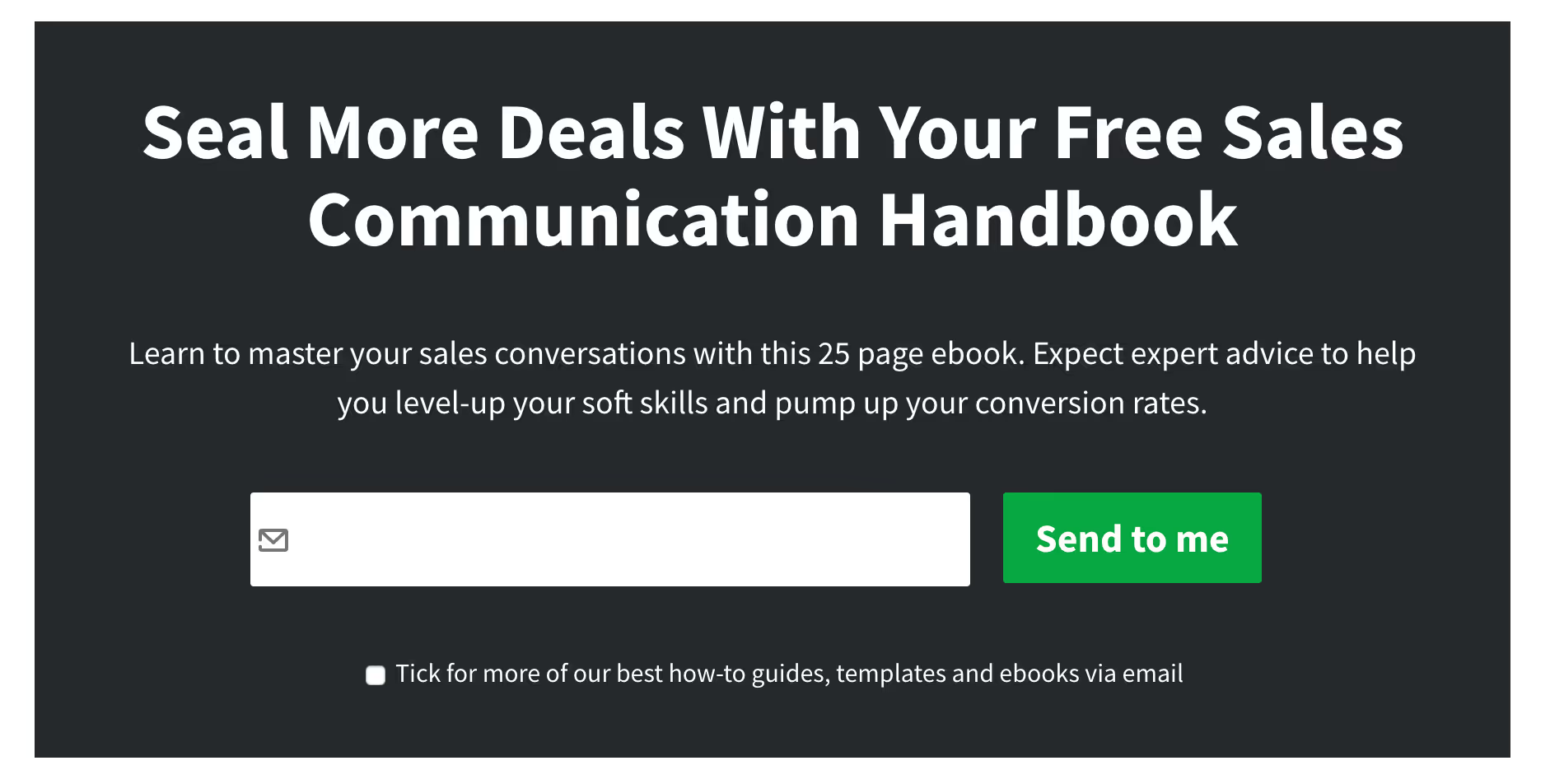
In-line CTAs are an effective and non-intrusive way to drive action. In the example below, Pipedrive has a simple in-line CTA that offers additional content around the topic the reader is currently engaged with:
The offer itself is as important as the CTA. How does your lead magnet add additional value beyond the content users are actively engaged with?
The answer: craft lead magnets and offers that serve overarching themes.
For example, an ebook or training video about ad copy could be used on articles that talk about headlines, landing pages and Facebook ads.
Find the perfect balance between your offer, CTA and the placement. Take your audience into account, and consider crafting tailored offers or lead magnets for individual articles.
Re-distributing updated content for fresh eyes
With our content polished up and updated, it’s time to promote. Content distribution is key, but there’s no point in wasting time on ineffective channels just because they exist.
Start with people who shared and engaged with the original piece of content. BuzzSumo is useful for uncovering these individuals:
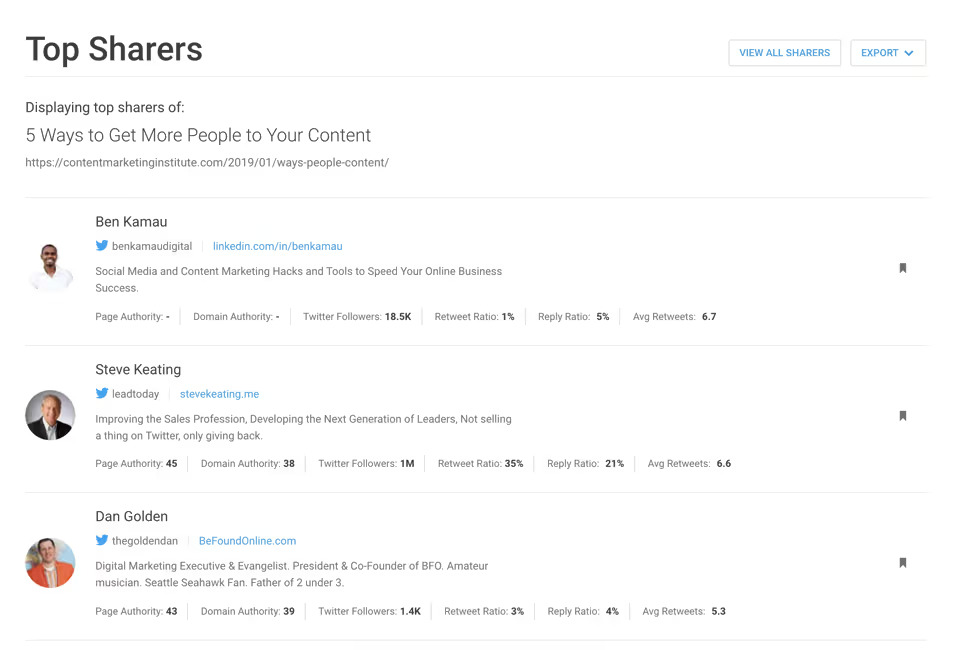
Strong relationships are foundational to content promotion. Being a trusted face on your primary channels will help your content be welcomed with open arms. This goes for all distribution approaches:
- Community engagement: Become a welcome face. Contribute to the conversation and become a trusted source of advice.
- Influencers: Get them involved with your content production. This not only provides you with a new audience to reach, but also makes your content more original.
- Link building: Build relationships with publications and creators. Find ways to add value, collaborate and build relationships. Avoid cold email at all costs.
Don’t forget about your owned assets. If your content has been given a new lease of life, relaunch it to your email subscribers and social media followers. Summarize new elements, and tell them what they’ll learn in this improved version.
An ongoing optimization process
The steps outlined so far will help with one-off auditing and optimization projects. However, it’s well worth building an ongoing content optimization process.
Why? Because it can future-proof your rankings and organic traffic. During Google’s May 2020 core update, Neil Patel (love him or hate him) analyzed 641 websites that updated content on a daily basis:
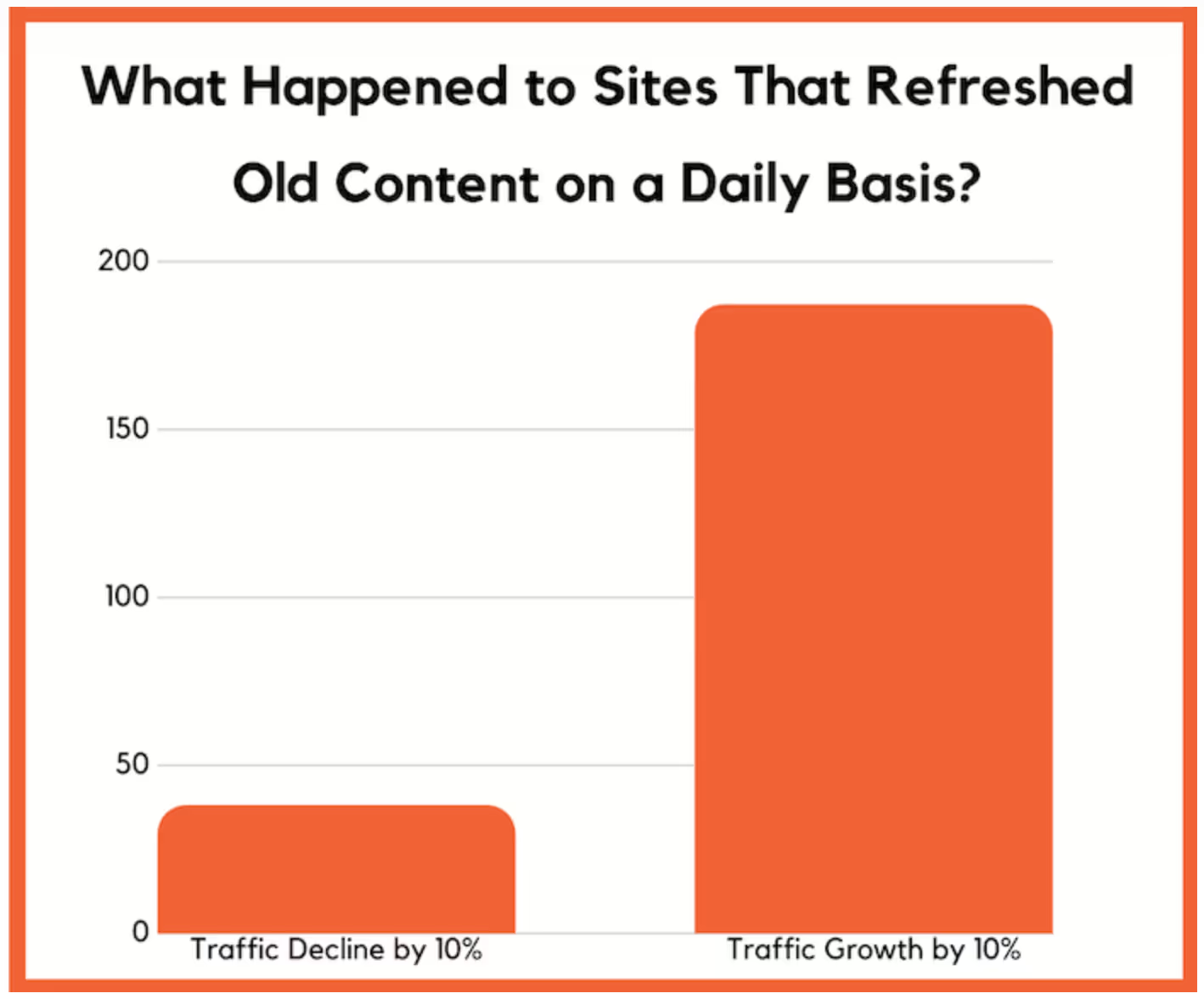
He found that only 38 of these sites (5.92%) saw traffic decline by 10%, which is extremely low for the volatility seen during the update.
However, 187 of those sites saw traffic increase by 10%.
Keeping content fresh and updated on a regular basis will not only increase your organic traffic and conversions, but can protect you against future algorithm updates.
Building an ongoing optimization process requires the following elements:
- Monitor market trends: What changes are happening in your industry that may affect the accuracy of your content? Social media marketing solutions, for example, will need to audit their content whenever a platform updates existing features or launches new ones.
- Monitor your rankings: When you start to see traffic dip, it’s time to act. Keeping your content updated (especially when targeting competitive terms) will help you increase and defend your position on the SERPs.
- Monitor conversions: CRO is a complex battle, so you’ve got to pick your battles wisely. Consider monitoring content against benchmarks and use fluctuations to inform your priorities. Alternatively, identify the 10% that contribute to strategic goals, and go all-in on those.
Building a reactive and pro-active process will help you improve results over time. Even a small 1% increase will compound over time. Start with the metrics that matter most, then build processes to act on them using technology and talent.
Conclusion
Your content optimization efforts must align with your existing strategy. It’s only worth optimizing content if it still has a place in your customer journey.
The philosophy behind content optimization is simple: Treat every piece of content like an asset. Re-invest in relevant content that will help you get better results.
A thorough content audit will show you what to keep, optimize and merge. Prioritize content that will make the biggest impact first, and you’ll quickly make a case for ongoing optimization with the boardroom.

What is bottom-of-funnel (BOFU) content?
Bottom-of-funnel (BOFU) content helps your audience research products and solutions. It’s designed to educate buyers that your product is the best option and overcome objections.
While BOFU is designed to convert, it must still add value to readers.
Common bottom-of-funnel content formats include:
- Comparison pages
- Product listicles
- Case studies
- Explainer videos
Content at this stage of the funnel:
- Eases prospects past their objections and builds enough trust to take action (e.g. book a demo or sign up for a trial)
- Gives solution-aware prospects the information they need for product research
Top-of-funnel (TOFU) and middle-of-funnel (MOFU) content have slightly different goals. They build awareness and capture users early in the customer journey.
BOFU content directly contributes to customer acquisition.
For example, here’s a BOFU article we created for Pipedrive. It teaches their audience how to create client reports—a common jobs-to-be-done (JTBD):
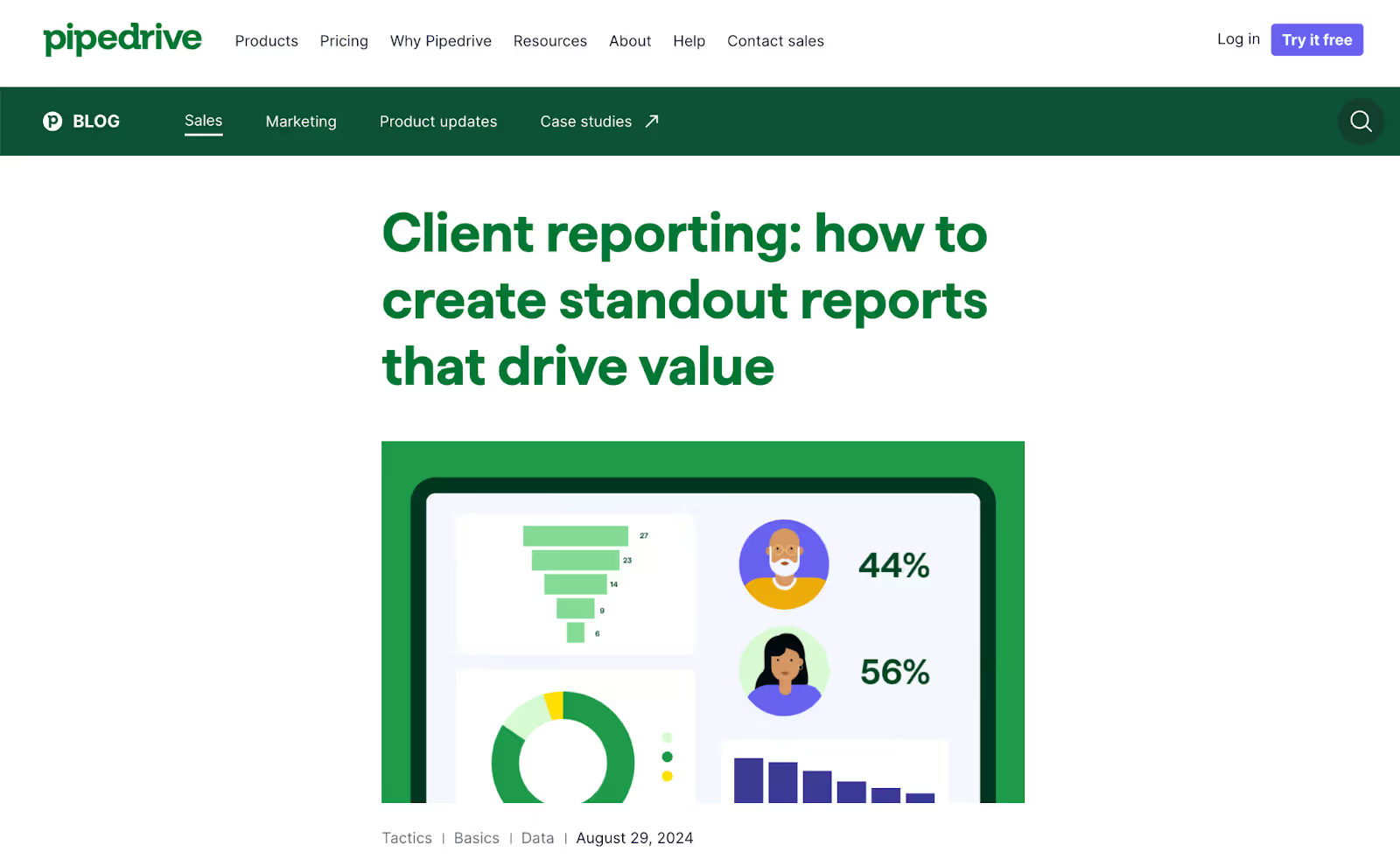
It offers practical advice and tips on what to include in client reports. More importantly, it walks readers through creating them using Pipedrive’s reporting features.
We call this product-led content, which adds value and teaches users how to solve relevant problems with your product:
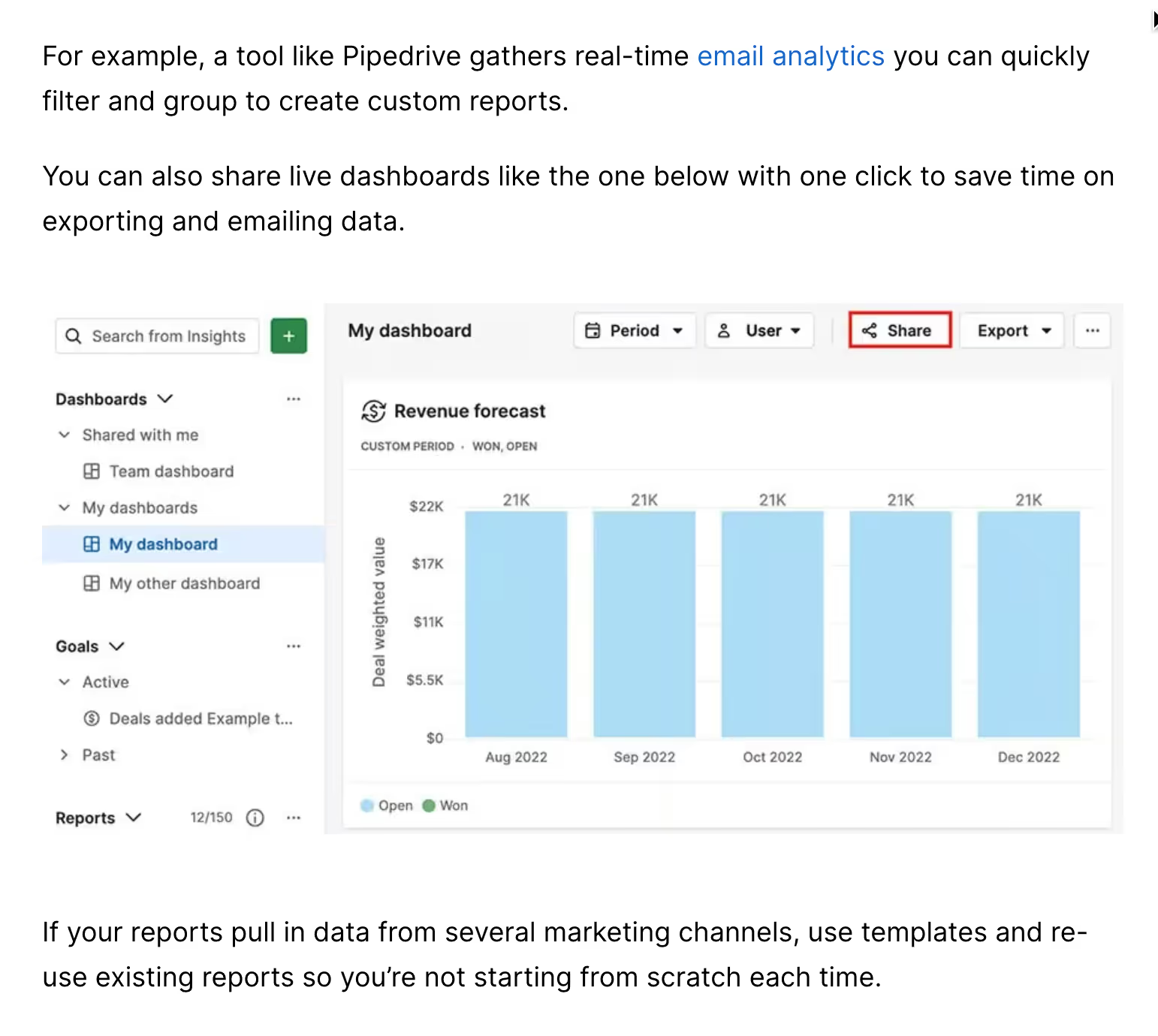
Further down the funnel, you can create product content to attract in-market buyers.
Like this article we wrote for HiringBranch listing the best candidate assessment tools:
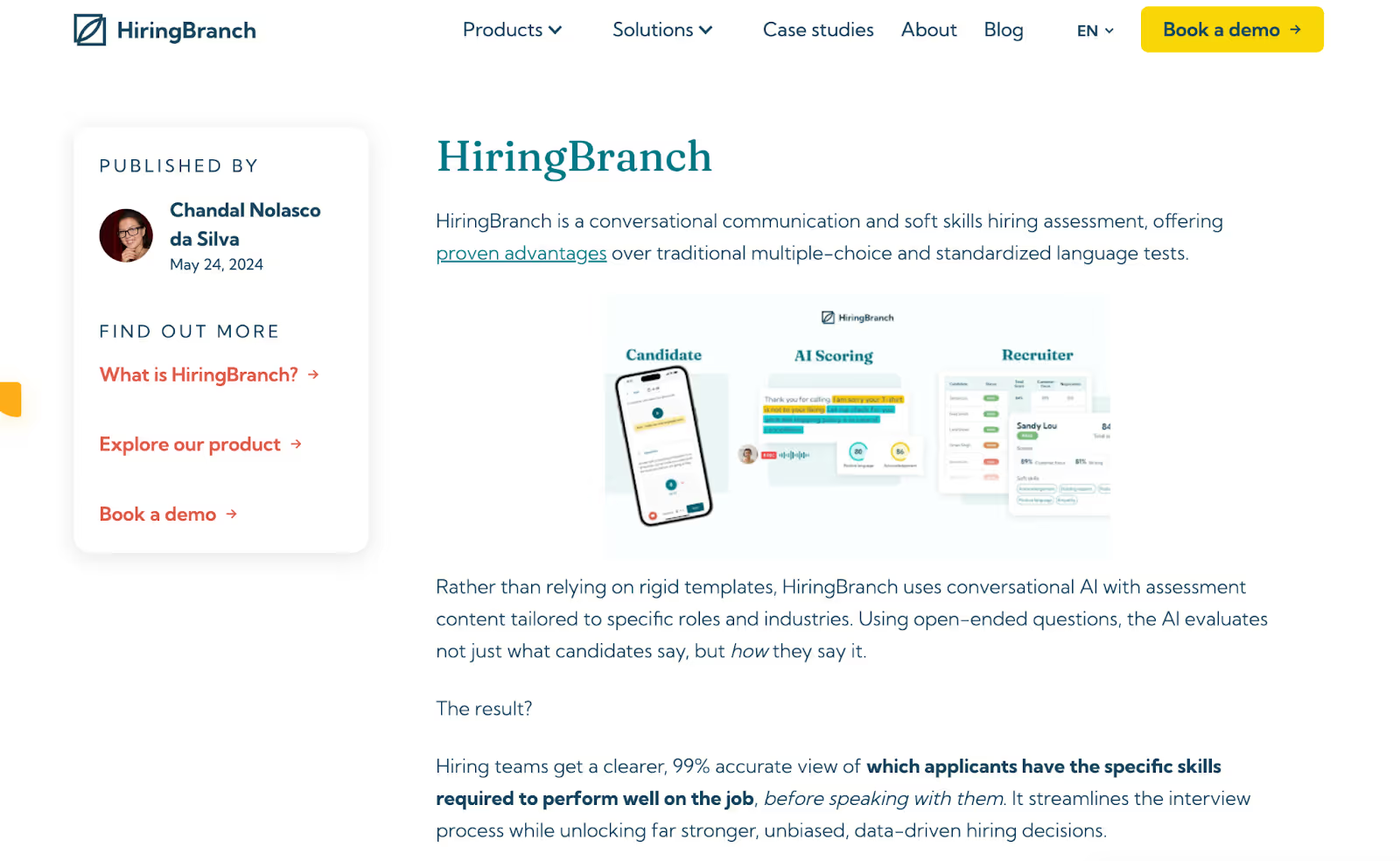
This piece of BOFU content:
- Gets HiringBranch’s product in front of searchers looking for their product
- Adds huge amounts of value for readers researching their options
- Includes a relevant CTA to sign up for a demo
Both top- and bottom-of-funnel content have their place in the marketing mix.
For B2B and SaaS startups getting started with content and SEO, it’s best to focus on the latter.
Why? Because revenue and growth are your core priorities. BOFU content gets you in front of the buyers who are looking for your product right now.
[[component]]
How to find bottom-of-funnel content topic ideas
To find the right BOFU content ideas, you need to understand why customers buy from you.
- Not just: “Our customers need an invoicing tool.”
- But more like: “Our customers want to send invoices and reminders on mobile devices. They don’t want to chase clients to get paid.”
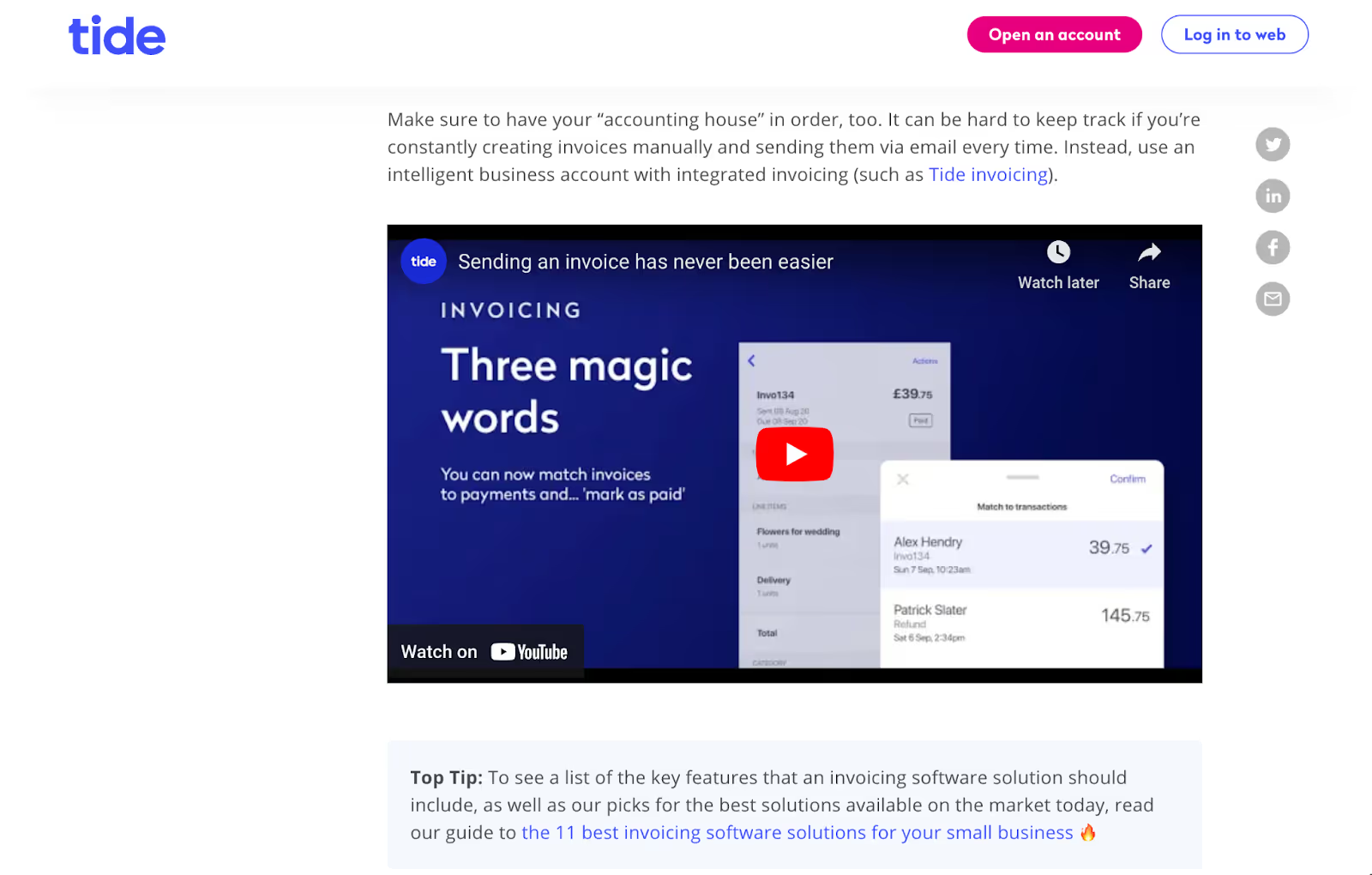
“Mobile invoices and reminders” is the what. “Not having to chase clients” is the why.
Which is exactly what this Tide article covers:
Here’s how to conduct BOFU content topic ideation:
Interview your customers
Customer interviews will uncover insights to improve your messaging and help you understand:
- Which problems you help customers solve
- Why they invested in your product
- What positive and negative experiences they’ve had
The key to effective customer interviews is to a) be direct and b) ask good follow-up questions.
This is where you’ll find their true motivations and insights you can act on.
Here are some examples of initial and follow-up questions. We've based these on hypothetical customer responses for an asynchronous meeting platform:
From these initial and follow-up questions, you might learn:
- Customers choose you over competitors because you keep meetings organized and on track.
- Teams are able to spend more time on deep work and implement a four-day workweek.
- Automated minutes would allow teams to clearly communicate and stay present during meetings.
- Customers send voice messages over video because they feel it’s easier to hit record. They don't have to worry about their appearance.
- Screen sharing isn’t a priority because Loom offers a best-in-breed solution. Customers would rather see an integration.
Take these insights and use them in your BOFU content. Be open to critical feedback. You’ll discover ways to improve your content and messaging.
How we'd use these insights to create content for clients:
Using the responses above, we could write a “Zoom comparison article.”
If we were writing it for them, it would emphasize that it helps customers save time and improve productivity as key differentiators.
We’d even share how one customer implemented a four-day workweek—all thanks to the number of hours saved.
This would position them not just as a meeting tool, but as a way to improve remote working cultures.
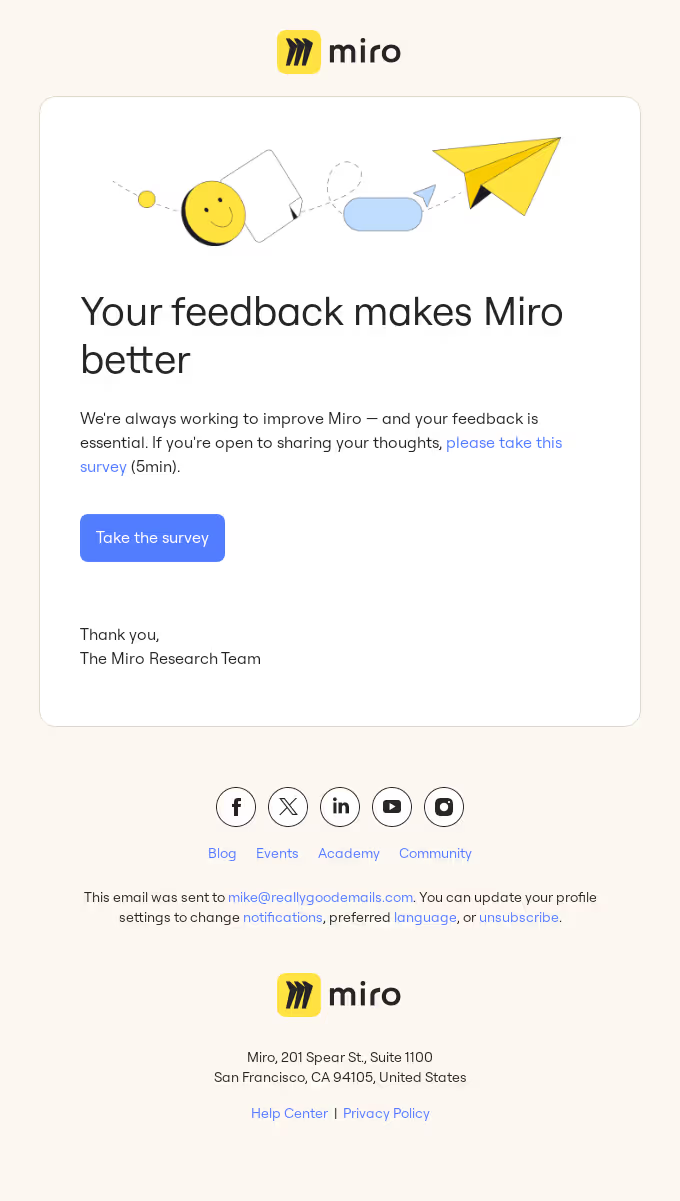
Customer interviews allow you to collect feedback from your customers. You can ask follow-up questions and understand their trust motivations, challenges, and goals.
You can also send email surveys—like Miro have done here:
Collaborate with sales and customer success teams
Customer success and sales teams talk to your customers on a daily basis. They have their fingers on the pulse of common challenges and goals.
Use these insights to eliminate friction from the conversion and onboarding process.
Look to customer support tickets and forums, as many users go here first to find answers.
For example, this ClickUp article teaches readers how to manage large amounts of content:
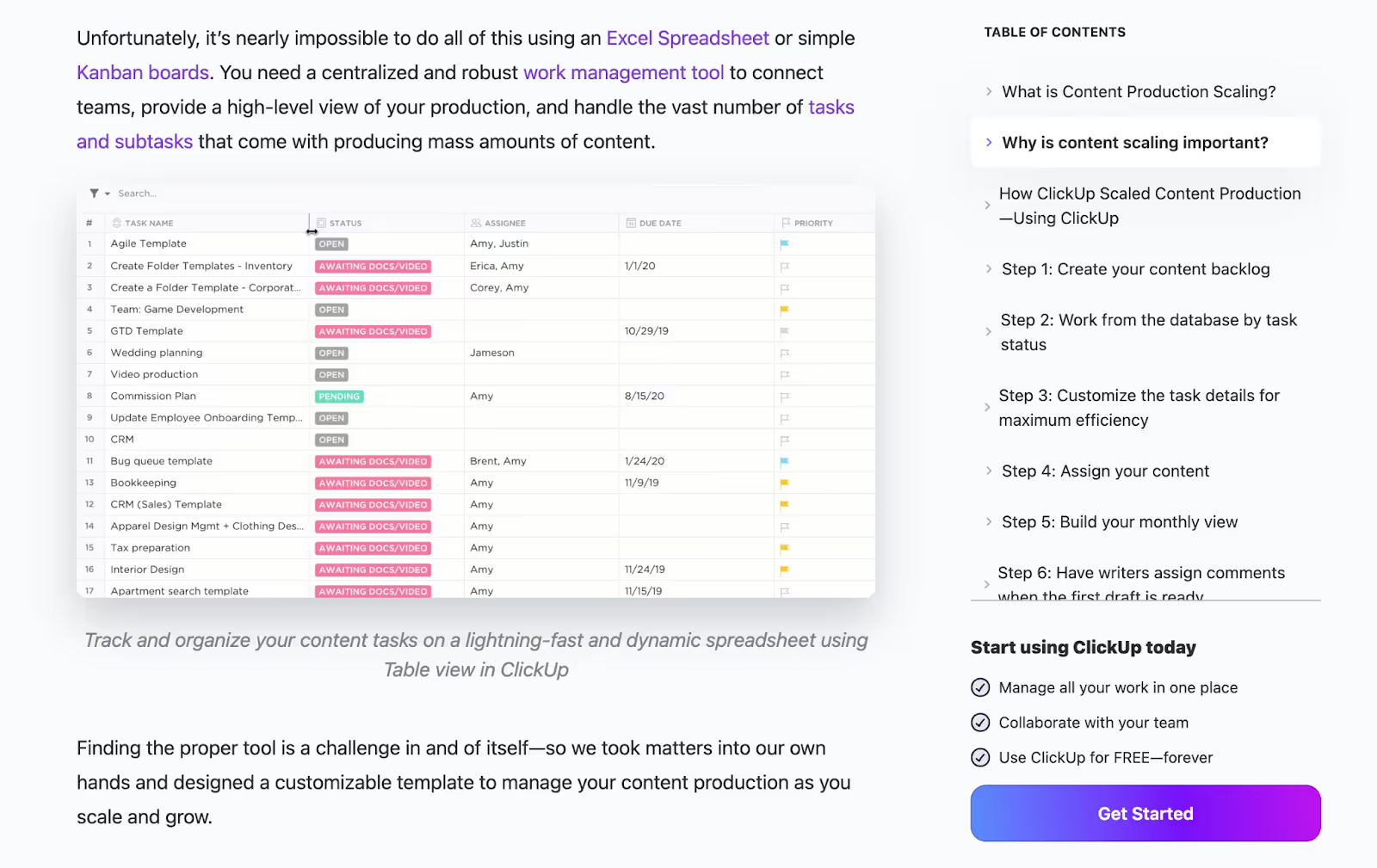
It shares a system for scaling content production—a common use case shared among ClickUp users.
Regularly meet with your sales and customer success teams. Uncover questions customers ask before and after investing in your product or solution.
Find out:
- Which product features have the most usage?
- How do prospects compare you to competitors?
- What features are customers rarely interested in?
Your BOFU content must answer these questions and overcome objections.
Here's how HockeyStack addresses user challenges in its Can You Dashboard It? series:
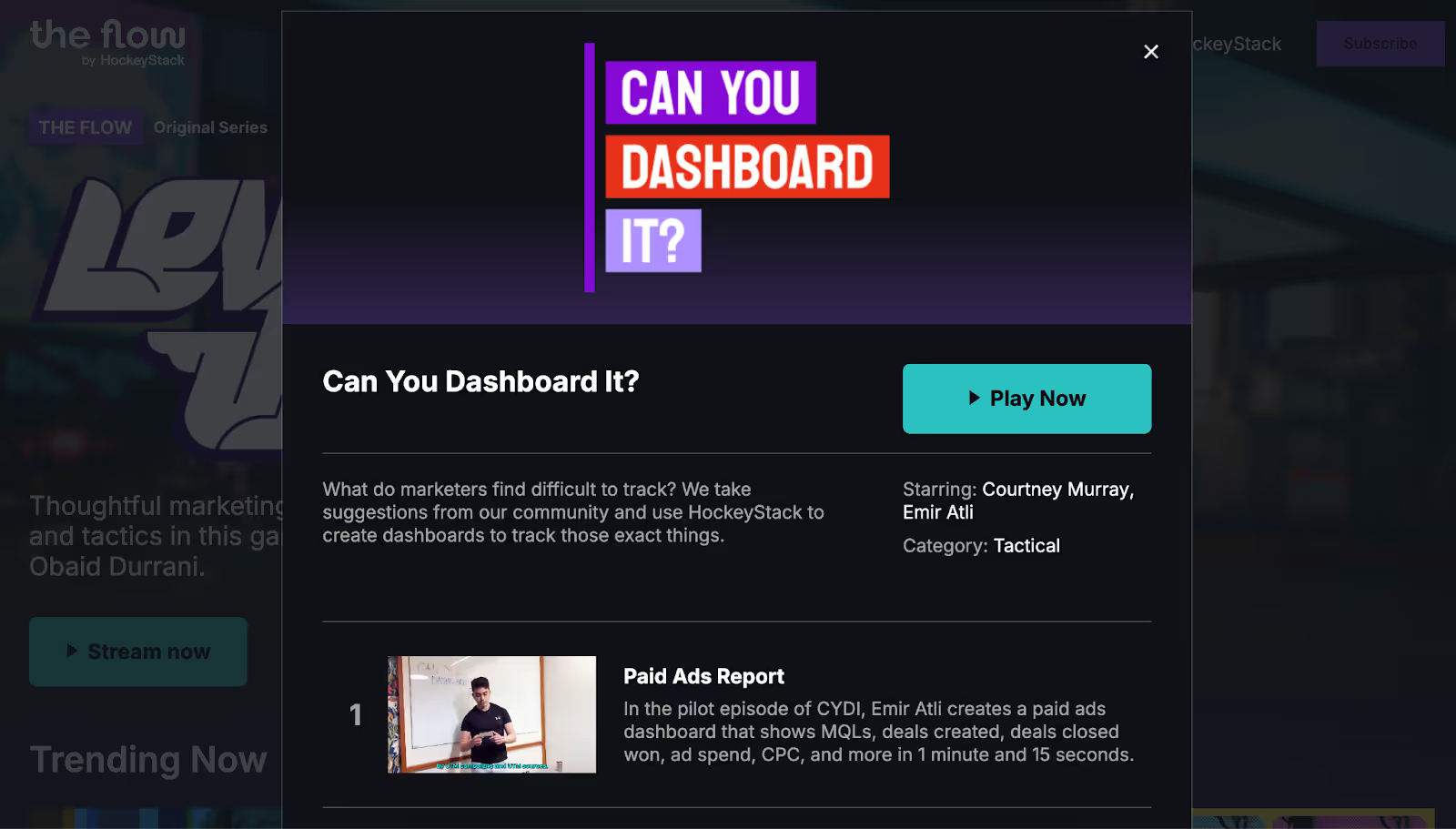
The team shares how to create ad tracking and sales dashboards.
It shows users how to measure impressions and sales activities using their product.
Essentially, the series teaches potential HockeyStack customers how to solve their biggest problems. It's an educational and entertaining series of product marketing materials.
Make it easy for customer-facing teams to share their observations and objections.
Create a dedicated Slack channel or spreadsheet to keep insights organized and accessible.
Run a competitive analysis
Analyze how your audience talks about your competitors. Use this insight to create strong positioning and differentiation.
Use reviews, communities, and support forums to find out what questions they're asking.
What are they saying in G2 and TrustPilot reviews? What objections and complaints do they have?
For example, here’s a response to a Reddit post asking HubSpot users about their biggest problems with the software:
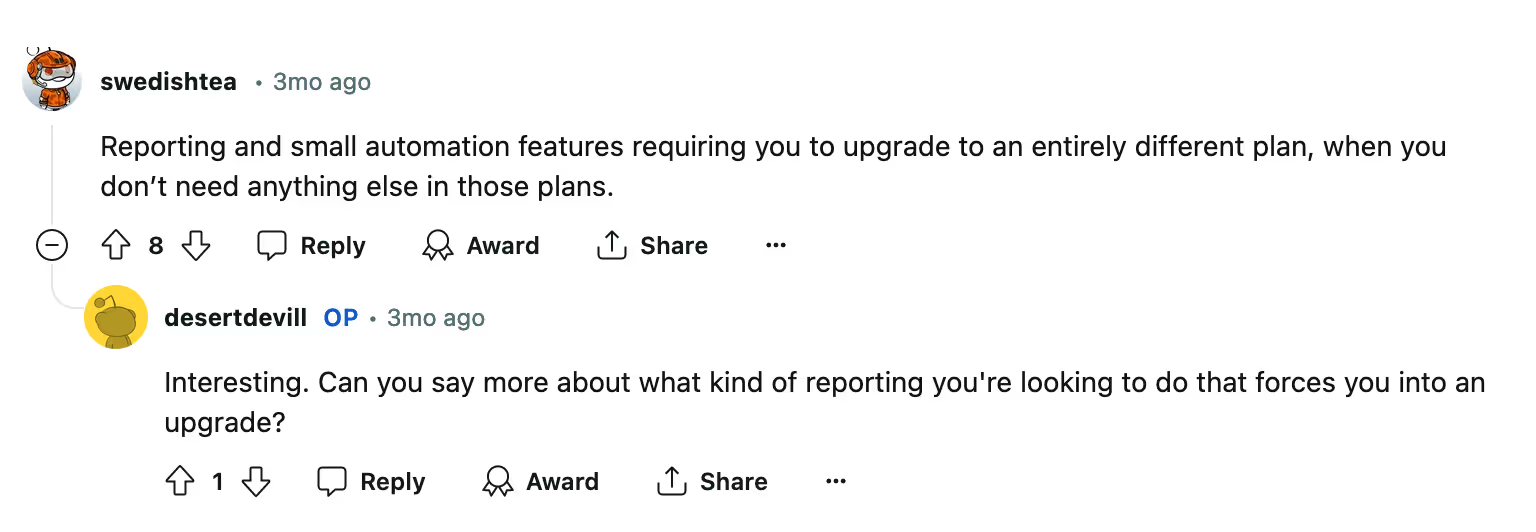
Pricing is a common issue in this thread, their customer base feels it as a whole.
A competing CRM could create a comparison page to show how it fills these gaps. Here’s one we created for Pipedrive:
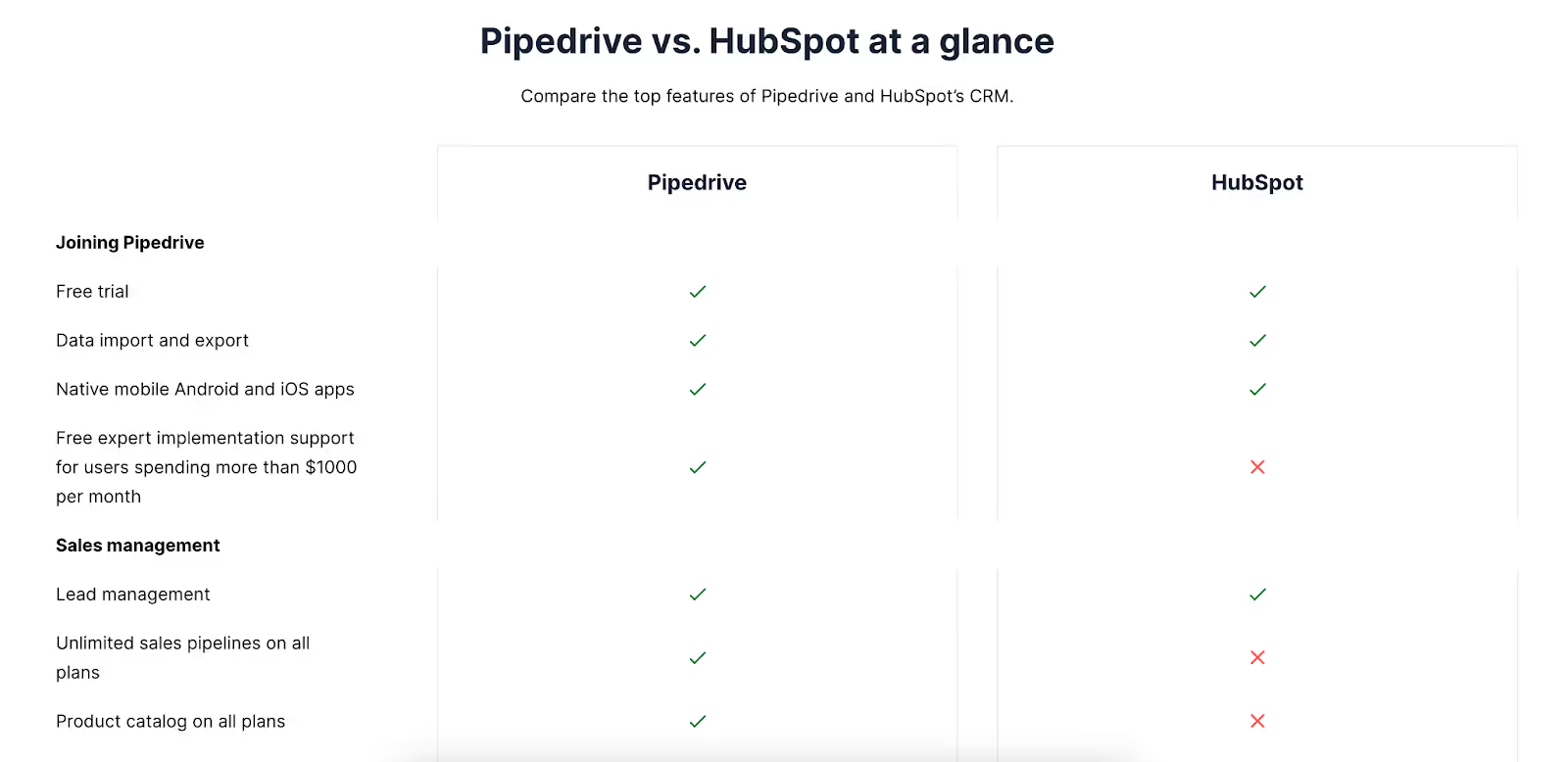
Your competitor analysis might uncover pain points you weren’t aware of. Use these to fill gaps in the market with your BOFU content.
For example, this Reddit post expresses confusion around Notion' digital asset management capabilities:
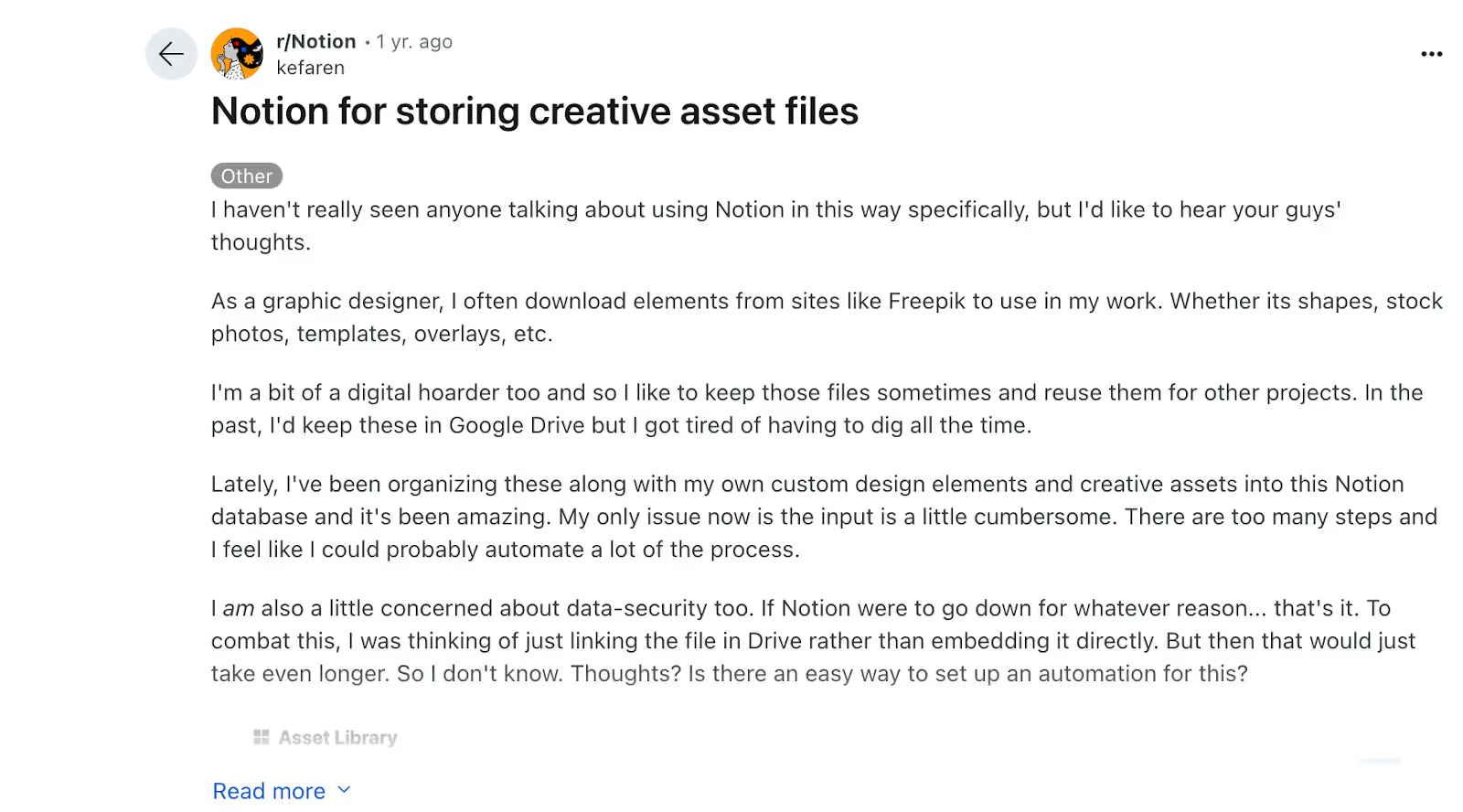
As an indirect Notion competitor, Airtable wrote an article that teaches an easier way to build one:
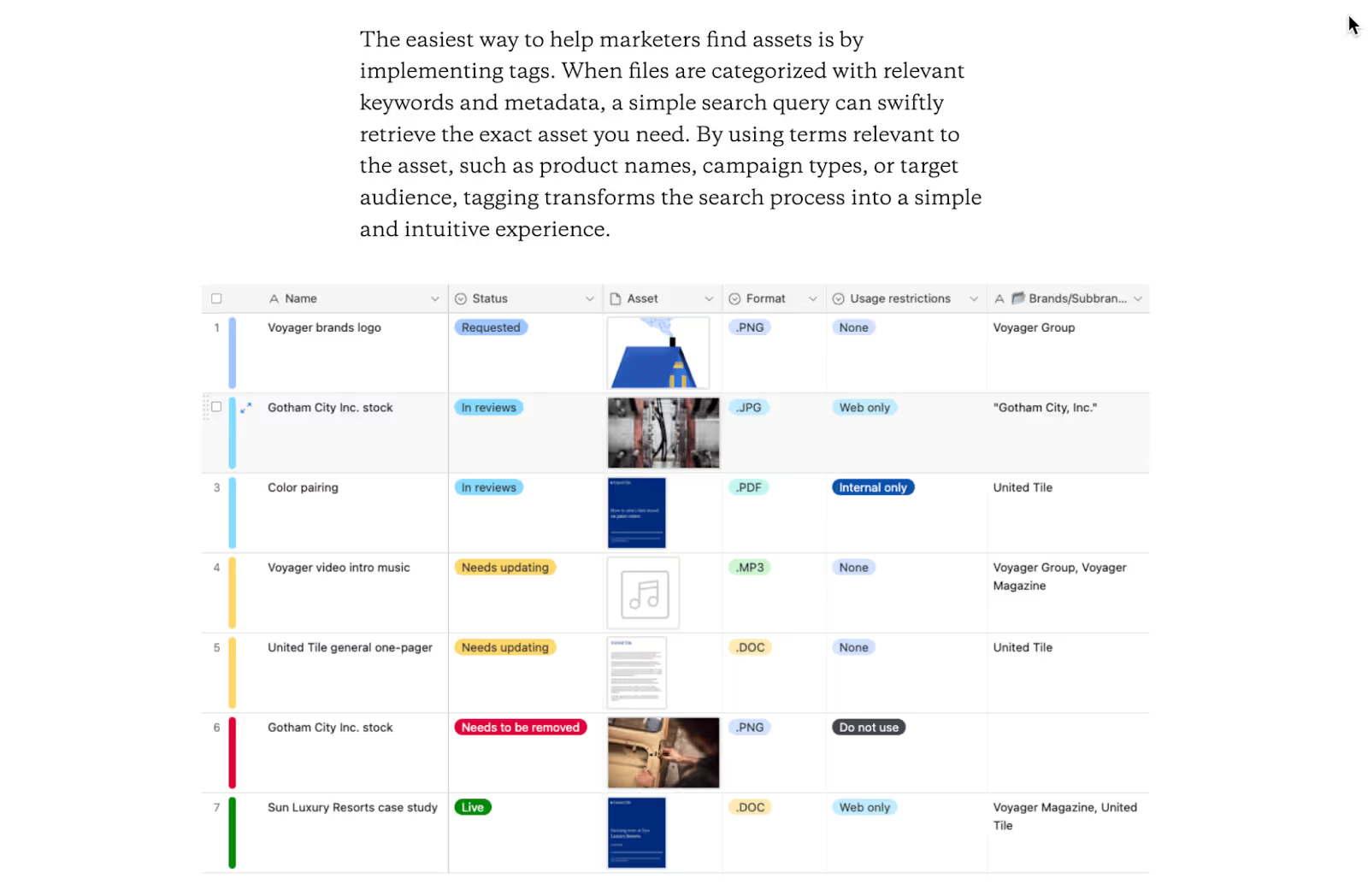
Conduct BOFU keyword research
Optimizing your BOFU content for SEO gets your message in front of potential customers.
BOFU keywords indicate a high intent to invest in a product or service. This includes queries including words like “vs” and “pricing” or “demo.”
Here are some BOFU keyword variations for a SaaS brand:
- best [product type] software
- [product name] free trial
- [product name] demo
- [product type] for [role]
- [product type] for [industry
- [brand name] pricing page
- [brand name] vs. [competitor]
- how to [do a thing] with [product name] (also known as JTBD content)
- [competitor name] alternative
For example:
- best project management software
- crm for real estate
- Notion vs. Airtable
- how to create a marketing report
These are search terms used by in-market buyers who are problem- and solution-aware. They might be close to making a buying decision, as indicated by the search engine results page (SERP)
Here are the results we get for the term “best project management software:”
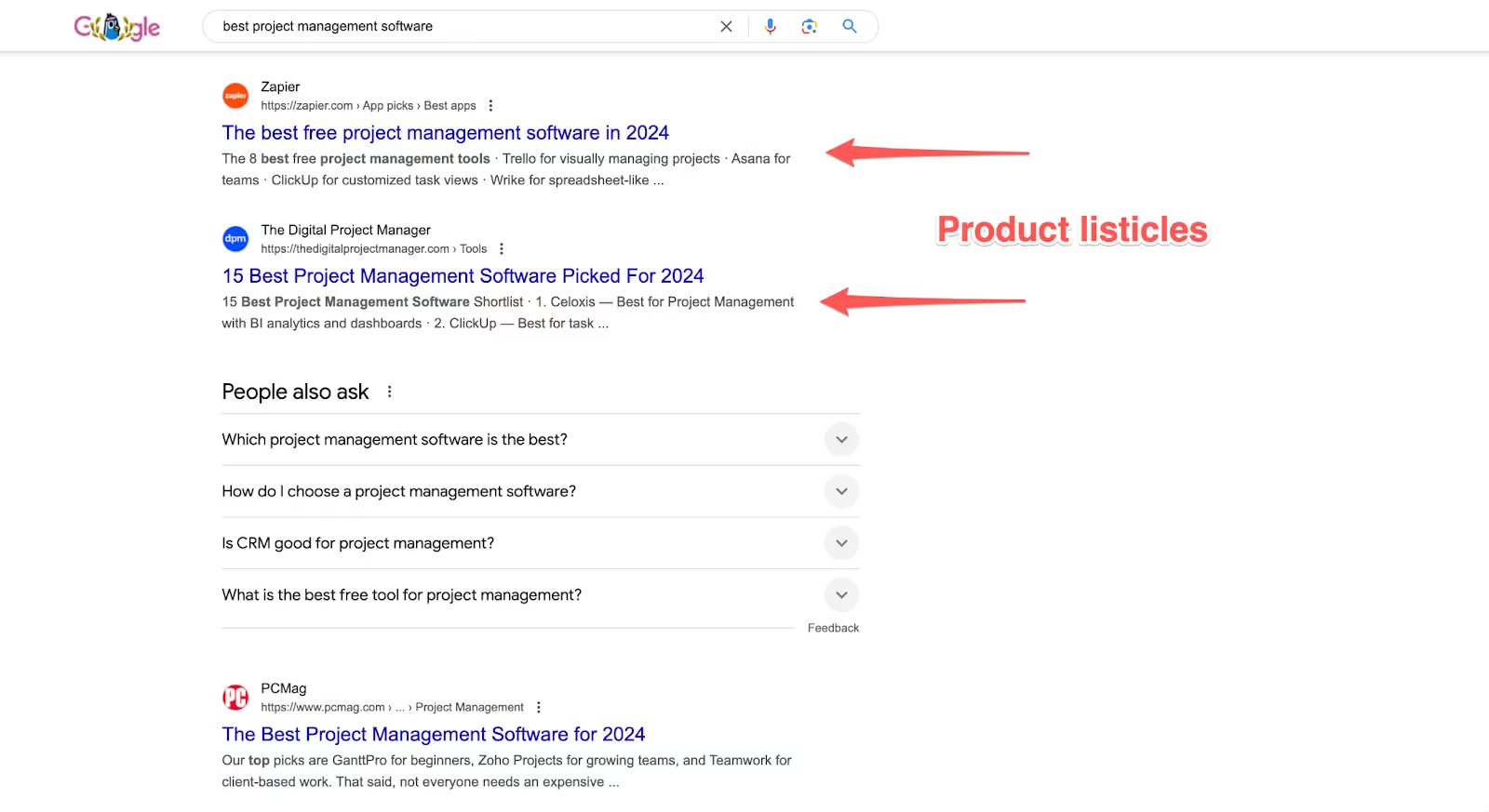
Product listicles indicate that searchers are learning about and evaluating their options.
We use the word “best” in the above keyword list loosely. “Best” could mean any combination of specific features and needs unique to your audience’s criteria.
If keyword research is new to you, HubSpot's guide is a solid starting point.
For now, here’s a workflow specific to finding BOFU keywords:
- Brainstorm relevant terms. Based on your customer interviews and research, identify terms your audience searches when they’re ready to take action.
- Validate demand with a keyword research tool. Put these terms into a keyword research tool like Semrush or Ahrefs to measure demand. Uncover other related keywords using “Terms Match” in Ahrefs or “Keyword Variations” in Semrush.
- Build your keyword clusters. Organize terms that fulfil the same search intent (i.e. have the same results in the SERPs). This helps you maximize results by getting a complete picture of the demand for a topic.
- Analyze search intent. Look at the SERPs for your keywords to commercial intent. For example, if the SERPs for a topic contain product listicles or landing pages, it’s likely that users are researching their options.
- Prioritize ruthlessly. Focus on opportunities based on product relevance, search volume, and brand competition. Prioritize keyword clusters that align with your offering and target audience.
- Test and iterate. Continuously measure performance by monitoring rankings, search visibility, engagement metrics (such as avg. time-on-page), and most importantly, conversions.
Your BOFU content must drive business results. Trials, demos, sales-qualified leads (SQLs), or revenue should be your north-star metrics.
When in doubt, follow the EPIS model: experiment, pivot, iterate, and scale.
7 bottom-of-funnel content types (with examples)
Your chosen BOFU content formats will depend on search intent, customer needs, and goals. Here are nine proven frameworks you can use.
1. Comparison pages (you vs. them)
Comparison pages pit you and your competitors against each other. It makes it easy for customers to compare the features of two solutions in a visual format.
For example, QuickBooks uses a simple table to compare features against Xero—one of their biggest competitors:
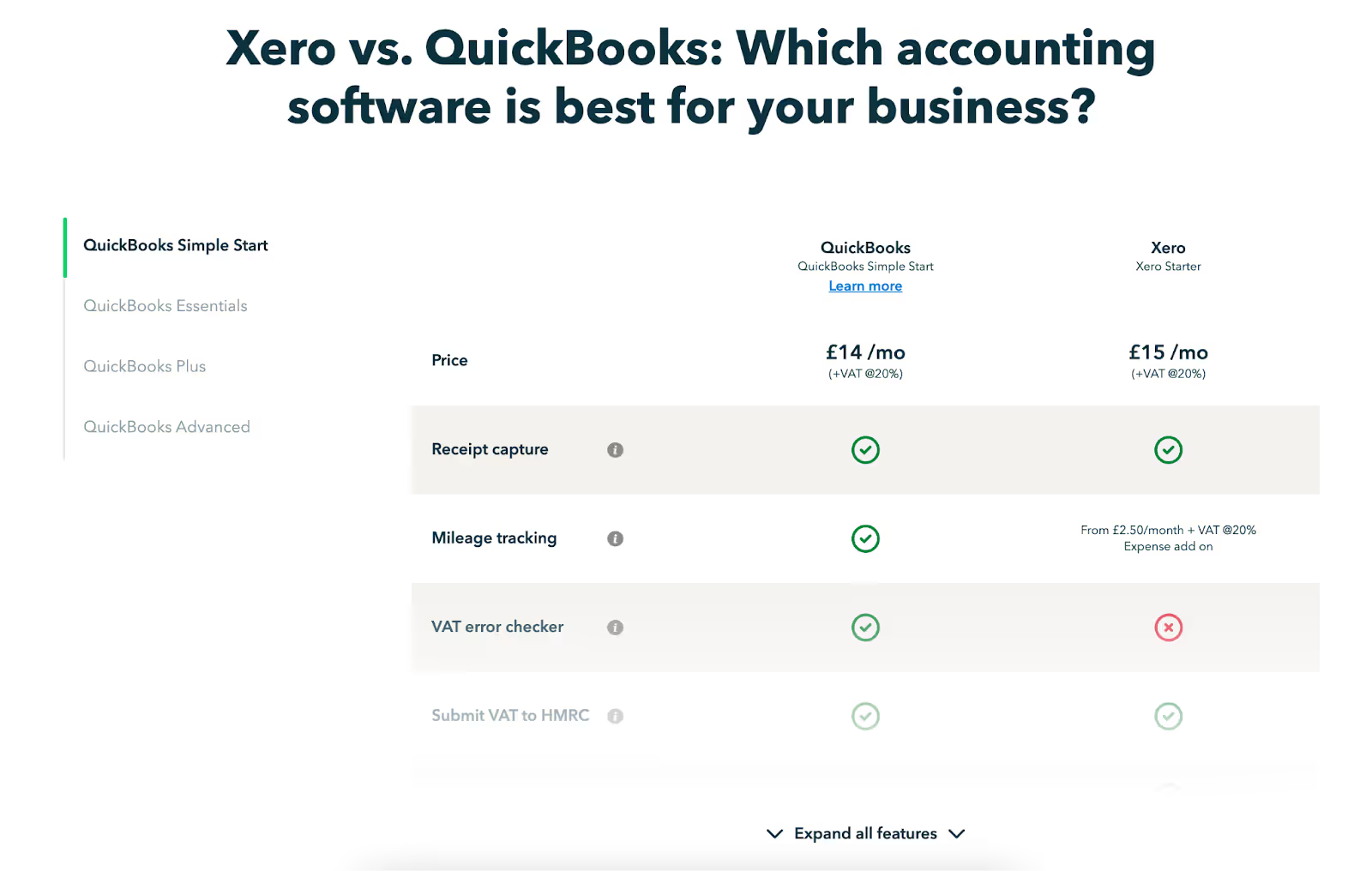
It allows users to quickly compare features when evaluating the two platforms.
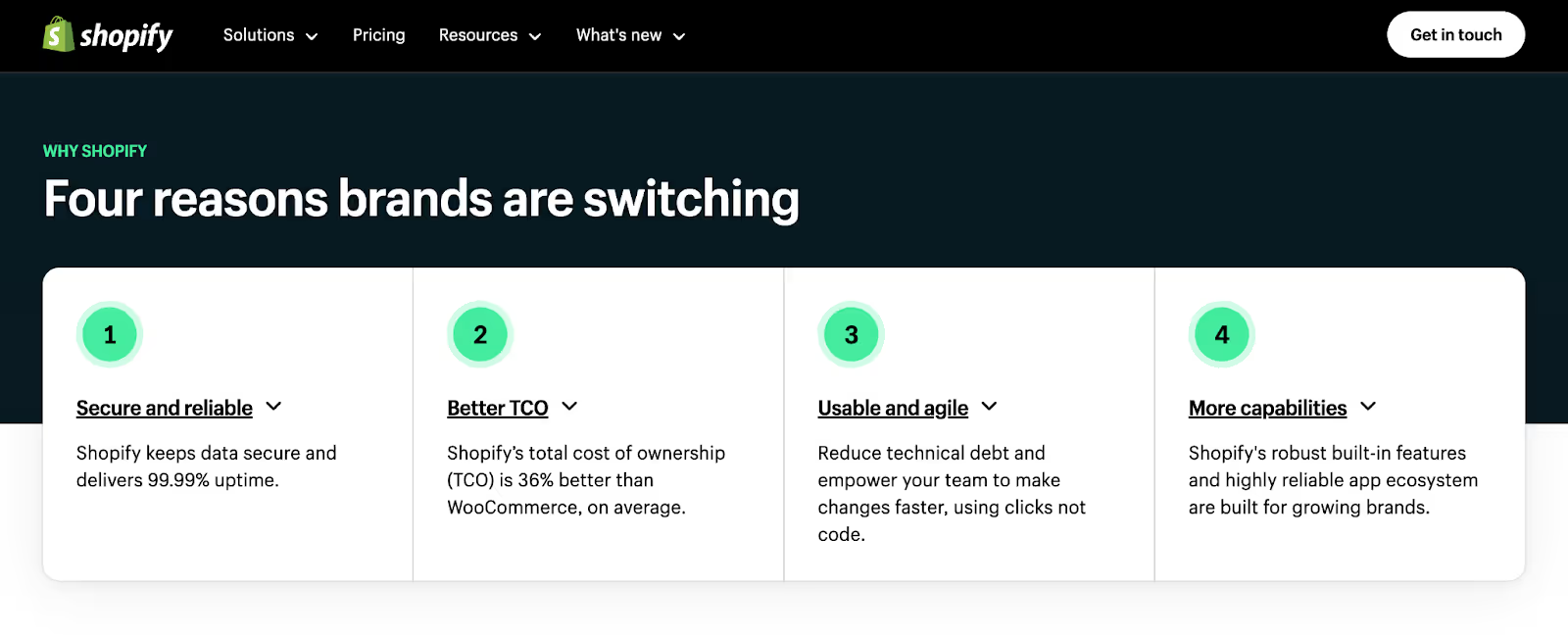
And here, Shopify has created a page comparing them against WooCommerce. The four-column layout allows Shopify to lean into what makes them different:
Tips for writing comparison pages:
- Lean into your product’s strengths, and don’t be afraid to talk about who your product isn’t for.
- Don’t misrepresent your competitors. This can erode trust and lead to cease-and-desist notices.
- Dedicate sections to the features and benefits that you offer and others don’t.
- Feature testimonials and case studies to build social proof. If you can find stories of customers who made the switch from a competitor, even better.
- Back up your claims with data. For example, average server uptime.
Be impartial and focus on attracting your best-fit customers. Demonstrate who you’re for and don’t be afraid to alienate people to attract your best-fit customers.
2. Product pages
Product and landing pages highlight the benefits of your solutions and features. They can also cater to specific audience segments, roles, and industries.
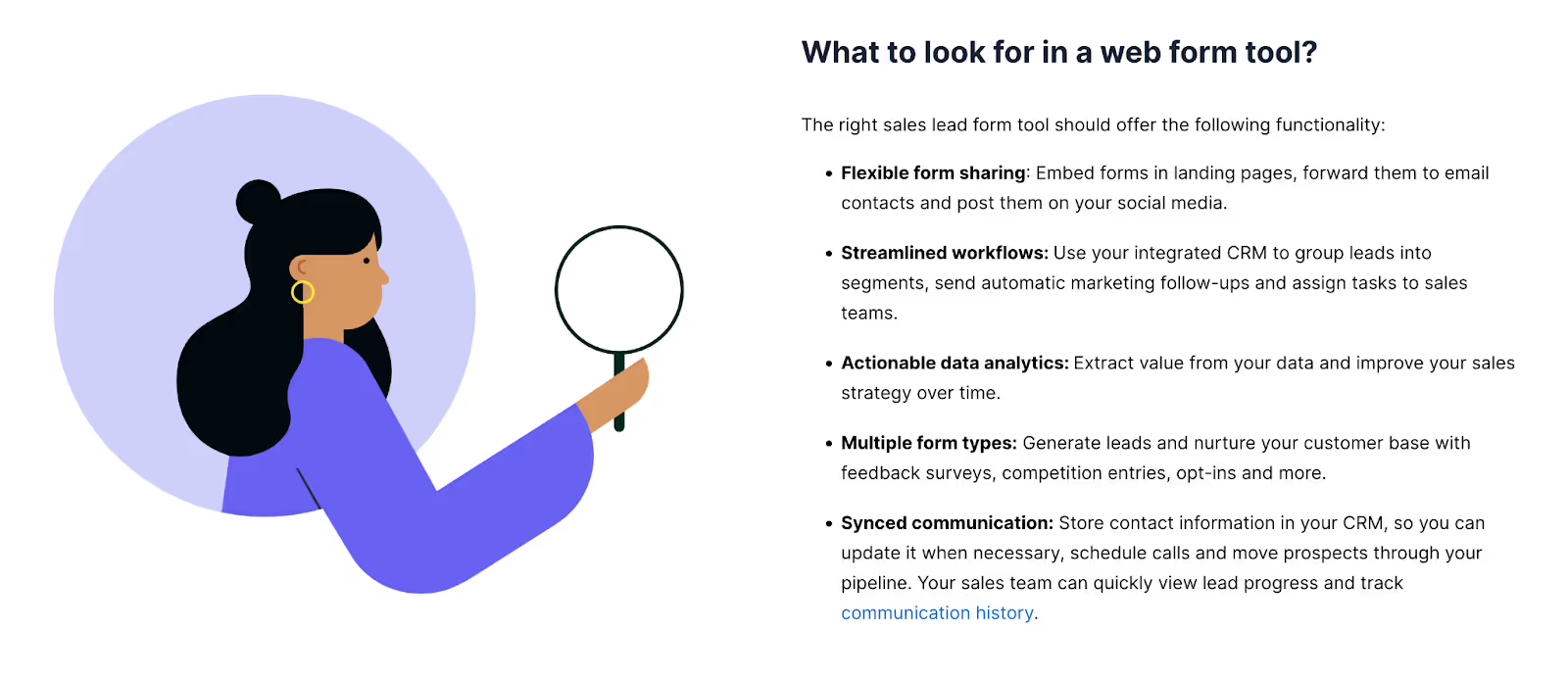
Take this product page we wrote for Pipedrive’s web forms feature (which generates over 400 visitors a month). It focuses on the features that customers care about the most:
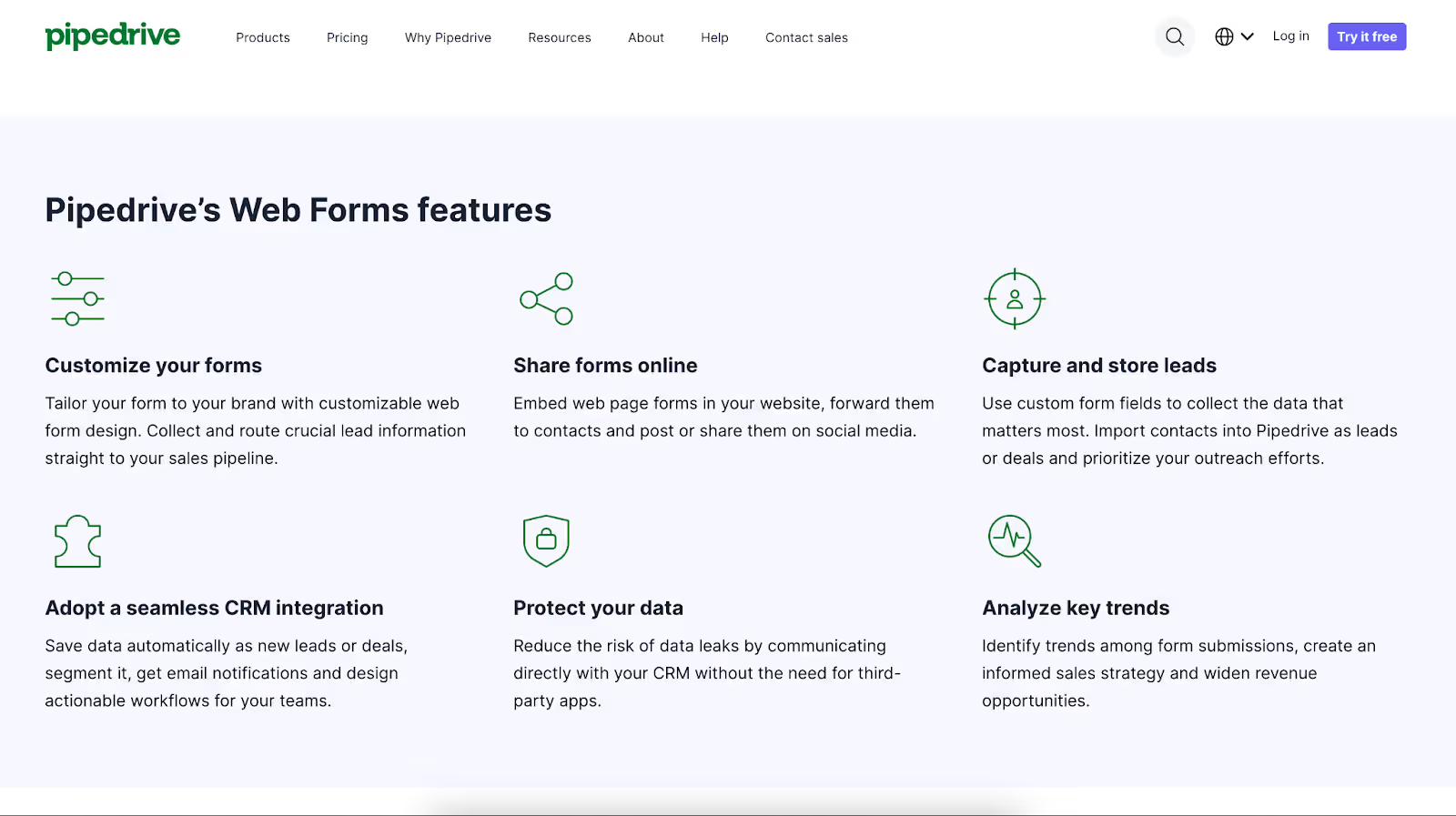
It also shares helpful information on what to look for in a web form tool:
Tips for writing product pages:
- Dedicate full-width sections to the most important features and benefits.
- Edcate users by writing punchy copy using a framework like PAS or SCQA.
- Pair product features with benefits, outcomes, and your customers’ JTBD.
- Clearly state what your features help customers achieve.
- Use grid layouts (e.g. 3x3) to increase the perceived value of your product or features.
- Educate your readers on what the feature is and how to choose one.
- Reduce friction with step-by-step instructions on how to get started.
- Improve visibility by optimizing product pages for SEO.
Optimizing your product pages for search helps you capture new in-market buyers. To date, we’ve helped Pipedrive generate approx.
3. Alternative pages
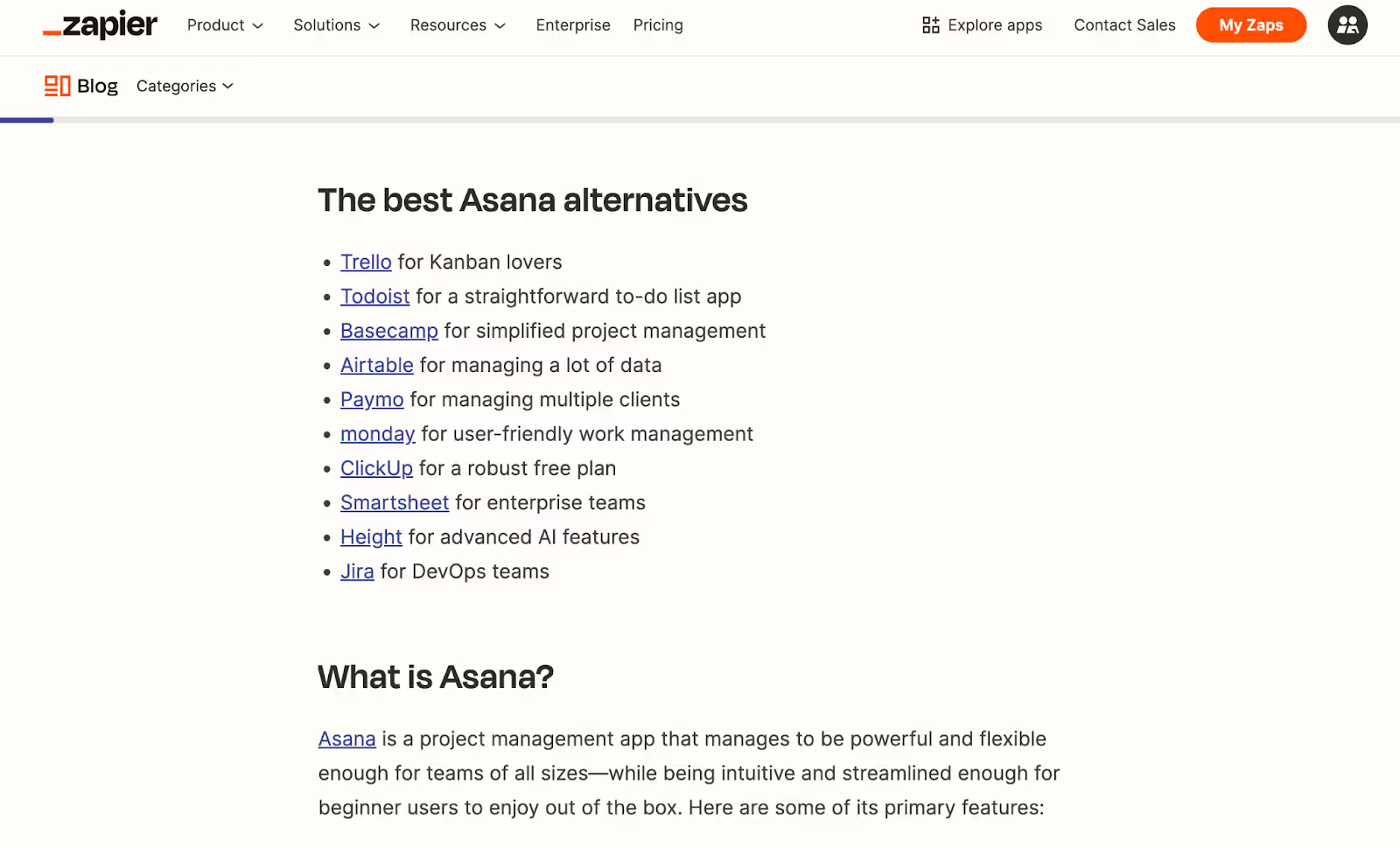
Alternative pages offer lists of similar products to a particular brand.
For example, it's likely someone searching for “asana alternatives” is in the market for project management tools. They might also be an Asana customer looking to switch:
Tips for writing alternative pages:
- State what each tool is best for in subheadings and table of contents.
- Add a table at the top of the page to give readers a summary.
- Include additional content (definitions, how to find the best solution, etc.).
- Give your sections uniformity by including the same elements e.g. pros, cons, pricing, description, etc.
3. Best of
“Best of” pages offer lists of products and solutions in a specific category. The format is similar to alternatives pages, as they offer tools and solutions in a list format.
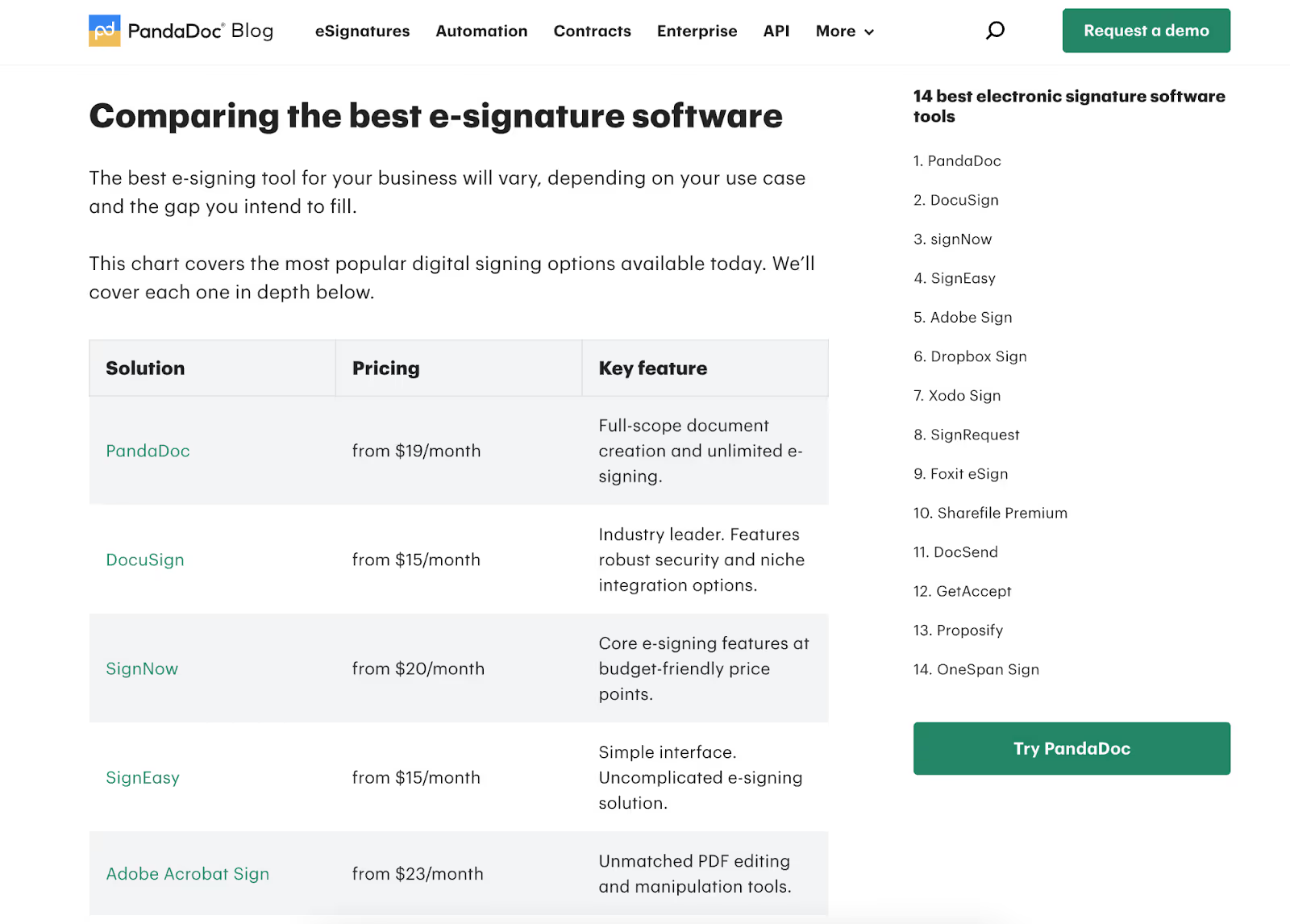
For example, this article from PandaDoc lists the top e-signature software platforms. It uses several of the principles shared with “alternative pages” above:
Tips for writing “best of” pages:
- Feature your product or brand at the top of the list for maximum exposure.
- Don’t be afraid to list your competitors. This will build more trust with users.
- Follow the same principles in the “alternative pages” tips above.
“Best of” pages are once of the best BOFU SEO content assets you can create.
Why? Because it gets your product in front of an audience who are at the early stages of the buying process. Use them to get into their consideration set.
4. Case studies
Case studies share the success stories of your customers. They build trust with your audience while allowing them to learn more from their peers.
At Grizzle, we follow a traditional case study framework:
- Challenge: Share the problem that your customer faced, and why they decided to invest in your brand.
- Solution: The specifics of how your product or solution solved their problems.
- Results: How you helped your customer achieve a specific outcome.
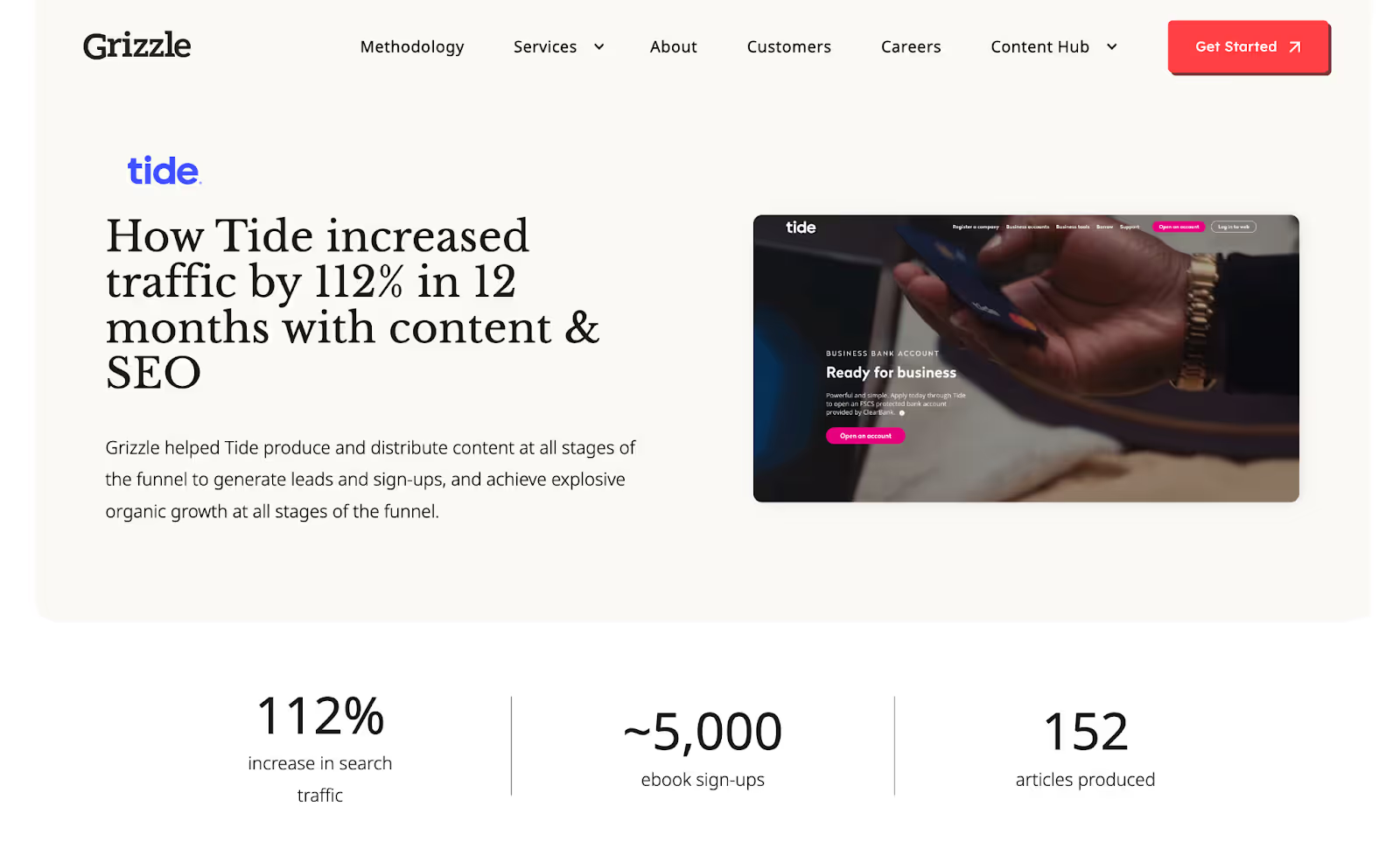
Like this content and SEO case study we produced with Tide:
Tips for writing case studies:
- Feature a snapshot of results at the top of your case study.
- Include industry and business model to build social proof with similar companies.
- Add information that shares how you helped your customers.
- Include imagery and multimedia.
- Featured client quotes throughout the case study.
5. Ebooks
Ebooks are a long–form content format that offer huge amounts of value to readers. They're often used for lead generation in exchange for email and other information.
Despite their reputation, ebooks are still an effective form of content—when done right.
For example, this playbook from Madison Logic offers a system for creating an account-based marketing (ABM) motion:
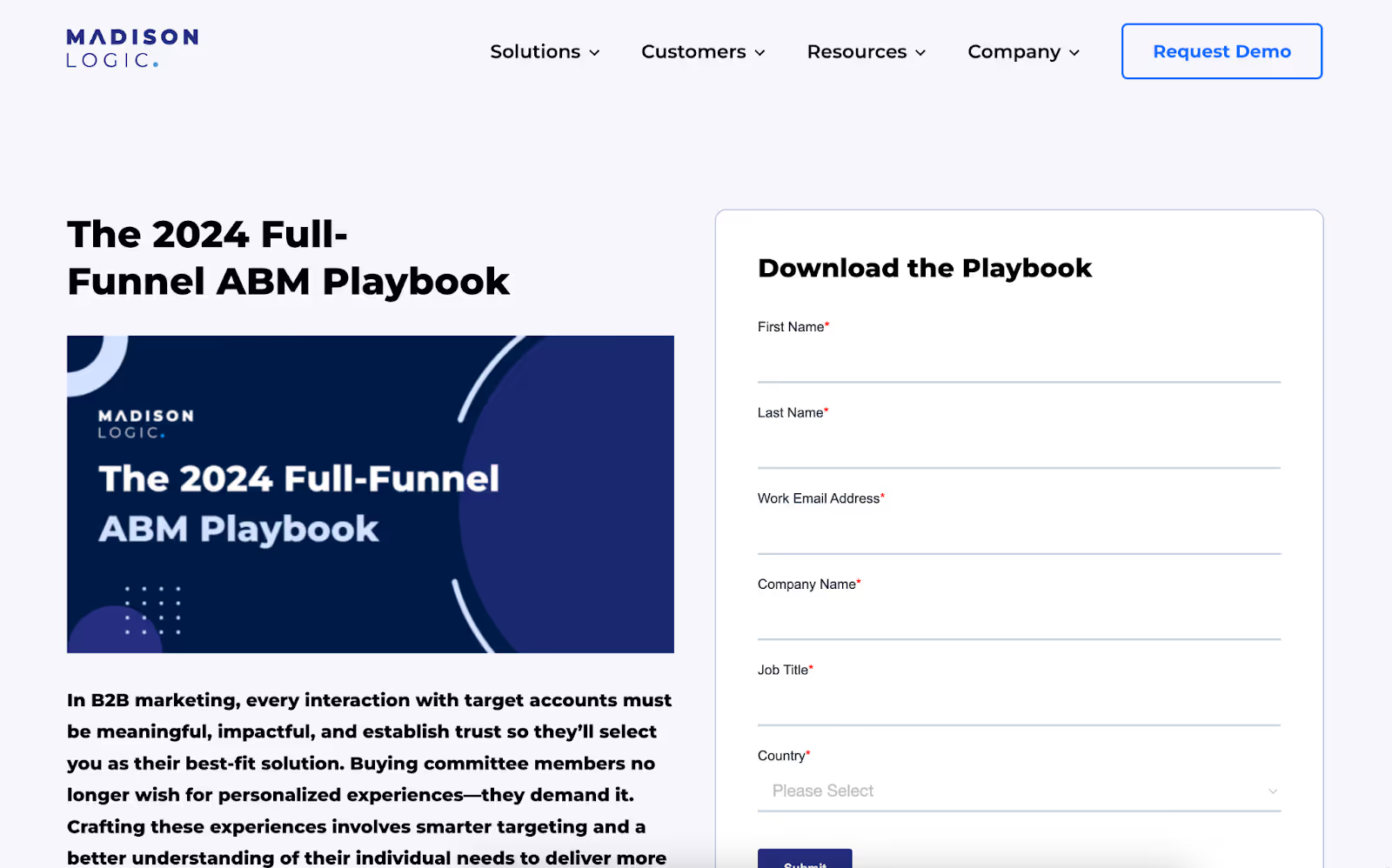
Readers have everything they need to get started with this marketing practice. From strategy and targeting to creating effective ABM content, it reveals the entire system.
Tips for creating ebooks:
- Don’t hold back on value. Give away plenty of guidance, examples, frameworks, and templates to make it worth your audience’s time.
- Make the reading experience delightful with good design.
- Pair your ebook with a high-converting landing page.
- Use email nurture workflows to further educate your audience.
6. Webinars
Webinars are online events where a host shares a presentation with an audience. They can be live, recorded, or evergreen.
Whichever format you choose, your webinars must be educational. And they must be relevant to your product or solution.
For example, this webinar series from Later offers social selling advice from other experts:
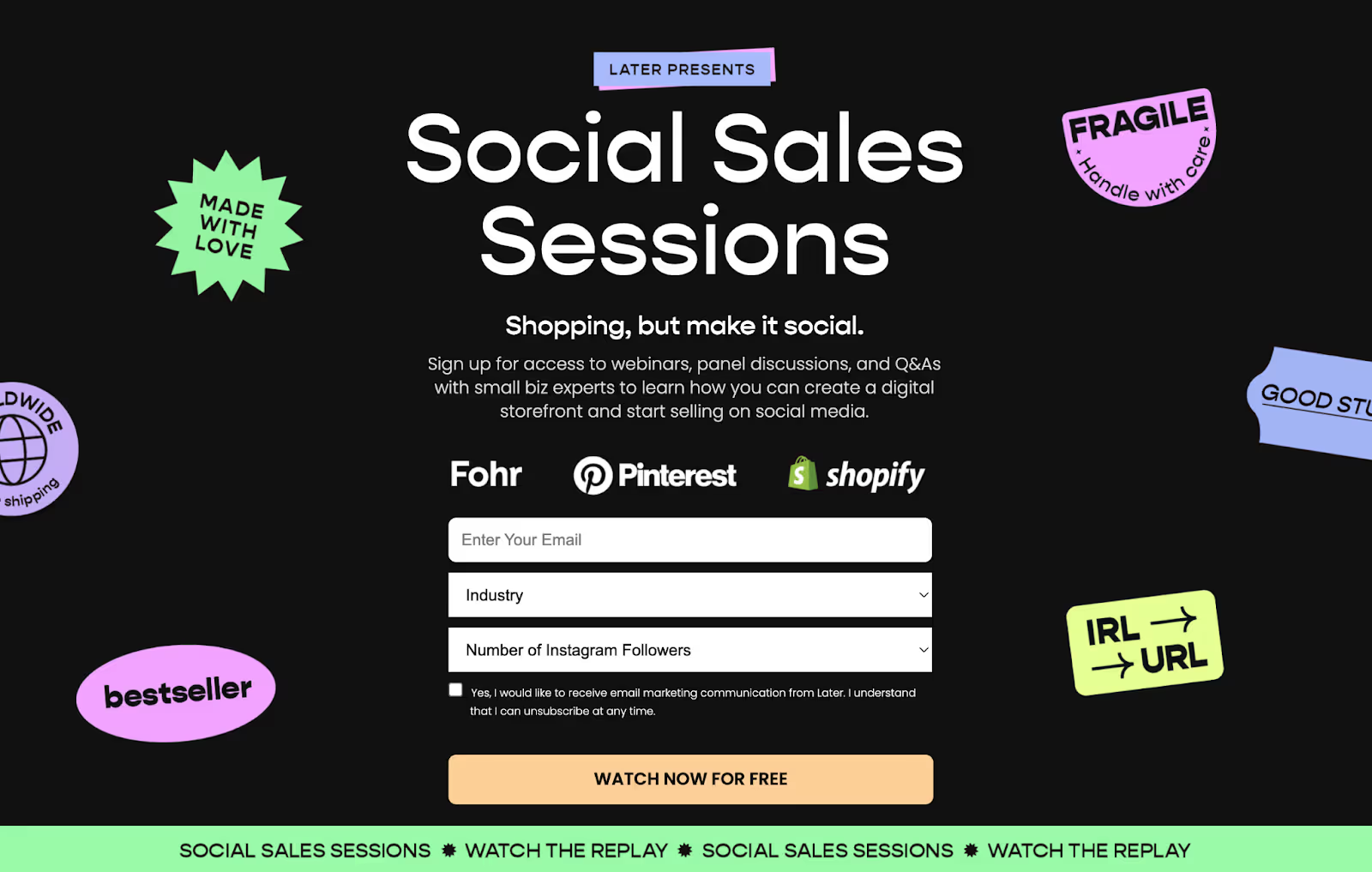
The series dives deep into a specific social selling practice, offering plenty of how-to advice.
Most importantly, many of the webinars teach attendees how to achieve their goals or solve problems using the Later platform. This makes them educational while mentioning features, increasing awareness of Later’s products.
Tips for running webinars:
- Partner with other experts and brands to reach a wider audience.
- Make your webinar a live event and let attendees interact with the host to increase engagement.
- Request questions from the audience before the live event.
- Record the webinar and allow users to access it later in return for their email address.
- Include a call-to-action at the end of your webinar to convert attendees into leads, demos, and users.
7. Explainer videos
Explainer videos are animated or live-action assets that communicate product features and benefits.
Here’s an explainer video we created for SmileBack’s CSAT feature:
It talks about a specific problem faced by SmileBack’s audience of MSPs before sharing the solution.
The video also shares step-by-step instructions on how to get started with the feature. This reduces friction for new users and shows viewers how easy it is to get started.
Tips for creating explainer videos:
- Get specific with the problems you solve. Kick the pain to hook users and keep them engaged.
- Invest in high-quality motion design, voice-over artists, and animation to establish credibility.
- Showcase product features and how they work with motion design.
- Use animation to tell a story and illustrate your points.
Generate more revenue with BOFU content
Bottom-of-funnel content drives customers to trust your business and make purchases.
It satisfies their search intent by positioning your solution as the perfect answer to their problems.
Talk to existing customers, spend time where they hang out, and study your competition.
Build a BOFU content strategy to address those challenges. Feature your product as the natural solution to your customer’s problems and JTBD.

When making SEO a priority, it can be easy to measure up against competitors. As a result, content loses originality. It fails to stand tall and shine in a sea of content playing by the same rules.
Great SEO-driven content should accomplish the following:
- Alleviate the challenges and deliver specific solutions to make your audience happy,
- Deliver value that answers every single question they have, and
- Make Google happy from a data-driven perspective
In this article, we’ll outline the content marketing & SEO methodology we use to help companies get results like this:
- Fintech company: 25% month-on-month increase in search traffic (~10,000 visitors to ~32,000 in 6 months)
- SaaS company: An extra 10,000 organic visitors a month
- Consulting company: 1,185% increase in search traffic in 12 months
🤫 We’ve included anonymized data throughout this article. Want to learn more about what goes on behind the scenes? Get in touch.
A content research methodology to optimize success
Research is what will make or break your content marketing efforts. It’s a delicate balancing act. In order to capture visibility in the SERPs, your content must:
- Target keywords relevant to your audience & brand
- Satisfy the Google monster, and
- Delight your audience, empower them and give them answers
As well as a data-driven approach, your research must also be qualitative. At the very least, your process should uncover the following:
- An understanding of current trends
- Analysis of content competitors and their high-performing articles
- Customer interviews to generate insights
- Need identification (challenges, pain-points, desires, etc.)
- Keyword research
- Funnel mapping (how the content serves the audience)
- Topic ideation
Content competitors are the brands or publications that are attracting the same audience as you. They may not sell competing products, but they are fighting for the attention of your customers.
It’s also one of our favorite places to start with data-driven research. With the right approach (and tools), you can identify upcoming market trends, common audience challenges and uncover keywords you may not have thought of.
But the most important part of content research is understanding your customers.
This means getting on the phone and conducting customer interviews. If there’s friction, start with your sales or customer support teams. They talk to your customers on a daily basis and hear the same questions, objections and pain points regularly.
The insight and data you collect through these approaches is your ideation fuel. Use it to prioritize topics, set content objectives and map them to the funnel.
Funnels, flywheels and spaghetti hoops – the trusty marketing funnel is under scrutiny in today’s marketing landscape. However, funnels are still a useful tool to help you give your audience the information they need, when they need it.
They control the customer journey. But you can still give them the stepping stones that help them navigate it. That’s what a marketing funnel should do.
Some topics may not have a large search demand, and that’s ok. Your content strategy should be fueled by satisfying market needs, not by search data alone.
A process for comprehensive & original content
Once you’ve prioritized your topics, it’s time to plan and produce your content. At Grizzle, we do this using a “Content Framework”, which covers the objective of the content, search data, target audience information and an outline.
In order to create content that ticks all the boxes, we use a planning methodology that defines the high-level strategy of an article as well as the nuances and details it should contain. A macro/micro approach.
Let’s say we’re creating an article on “transcendental meditation”, with the objective to rank for that keyword. As SEO is the main goal here, the macro-level planning would include an opportunity analysis. This should include the following:
- Content Competition: How comprehensive is the existing content? Does it include proprietary assets we don’t have access to? What are the gaps we can fill?
- Backlink Competition: How many referring domains does each piece of competing content have? Is the competition moderate or fierce?
- Content Opportunities: What do we need to do in order to overcome the competition, and create the most valuable piece of content available for our audience.
On a micro-level, consider sub-topics that would make the content original. For example, can you add unique stories, original insights or influencer quotes? There are dozens of ways to inject originality into your content.
Use this same philosophy throughout the content production process. Start by identifying “expansion threads” – areas of your content that can be expanded upon with more granular insights, advice and how-to information. “Value bombs”, as we sometimes like to call them.
To summarize: Macro/micro mapping means taking a high-level approach to what your content must look like in order to succeed, as well as the details that will ultimately make it original.
A data-driven editorial processes
I won’t wax lyrical about the need for polished, high-quality content here. You already know that a solid editorial process is key for a strong content strategy.
Instead, let’s focus on how we use data to help the process. Using data-driven tools and a general understanding of our audience, we’re more likely to create the best content possible.
Clearscope is invaluable for this process. It helps us identify common themes and weave a logical narrative. For example, here are some relevant terms for the keyword “smart casual:”
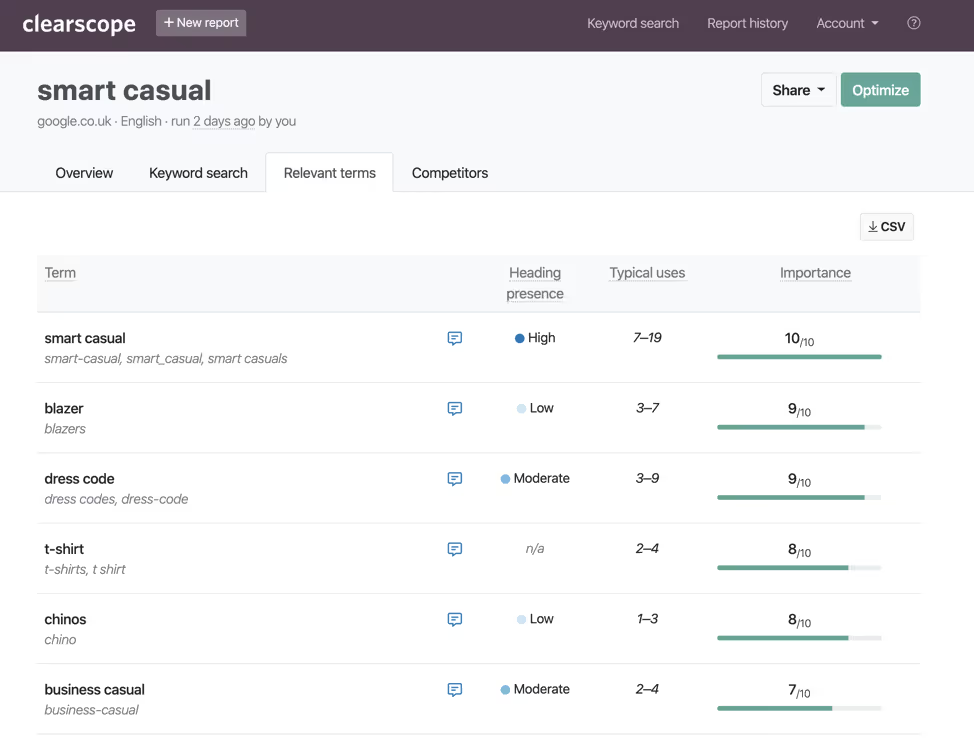
Of course, common sense is required. You can’t simply shoehorn a phrase into your content just to tick a box. Look for how to add an original spin on important terms, and use them as a guide when planning content from a macro/micro perspective.
An 80/20 approach to promotion
When publishing content, many marketers go on a promotion spree, spamming every channel they feel is relevant.
However, for pure-play SEO, you don’t need to go nuts. Select a handful of channels where your audience is active, and promote your content there in a contextual manner.
Why? Because if you did your homework correctly, your content should do the heavy lifting. A handful of promotion channels will help get your content on Google’s radar. As a bonus, it’s likely you’ll attract targeted eyeballs in the first seven days of publishing.
[[component]]
However, for SEO-driven content that relies on a reliable publishing schedule, focus on content quality.
What about link building?
In short: Link building isn’t always necessary. For example, we managed to get this Sales Hacker article ranked #1 without any link building, appearing above the likes of HubSpot for our target keyword:
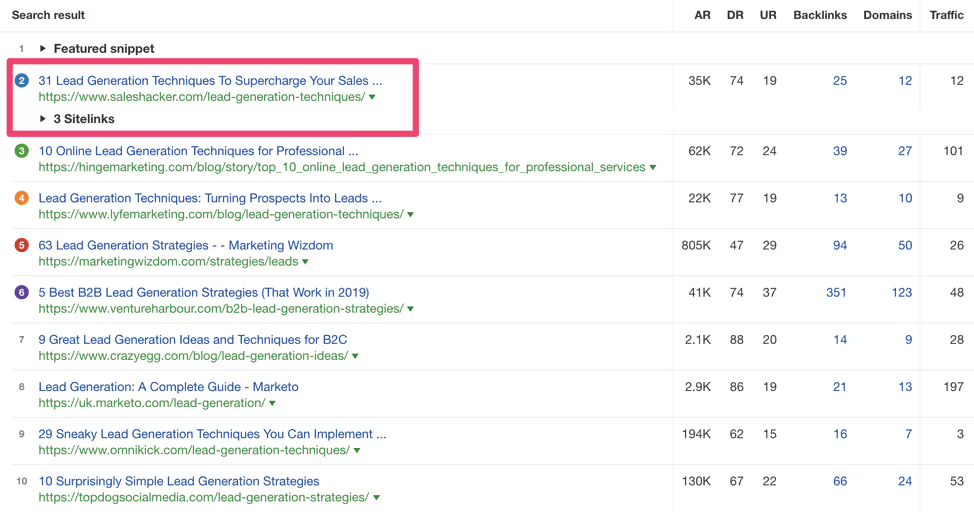
And it’s not an isolated occasion. We recently helped a fintech client rank on page one for a term with over 400,000 monthly searches and a keyword difficulty of 57/100 (according to Ahrefs).
How? Because we committed to creating something 10 times better than the competition. Pick your link building battles and focus on the topics and keywords that need it most.
Conclusion
Getting better SEO results requires the best content. But before you can do that, you need to identify the right topics.
This means understanding your audience’s challenges and needs at all stages of the funnel. Use the funnel as a guide to deliver the right content at the right time.
Ultimately, focus on creating content that delivers long-term nurturing opportunities, while simultaneously catering to visitors who are ready to buy.

When built the right way, B2B influencer relationships can be invaluable.
- They can lead to business development opportunities
- They can help you distribute your owned content to a larger audience
- They provide an opportunity to work on co-marketing projects together
The trouble is, most advice begins and ends with “provide value", which usually comes in the form of sharing content, mentioning them on social, and commenting on their blog posts.
But busy influencers are bombarded with these social notifications and cold emails on a daily basis. What influencers really need help with is getting their message, brand, and story in front of a larger audience.
In this guide, you’ll learn how to build long-term, meaningful relationships with influencers by getting them in front of a wider audience. You’ll learn how to engage with them, create content for other people’s audiences and create win-win scenarios for all involved.
The best bit? You get to create amazing content for a wider audience in the process.
Here’s how.
Identify relevant influencers
Not all influencers are made equal. And those you target will depend on your marketing goals.
For example, if you’re looking to establish co-marketing efforts (e.g. a co-branded eBook) with another non-competing brand, you’ll want to target senior marketers.
Perhaps you’re trying to expand your audience? Then you’ll want to engage with thought leaders who create great content for a large, engaged audience.
You should already have an idea of who you want to connect with. But you might also be looking for other opportunities outside of your “frame of reference.”
Here are some techniques to identify the best thought leaders in your space.
1. Use BuzzSumo for data-driven validation
Influencers are already sharing great content. You just need to find it.
BuzzSumo is just the tool for this job. With it, we can identify top-performing content and the influencers who shared it.
Let’s say we want to engage with influencers interested in chatbots. Type a keyword (e.g. “chatbot marketing”) into BuzzSumo and look at the top results:
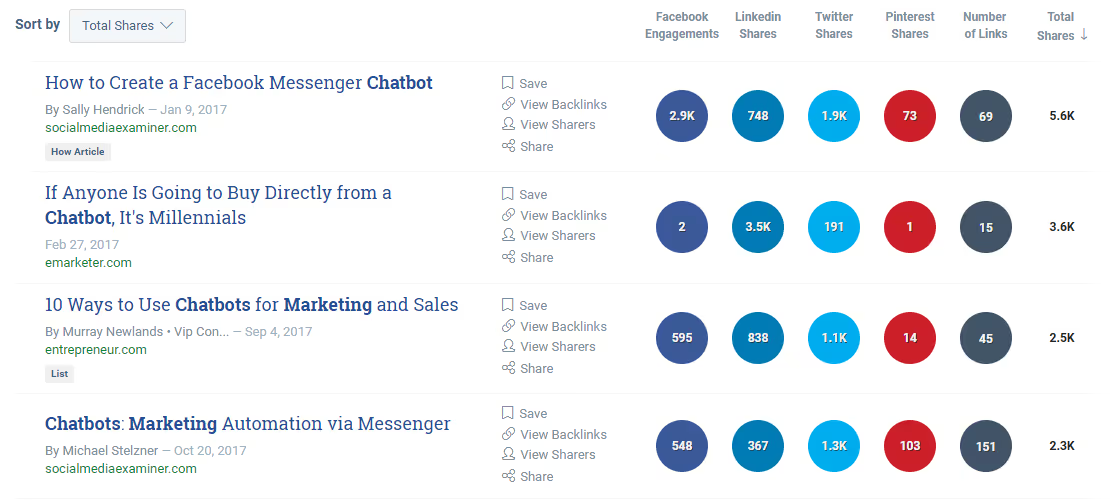
Click on “View Sharers.” You’ll be taken to list of Twitter users who shared this content:
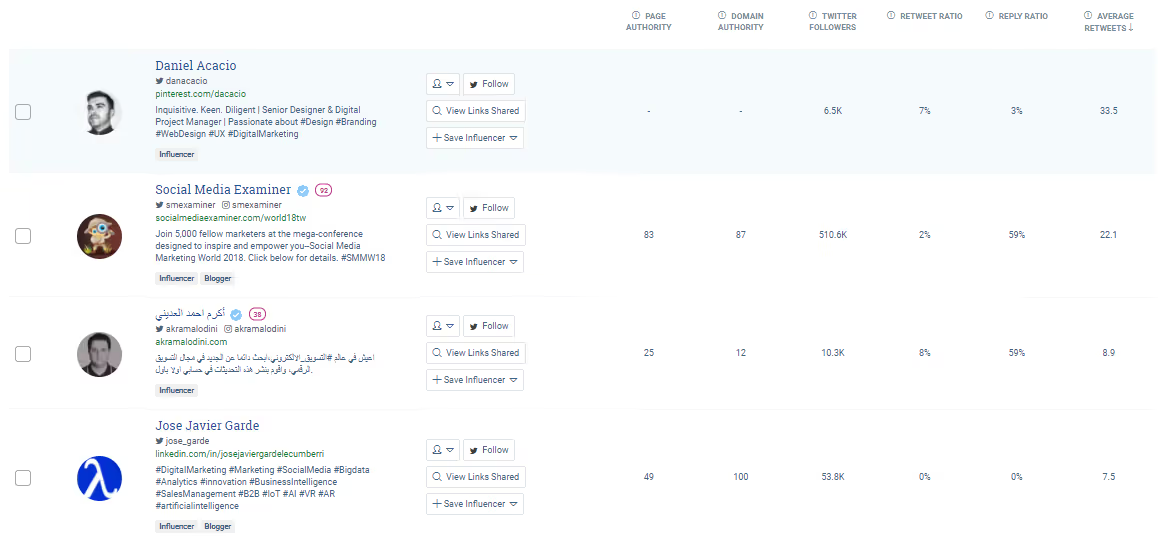
If you’re on the free version of BuzzSumo, order the list by Twitter Followers and identify individuals who would be a good fit.
For those on the premium version, we can download a CSV and perform some data wrangling. Click the “Export” button at the top right of the list and select “CSV.”
In Excel or Google Sheets, filter the data as follows:
- num_followers: > 5,000
- person_type: deselect any with [company]
- num_followers: order by largest to smallest
- Place name, URL and bio columns together (you may need to paste filtered data into a new spreadsheet to do this)
Moving these columns together makes it easy to sort through the list. You want to find users that have authority beyond the size of their followers.
Phrases such as “author,” “CEO” and “founder” are all indicators of legitimate influencers. Ignore users with their Pinterest or Facebook profiles listed.
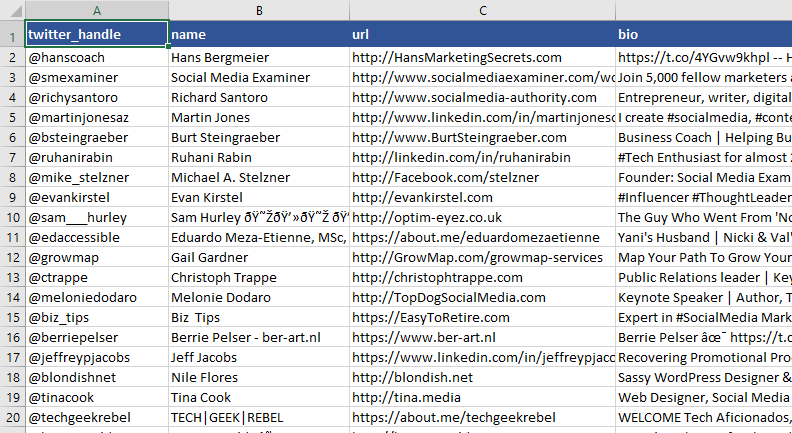
Add these to your list of target influencers.
2. Find Popular Brands to Partner With
When we think of influencers in the B2B space, we often think of bloggers, authors, and thought leaders.
While there’s some overlap, we often overlook “organizational leaders” – the senior decision makers and movers and shakers who work for other brands.
There are several benefits to strategic partnerships like these:
- They can help you reach a larger audience
- You can establish a partnerships to promote your content to each other’s audience
- You can create co-branded content
For the sake of this guide, we’re going to focus on co-branded content.
So, what exactly is co-branded content?
Co-branded content is a long-form asset (usually an eBook, report or webinar) co-authored by two (or more) brands. It helps increase the awareness and authority of both brands while generating qualified leads.
When starting up his agency, KlientBoost, Jonathan Dane decided to sacrifice “owned” content for partnerships. He identified software companies with access to his ideal clients and created co-branded eBooks with them:
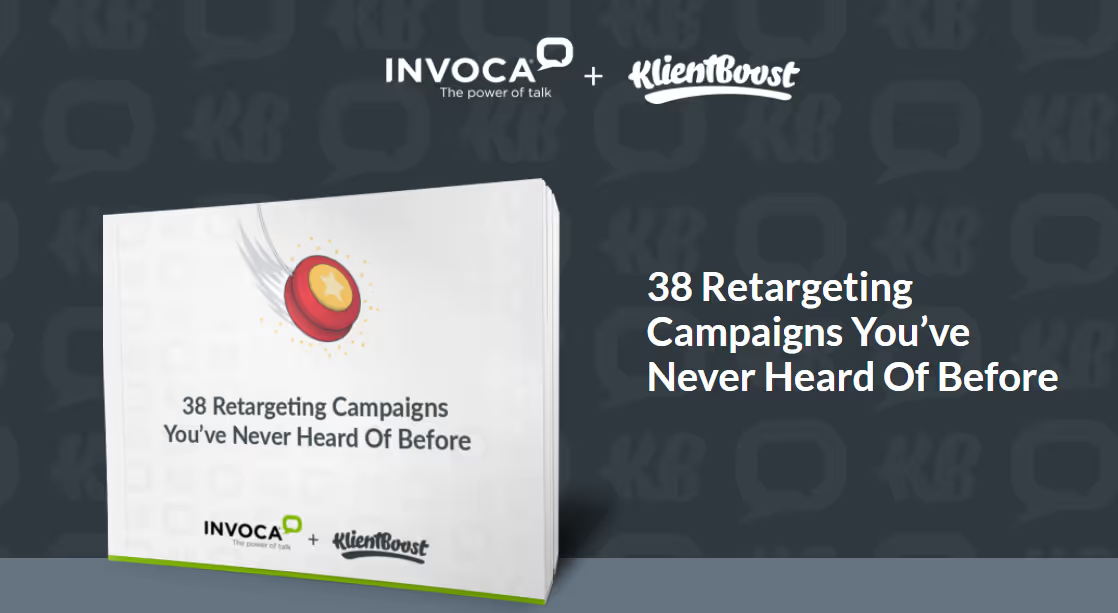
As a result, KlientBoost grew from nothing to $1 million in revenue within a year. That’s the power of other people’s audiences.
Find brands using the BuzzSumo technique above. This time, include companies in your search. Look for influencers who have their company and job title in the bio.
LinkedIn is another great place to find potential partners. Using the advanced search features, you can find individuals within companies who would make great partners:
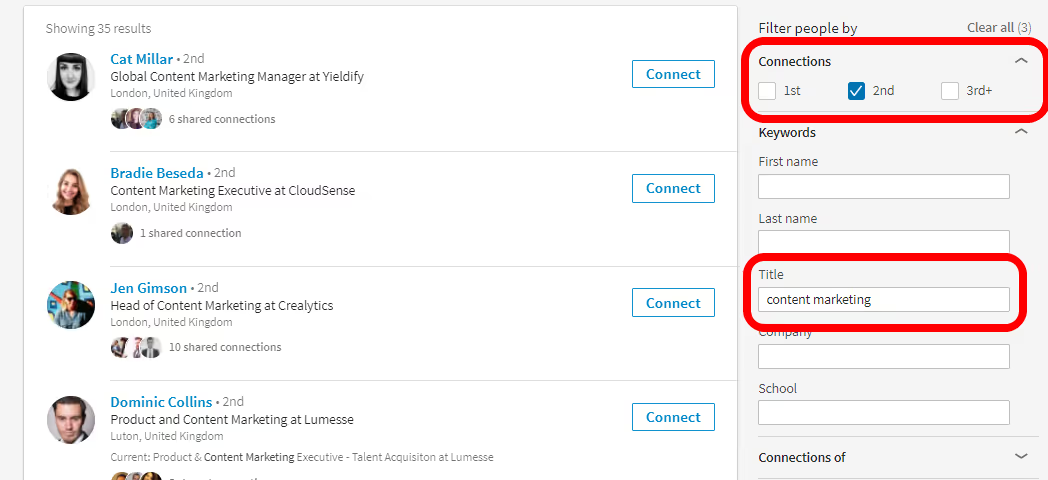
Tracking influencer activity & metrics
When identifying target influencers, you must keep track of the right metrics, activities and contact information.
This information includes any engagement touchpoints, as well as audience metrics.
Let’s break down the kind of information you should be collecting:
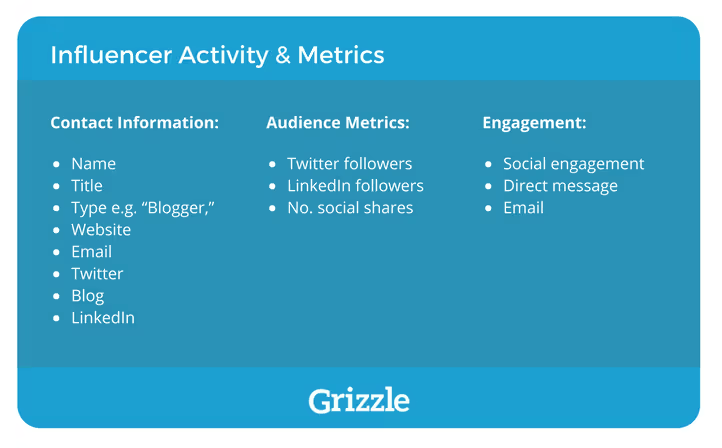
Social engagement can include likes, shares, and Tweets. But you need to get into the interview phase as quickly as possible.
As you’re aiming to add value through content, you should see a generous response rate during the outreach phase. We’ll cover influencer engagement in step 3.
Step 2: Creating Insanely Valuable Influencer Content
Once you’ve created a list of influencer targets, you’ll need a topic that brings them together.
There are two ways you can do this. The first is to make them the central focus of your content.
This is exactly what I did when writing a guest post for CrazyEgg, titled “7 Side Projects That Became Marketing Engines.” I reached out to marketers at the organizations featured, asking questions to get insights on their experiences on those projects.
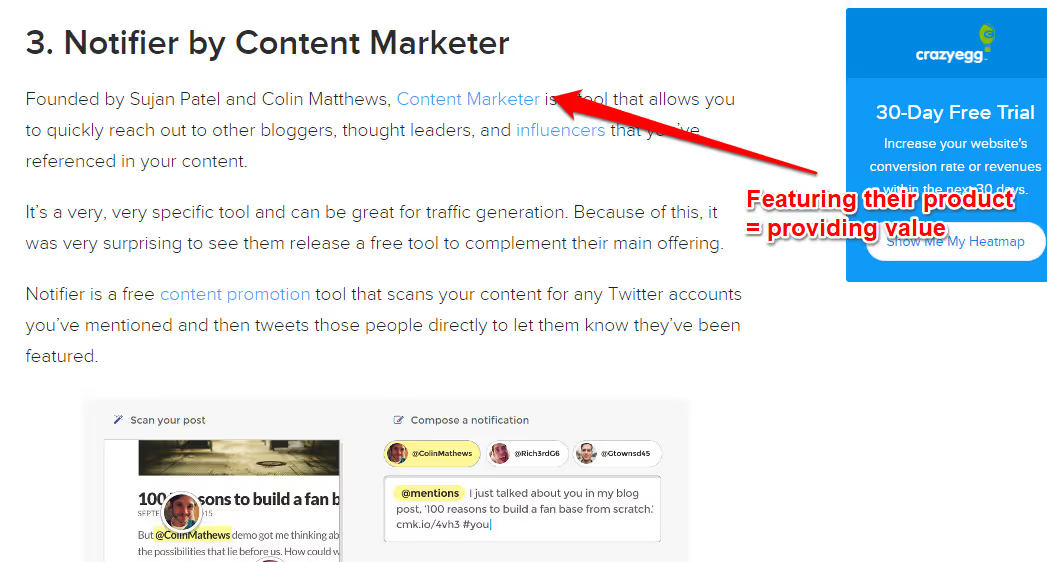
The second approach is to find a common theme that links your content to your target influencers.
Let’s say you’re writing a piece on content distribution, and you want to connect with CMOs at technology companies. The approach would look like this:
- Position your article as a content distribution guide for SaaS companies
- Identify 10 to 20 CMOs with access to your audience/work at target accounts
- Interview them about their distribution strategy, predictions, and results from their efforts
Finally, you can dedicate an entire piece of content about a single target influencer. This approach is especially effective if the influencer conquered a challenge that your offer solves.
Here’s an example of this in action on the Fieldbloom blog:
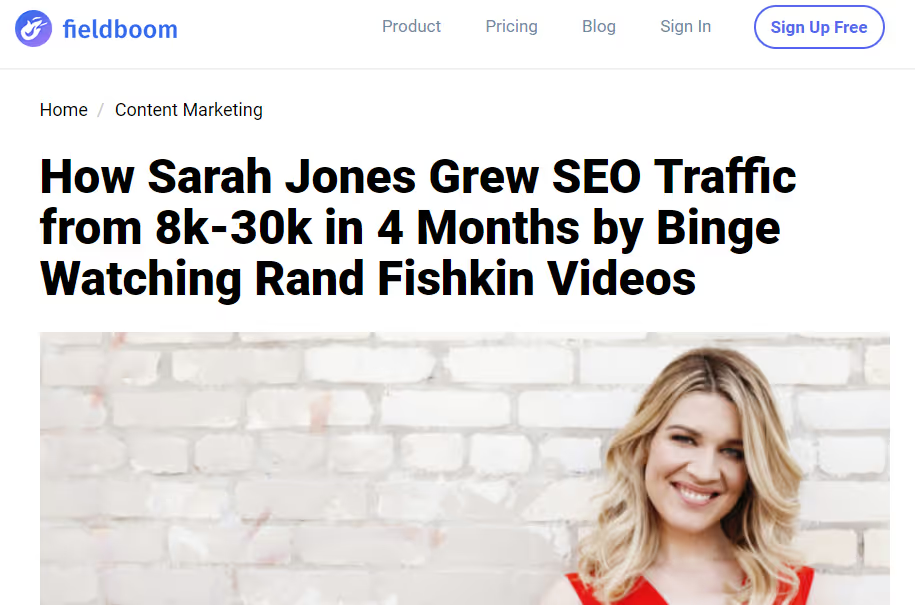
As you can see, the article positions Sarah Jones front-and-center. The result is a thorough and actionable case study that exposes Sarah to a wider audience.
Here’s a simple formula you can use to come up with story-driven articles:
“How [INFLUENCER/BRAND] Grew/Generated/Reduced [PROBLEM] [QUANT] in [TIMEFRAME] by [ACTION]”
Let’s break each element down:
- Influencer/Brand: The individual or organization you’re featuring
- Problem: The challenge they solved or the results they generated
- Quant: Provide specific numbers on the results
- Timeframe: How long did it take them to achieve this?
- Action: How they got those results. This is the topic of the article
From here, you need to create a killer piece of content. Whichever format you choose, it must be actionable and practical.
Take the insights generated from your conversations and provide actionable takeaways for the reader. You’ll learn how to do this in step 4.
Step 3: Influencer Engagement They Can’t Ignore
The most difficult step to influencer engagement is “getting past the noise.”
Here’s the good news:
The methodology outlined in this guide is designed to cut right through it.
Getting an influencer featured in industry and business publications is a sure-fire way to grab their attention.
The best method to reach out will depend on each target influencer. And to make matters worse, once GDPR ruins everything in May this year, you may want to diversify away from email.
Regardless, here’s how to reach out to B2B influencers and begin the relationship.
Pre-Engagement for Familiarity
While not always necessary, you can get on an influencers’ radar before reaching out.
Let’s look at some common methods of building familiarity.
Yes, I’m aware a “poo-pooed” these at the beginning of this guide. But these techniques are designed to nurture, not as a way of pretending to give superficial “value.”
- Comment: If they’re publishing content, add meaningful comments. By meaningful, I mean useful. Don’t just say “Nice post!” Ask questions, add your “two cents” and inspire debate.
- Social Engagement: Respond to their posts on Twitter, Facebook, and LinkedIn. Go beyond “likes” and get involved in the discussion. Tweet at them, comment on their posts and mention their name when sharing their content.
- Communities: Find the forums and groups they’re active in and get involved. You can do this directly or indirectly. Indirectly means contributing to the entire community.
These are just a few easy methods of getting on an influencer’s radar. The underlying principle is a simple one:
Go where your influencers are and start a conversation with them.
Influencer Email Outreach
If you can find the right email address, this form of outreach is often the most effective.
I’m not going to share any templates. They can quickly saturate and ruin an approach. Instead, here’s a framework you can follow to write your own:
- Personalized Opener: The expectations on personalization moved on long ago. “First name” variables no longer count as “personalization.” Instead, reference conversations and content where your paths have crossed.
- Get to the point: State why you’re reaching out, and why it’s relevant to them.
- Take the lead: The responsibility must be on you. Whether you’re guest blogging or creating co-branded content, you should be the one taking care of the heavy lifting. Make this clear to them and working with you will be a no-brainer.
- Soft CTA: Your call-to-action shouldn’t be assumptive or pushy. Simply ask them if they’re interested in collaborating.
[[component]]
If you’re reaching out to executives within an organization, Elucify is a great lookup tool for professional details and email addresses.
Social Engagement
Use the following approaches if you’re unsure of the legal aspects of cold outreach. This is a hurdle will affect many of us thanks to GDPR in 2018 and beyond.
Start with Twitter. Send a DM if your target influencer follows you. Use the same principles laid out for email outreach above.
If they don’t follow you, then you’ll have to tweet @ them. You have less room to make a case here, but 240 characters should be enough.
Get to the point quickly. “Hey @username, I’m writing a piece on TOPIC for PUBLICATION and wanted to get your thoughts on CHALLENGE THEY OVERCAME. Can I DM or email you?”
Alternatively, there’s LinkedIn. When connecting with your target influencer, add a personal note to state the intention. A note will increase the accept rate on your connection requests.
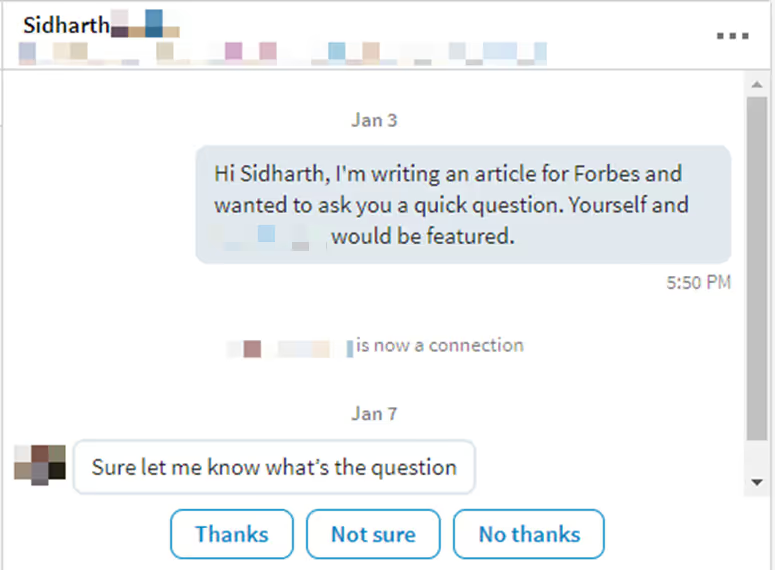
(Details blurred out for privacy)
What if influencers don’t respond? Try again on another channel, and keep following up until you get a “yes” or a “no.” Persistence is key, especially if you believe you’re adding real value.
Step 4: Influencer Interviews For Awesome Insights
So, you’ve established a relationship, and you’re ready to create content or establish a partnership.
Influencer interviews are the final step. Here, you’ll learn how to set up these discussions, the right questions to ask and how to turn their insight into content.
1. Digital Interviews
Some influencers just don’t have the time to chat with you on the phone. Deal with it and interview via digital channels.
I took this approach when creating the CrazyEgg post mentioned earlier. In fact, I conducted an entire interview with Sujan Patel on Twitter:
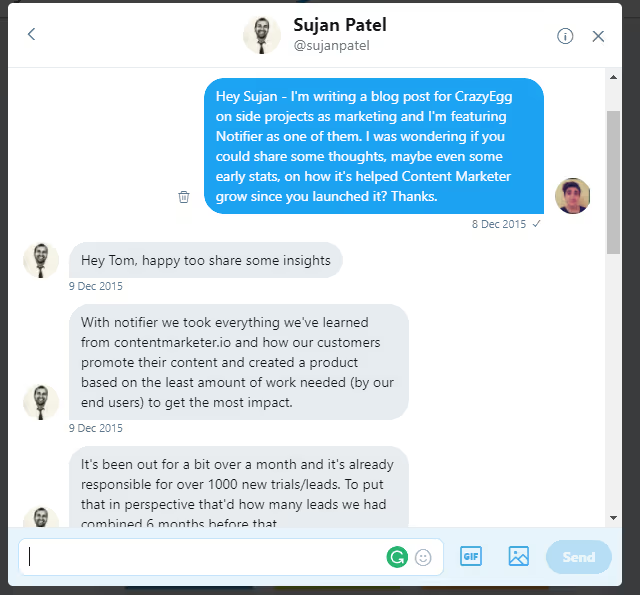
Just like any other interview, you can then dig deeper into their responses to understand the larger impact and thought processes behind these strategies.
Don’t let them drag on too long. Try and limit to three to five exchanges. Otherwise, you’ll see response rates drop.
2. Phone Interviews
Interviewing over the phone is the preferred approach for two reasons:
- You can dig deeper into responses while getting honest, raw insights on their motivations, needs, and experiences.
- It’s much easier to build rapport and lay the foundations for strong, long-term relationships.
When asking influencers for the interview, give them the option to talk on the phone or via email, Twitter, or LinkedIn.
What should you ask them when you have them on the phone? Here’s a framework I’ve borrowed from customer development frameworks.
- Really, really listen: Don’t wait your turn to respond. Instead, soak up everything influencers have to say. Learning to listen will help you use the next principle.
- Be open: Avoid scripts at all costs. Instead, ask questions that probe and dig deep into their answers. Allow yourself to be flexible depending on their response.
- Don’t lead: Avoid questions that imply an answer. E.g. “What impact did your side project have on lead generation?” vs. “How did this side project impact your business?” You’ll get more insights this way.
- Make friends: People do business with people they like. Spend one or two minutes at the beginning of the call to learn more about what they’re up to, but get to the point quickly.
Go in with three or four open-ended questions. Let their responses drive the rest of your questions. Get an understanding of the true impact their experiences and results had in their business or career.
Turning Influencer Insight into Content
You’ve conducted the interviews, and you have pages of notes. It’s time to turn that insight into content.
Your content must be actionable and practical. Whether it’s a guest post, webinar or podcast interview. The reader/listener should be able to execute on what you teach.
A good litmus test is to ask yourself “does this thoroughly guide me through the solution?” If the answer is no, add more detail to your content.
The introduction should outline the challenge, pain or complication in the market. What’s the problem that your content is about to solve?
One way to boost credibility here is to include third party data and statistics. Cite them when backing up your points throughout the entire piece of content.
Influencer insight will allow you to tell a story. What was the challenge, and why was this such a pressing problem for them and their business? How did they overcome these challenges?
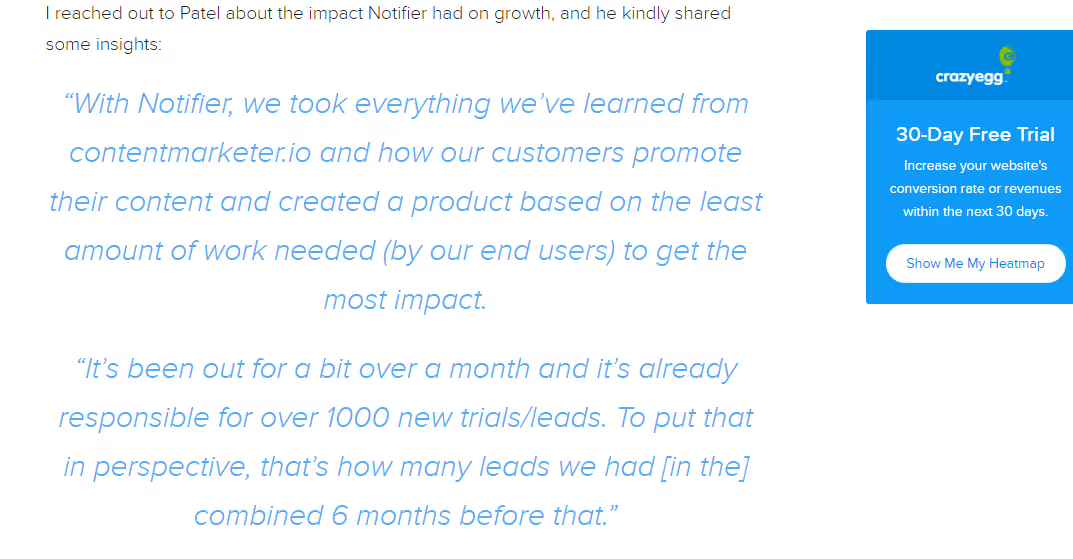
Then, it’s time to drive practical value. Extract takeaway lessons from your influencer’s story. Provide actionable steps with examples, screenshots, and instructions on how your audience can do the same.
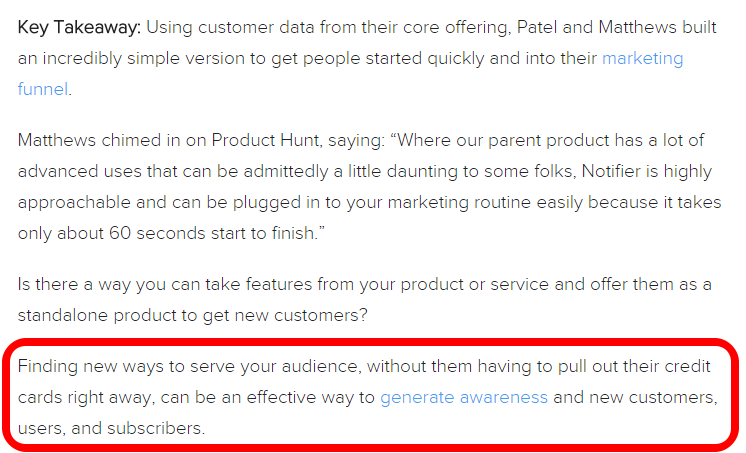
Include as many quotes, statistics, examples, and images as possible. These ramp up the perceived value of your content, leading to more shares, traffic and, most importantly, leads.
Conclusion
This methodology is designed to work across all platforms and content formats.
Looking for interview opportunities on podcasts? Need examples for an upcoming webinar? Influencer interviews will help with that.
The importance is that you’re adding value to all three parties:
- The creators or editors for the platform/publication your content will feature in
- The influencer you’re engaging with
- You and your business
Drive as much value to all three, and you’ll see your audience expand rapidly.

Your content brief is the roadmap that paves the way for high-quality content.
Without a solid brief, you’re likely to produce content that fails to meet expectations. A good brief connects your strategy and traffic goals with expertise and audience needs.
After collaborating with dozens of clients, content marketers, and writers, we’ve found the best approach to removing production headaches is a strong angle, detailed outline, and collaboration at the brief stage.
Your audience, why this topic matters to them, and how you’ll inject your expertise should be crystal clear for every stakeholder.
This article will detail the process and components of a content brief that drives high performing blog posts, landing pages, and more.
Content positioning
Content marketing is suffering from a case of “blind leading the blind.” For SEO-driven content, research often starts and ends by reverse engineering the SERPs.
Reverse engineering Google is critical for search. However, it will hurt your credibility if used as your only research method. Copying other articles “because they rank” is symptomatic of a lack of subject matter expertise. Your buyers can smell it a mile off.
Solid research is the bedrock of a great content brief. Conducting SME interviews, taking inventory of your own experiences, and diving into the rabbit hole of a topic is critical when writing for skeptical and experienced audiences.
But let’s assume you’ve acquired this expertise and done your research. It’s time to create a content brief, but where to start?
There are two key steps that must be followed when beginning the content brief creation process:
- Analyzing the competition to see what they’re doing right, what they get wrong, and gaps they’re leaving open.
- Establishing a unique angle that will ensure your content stands out—no matter which channel you prioritize it for.
These two elements are the most effective ingredients to establish a strong position in the market. One will give you the data to make creative decisions, while the other will help you stand out.
This is what we call “content positioning.”
Content positioning means treating your content like a product, differentiating it in a competitive marketplace, and helping your ICP solve their jobs-to-be-done (JTBD).
How to find an angle that outperforms the competition
Content positioning requires an understanding of the value other articles are offering and how they’re currently getting attention.
To identify competitive gaps, you must first understand what you’re up against. There are three approaches to competitive content analysis:
- Content quality: What’s the overall quality of other articles? Do they lack value? Are they repeating the same conventionally held (yet incorrect) beliefs as everyone else? It’s often possible to outcompete on quality alone or by focusing on a hub-and-spoke strategy to build topical authority.
- Brand equity: Are you up against a number of industry incumbents? Do they have a monopoly on the topic, or are they dipping their toes in? This is a reality that should inform your overall content strategy, not just your brief. For example, a project management brand like Asana writing a one-off article on “remote working” is unlikely to have much authority on the topic.
- Distribution landscape: For SEO-driven content, how hard would it be to rank based on the number of backlinks other articles have earned? What’s the keyword difficulty for your primary term (as well as the average across your entire keyword cluster)?
Your findings will inform how you approach the production and distribution of your content. For example, you may find a top competing article from a startup has lots of backlinks, but is poorly written and contains little utility. This is a prime opportunity to outcompete by creating more authoritative and value-driven content.
Competitive analysis will help you inform your content positioning and create original blog articles. Here are three practical ways to apply your findings:
1. Finding unique angles for search
Too many content marketers continue to create content by reverse-engineering and emulating the SERPs. But this presents a deeper issue, as content begins to look the same and, over time, erodes the user experience.
While aligning content with search intent is critical for organic growth, it mustn't be followed blindly. Use the SERPs to evaluate competing content and identify gaps that you can fill.
For example, when writing an article on CRM technology, you might find that nobody covers how to evaluate and choose the right platform. Instead, everyone focuses on definitions, benefits, features, and the like.
In this scenario, you could include an entire section that teaches readers a process for evaluating CRM vendors. This creates a temporary moat around your content and provides the reader with more value in the form of practical next steps in their vendor research.
2. Communicating credibility and authority
Marketers often make lofty claims with no data or proof to back them up. This provides you with an opportunity to build a more credible and original piece of content.
Building authority is more than writing in the language of your audience. It means collecting or leveraging experience and expertise on a topic.
For example, if you’re writing for a senior marketing audience on ICP research, you’d ideally seek input from an expert that has experience conducting countless customer interviews.
Using your audience’s language will generate more engagement. But to build trust, don't just emulate their words, speak their mind. Reflect back what they're thinking but nobody else is saying out loud. This will build deeper emotional resonance and connections. These insights can only be gleaned from someone your reader would consider a peer.
3. Be controversial
In marketing, zigging while everyone is zagging can be all you need to differentiate yourself.
Rand Fishkin, founder of SparkToro, did this when a customer asked for advice on cold outreach. After searching Google, he found the SERPs contained repetitive and outdated advice:
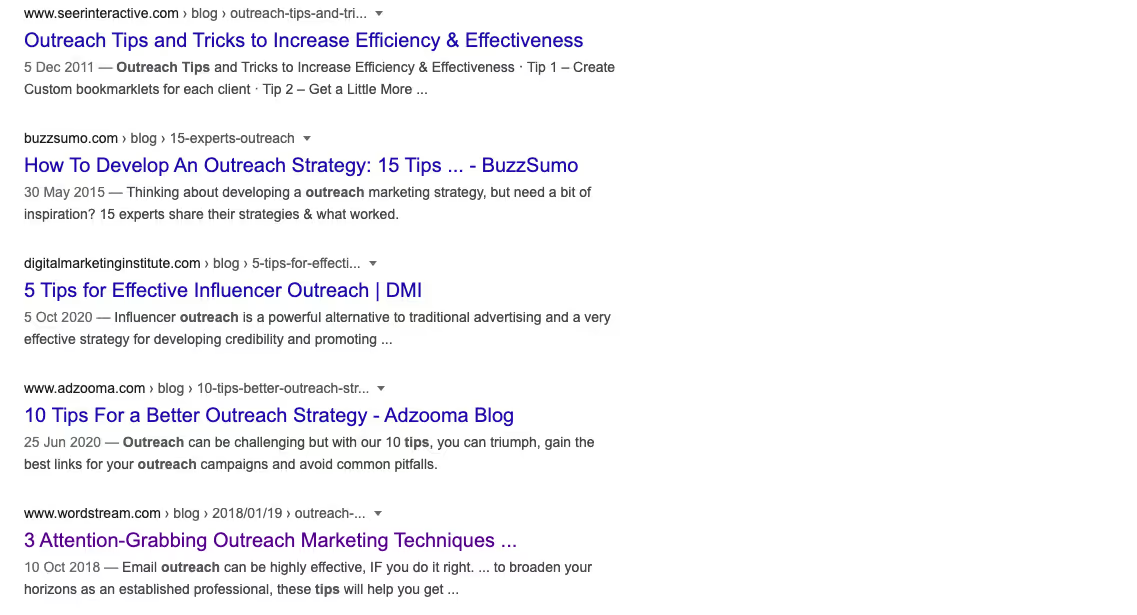
So he decided to write an article on the topic to call out these outdated practices, titled “Outreach Tips (better than anything you’ll find searching Google):”

He opens up with a controversial introduction before moving on to a subsection that promises the reader eight tips they won’t find anywhere else.
This article is one of the most commented on the SparkToro blog and ranks below the featured snippet for the term “outreach tips:”
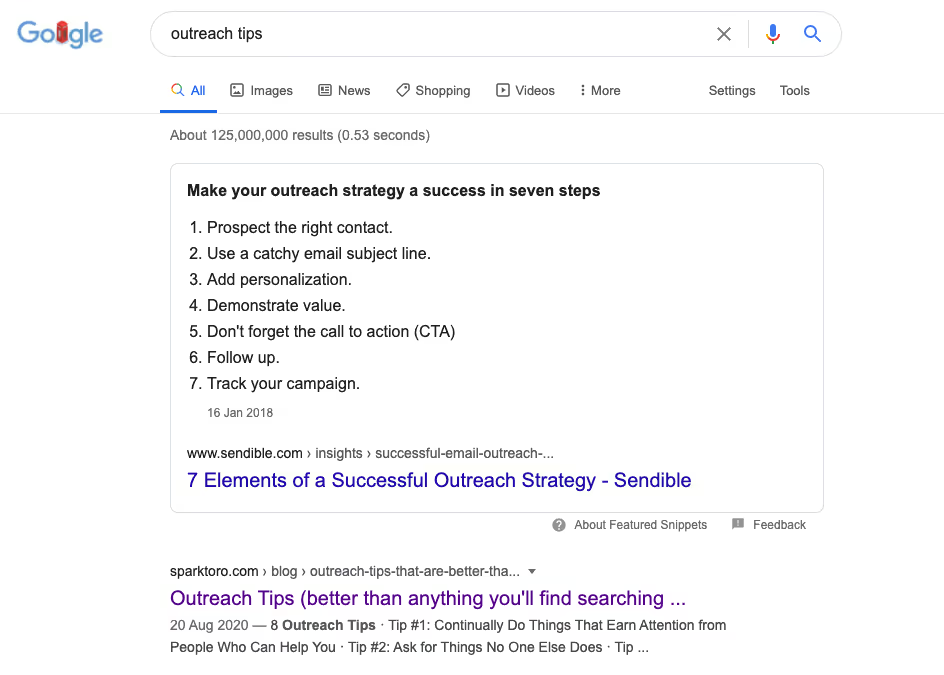
[[component]]
When a seasoned marketer or salesperson next searches for cold outreach tips, which result do you think will stand out in the SERPs? We’d hazard a guess that Rand’s article gets the lion's share of clicks.
A controversial angle breaks the mold and grabs attention in a sea of sameness. Allow your content to stand out by framing it around earned, accurate, and proven advice.
Building an outline using data & creativity
A good outline creates context around your content and communicates the narrative to other stakeholders involved in the production process.
Including a clear objective will keep everyone aligned on outcomes and avoid the problem of “too many cooks in the kitchen.”
Let’s say you’re a SaaS startup and your primary goal is “generating organic traffic with high buying intent.” In this scenario, your article should sit within the sweet-spot of these three areas:
- Algorithm: What themes, questions, and sections has Google deemed important for the user to fulfill search intent?
- Audience: What are your customers hungry for and what gaps are competitors leaving unfulfilled?
- Product: How will your content align with your value proposition, solution, or product?
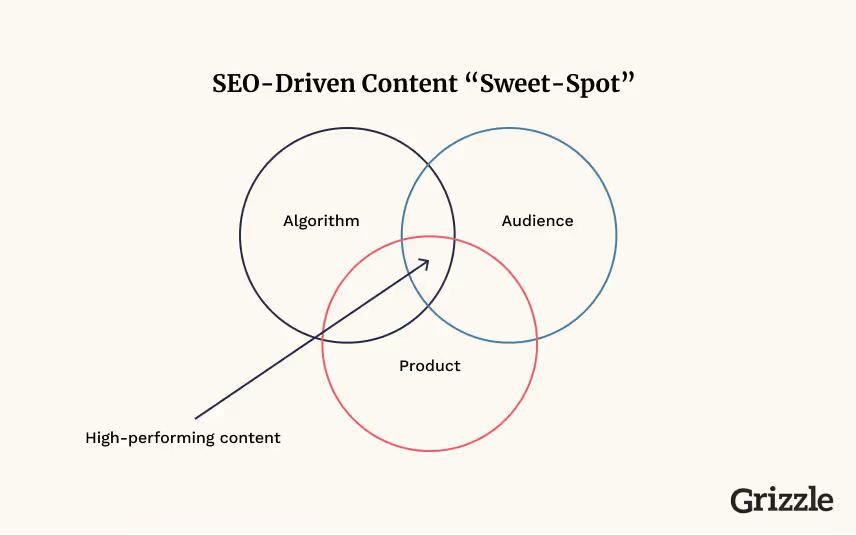
Templates and frameworks can guide you through the production process and reduce the friction in getting started.
For example, a “how-to guide” template follows a step-by-step instructional narrative, which is perfect for anyone targeting individual contributors looking to solve a problem or JTBD.
Alternatively, when targeting senior decision makers, you might use a framework that outlines their problem, builds an argument for new solutions, and demonstrates a new way of doing things.
Use tools like Clearscope when planning SEO-driven content to uncover which themes to include. Here’s what some of those relevant terms look like for the term “DOOH” (digital out-of-home media):
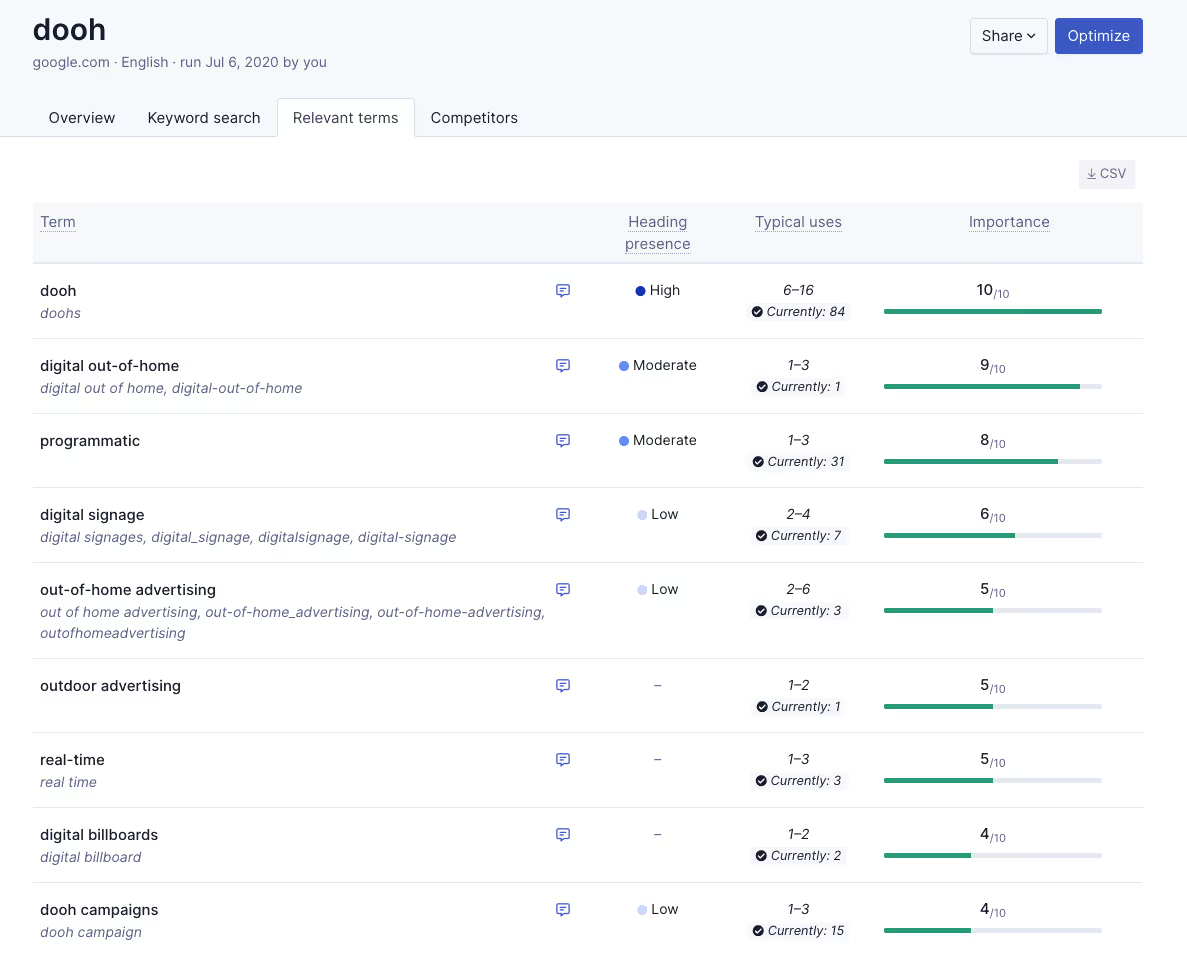
Avoid stuffing these terms without context, as you’ll ruin the content experience and undermine trust. Use this data to inform sections and themes to include in your content.
Finally, don’t worry about perfecting the subheading copy. Subheadings should simply communicate what each section will cover. Once you’re writing the draft, your subheadings should communicate the benefits or outcome that each section promises to deliver. This grabs the attention of skimmers and communicates the overall value of your content.
Outline collaboration
Everyone has their own method of writing outlines. Instead of providing you with a rigid framework, here’s a scrappy example using the DOOH topic introduced above:
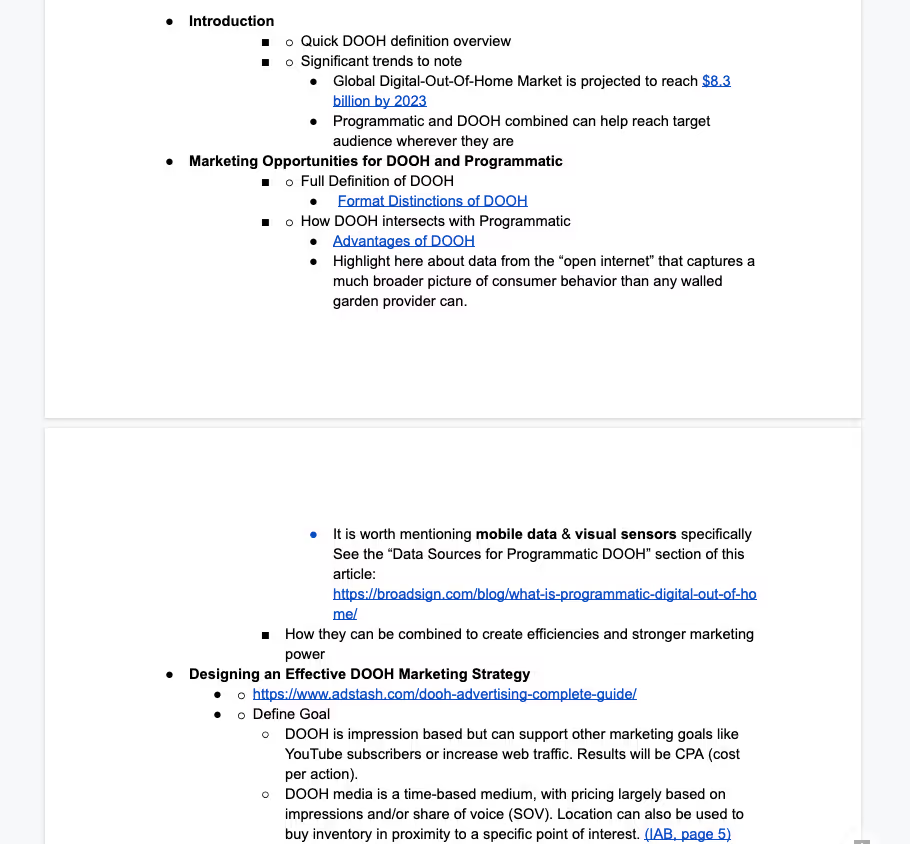
Here, we see a portion of the outline that includes details to add context around what each section will include:
- Outcomes that the target audience will benefit from using DOOH
- Statistics and data to back up certain claims
- Key DOOH metrics to measure, what they mean, and why they’re important
Your outline also provides a canvas for stakeholders to get involved. Including lots of white space and nested bullets will create a hierarchy that’s easy for everyone to follow. Stakeholders can add comments with their thoughts and insights with ease.
Collaborating on an outline will mean fewer draft revisions as the narrative and structure was agreed upon well in advance.
Content briefs are your roadmap
Many marketers see the brief as a hurdle to overcome between having an idea and writing it down.
Your content brief is the compass and your outline is the roadmap. Both allow you to find a gap in the content landscape and uncover an angle that your audience is hungry for and will stand out.
Point in the direction you want to go in, chart a course, and pave the way for content that resonates with your audience.

In this article, we’ll outline the content-driven acquisition methodology we use to help companies get results like this:
- Fintech company: Avg. ~5,000 leads generated each month using a content-driven paid media strategy (over a 6-month period)
- MarTech company: Avg. 47% conversion rate from content
- Consulting company: Avg. 42 marketing qualified leads (MQLs) a month
🤫 We’ve included anonymized data throughout this article. Want to learn more about what goes on behind the scenes? Get in touch.
What is Content-Driven Acquisition
Content-driven acquisition is the process of taking marketing channels like Facebook Ads and using value-driven content as the centerpiece of those campaigns.
It’s an approach that utilizes blog posts, lead magnets and other content assets to attract new users and expand your audience. While some may not be ready to buy from you now, you can educate and nurture them into customers over the long term.
It’s great for ecommerce, DTC and consumer tech brands looking to build an audience, as well as B2B and SaaS organisations with lengthy sales cycles that rely on lead generation.
Blending paid & organic acquisition channels
Using content to fuel your paid media efforts can help you:
- Diversify and expand your target audience/visibility
- Generate better long-term results (traffic, conversions and brand building)
If you’re looking to raise funding, it can also help you control your growth narrative. Do this by showing investors you’ve built an active and engaged community.
We’ve seen our partners use content to generate traffic at a lower CPC (and CPA). It also helps us to generate a burst of short-term traffic while invigorating long-term growth.
In other words, you can play the short- and long-term game with every content asset you produce.
Test on a small scale with a portion of your ad budget. Measure the results at all stages of the funnel (subscribers, leads, sign-ups and purchases). If the results are favorable, allocate a higher budget to scale.
This requires you to have a full understanding of your audience and customer journey:
- Without proper targeting, you’ll end up wasting money on unqualified traffic
- Without an understanding of the customer journey, you risk losing sight of the true, long-term ROI
For example, if you’re a DTC brand, you may find subscribers don’t necessarily convert immediately. But they may, on average, make their first purchase in 30 days.
Use long-term thinking as a way to accurately calculate and forecast ROI. The way you segment audiences into cohorts is up to you. Make sure your content efforts are getting the attribution they deserve.
Optimizing content for conversions
You may be creating epic content, but what happens during and after engagement? Are you optimizing your offers and calls-to-action to capitalize on this attention?
For example, readers of a how-to guide might simply want more information to help overcome a specific challenge. Therefore, creating a lead magnet that covers the topic in more depth is likely to drive action.
Conversely, you can include more commercially-driven offers if the topic is related to your product. For example, a coffee subscription brand writes a piece on the health benefits of coffee. They could include a call-to-action to sign up for a subscription at the end of the article.
Generating conversions from your content requires an understanding of the following:
- Context: Why are people reading your content? What are they motivated by? Help them take the next step in this journey by offering the right information or products.
- Experience: Don’t include calls-to-action that ruin the experience. For example, pop-ups that interrupt the reading experience can frustrate some readers.
People are more critical of content these days. Information is abundant, and if you get in their way, they’ll happily look elsewhere.
Using email marketing to educate & nurture
As you generate subscribers and leads, you’ll need to nurture them. This can be done through education, additional content and product offerings.
Your email marketing strategy will vary based on the nature and complexity of your product. Two of the most common formats are:
- Email newsletters: Regular digests containing content and product offers
- Nurture sequences: Automated emails sent over time that are designed to educate the audience on your brand and product
Many marketers use a blend of both. For example, SaaS companies often use email sequences for lead nurturing and product onboarding. I’ve also seen DTC brands use automated emails to introduce their brand before sending scheduled monthly newsletters.
Your emails must guide prospects and customers through the customer journey and give them the content they need, when they need it.
Conclusion
Content-driven acquisition caters to all stages of the customer journey. Each touch-point is designed to educate and empower your audience.
Fostering this approach can be as simple as using content to fuel your existing paid media efforts.
You won’t know until you speak to your customers. It’s the insight they give you that should fuel your content efforts. Listen, and then produce the content they need.
Many brands reach a stage where they no longer wish to rely on paid ads and performance marketing alone. Transitioning to organic acquisition is an attractive prospect.

B2B marketers must make their account-based content programs relevant. The best way to do this is to become disciplined with customer conversations..
Here, we’ll share an account-based content playbook that accelerates enterprise sales pipeline. You’ll learn how to attract the c-suite, sell to entire buying committees, and cross-sell into new markets through customer expansion.
Converting customer success into content
“Where do you go for new information?” is a common question we ask in our customer interviews.
After countless conversations with senior decision-makers in dozens of industries, we’ve found that most leaders look to their network.
Specifically, they rely on:
- Their direct reports: Both individual contributors (ICs) and middle-management
- Their peers: Commonly those with the same job role in other organizations
This is why customer success content works so well.
It elevates peer experiences and places them in front of your ICP. Goodwill is created within target accounts while proving you can get results.
The approach is even more effective when applied to customer expansion. Not only have you proven your success within an organization, but you’ve already overcome the red tape to become an approved vendor.
But doing this right means making your customer the hero of the story. Here’s how:
Write about shared pain points
Pain points are rarely unique to the individual, no matter what many may think. However, this belief is often a good indicator of problems that buyers are desperate to overcome.
By conducting customer interviews, you can identify these pain points and start to uncover patterns.
Prepare for interviews with account stakeholders and c-suite execs by limiting yourself to a set of broad questions. This allows you to follow “conversational threads,” using follow-up questions to dig deeper into their responses.
For example, the question "what are your revenue goals for the next six months?" may be met with the following response:
“We're looking to develop new revenue streams to improve customer value and improve the product experience to reduce churn.”
This response gives us two conversational threads to follow: “new revenue streams” and “product experience optimization.” But we don’t yet have context as to why and how they’re doing these things.
We can elicit this context using questions like:
- What do these new revenue streams look like?
- Why is improving the product experience important?
- What are the biggest hurdles you face when improving the product?
The answer to these questions may seem obvious, but they allow you to uncover the language customers use and identify new conversational threads to go deeper. It helps you reveal more context, the motivations behind their goals, and the root cause behind the pain point.
Let’s say you’re targeting VP-level marketers working at enterprise software companies. A common problem associated with improving the product experience might be:
“We want to ensure customers are getting as much value from our product as soon as possible. ‘Time to value’ is an important metric to us because we want to drive adoption across all teams within customer accounts.”
We now know the following:
- “Time to value” is an important metric
- This means customers get as much value as quickly as possible from the product
- Why is it important? Because it’s correlated with greater account value as more users adopt the product
Individual contributors have their finger on the pulse of these challenges. Make time to speak with both senior decision-makers and ICs to understand how a problem impacts the entire organization.
Cater to the buying committee
The sales cycle is more than a series of calls and consultations. It may start that way during discovery—where one or two stakeholders lead the conversation—but behind the scenes you have their bosses, CFOs, and procurement teams to convince.
Trouble is, you don’t have direct access to these people, and therefore cannot directly influence their decisions.
Account-based content helps overcome this bureaucratic maze. It acknowledges that the needs of stakeholders beyondt your immediate buyer must be catered to.
What content should you create for buying committees? Start with the following ideation process:
- Customer interviews: Again, ask questions about what the buying and procurement process looks like for your customers.
- Sales teams: Work with sales leaders to collect insights. Arm your reps with the right questions and communicate how it fuels material that will help them close more deals.
- CRM data: Segment your best accounts and review contact history. Which contacts were involved early on in the sales process? Are there any insights that can be gleaned from sales activity and notes left by reps?
Turn these insights into decks, short-form articles, slides, and even video content. Tools like Loxo allow you to create microsites for each account, organizing content in a personalized manner that makes it easy for your prospect champions to get internal buy-in.
Empower individual contributors to influence upwards
Alongside peer recommendations, senior decision-makers look to their direct reports for insights from “the field.” These include new ways of working, vendors, and content that aligns with internal conversations.
Top-of-funnel content still has a place at the table. ICs and middle-managers help senior decision-makers filter through the noise and have bottom-up influence in an organization.
Here’s how to write for ICs:
- Position content around daily tasks and priorities: While ICs rarely have buying power, they are your end user. Providing actionable content around specific use cases will arm them with a solution to present to their managers.
- Integrate organization-wide challenges: Some problems run so deep they frustrate entire teams. Write about these to create internal buzz.
- Focus on the big problem early on: Don’t keep strategic pain points hidden halfway through an article. Use article and section introductions to make it clear your audience is in the right place.
When writing for ICs, make them think “I need this, and so does my boss.” Teaching them how to solve a JTBD can act as a trojan horse.
For example, message testing platform Wynter’s ICP is VP-level demand generation and product marketing leaders, but this article on message testing caters to a beginner audience:
It ranks for the primary target keyword because it caters to a beginner audience. ICs are looking for information on the topic because they want to learn what it is, how to do it, and examples of it in action. The same goes for VP-level audiences who have yet to discover what message testing is.
Creating content for both buying committees and ICs alike gives you a diversified content portfolio. In the account-based marketing world, it pays to cater to all seniorities.
Create episodic content
Episodic content applies various topic ideas and formats around a central theme.
In a recent episode of the Demandist podcast, Nitsan Peled, Director of Content at Optimove, shares how he takes an episodic approach to account-based content:
“We took from Netflix’s book. So if [for example] we want to talk about segmentation, we come up with a series with a title or topic. And then we break it down into chapters. And we find someone to write those chapters.
“We come up with seven episodes. [Each] episode would be dedicated to a specific brand.”
This approach allows you to:
- Demonstrate you understand the world your customer operates (think subject matter expertise and industry challenges)
- Share the success you’ve already delivered to customers and other departments within existing accounts (for your customer expansion efforts)
- Provide actionable insights and guidance for ICs across an organization
Dedicating a content series to a single industry, job role, or JTBD can seem like a mammoth task. However, the concentrated attention it yields can have a compounding effect on pipeline and awareness—especially when attracting a narrow audience.
Account-based content distribution
Getting your content seen by target accounts requires a personalized approach to distribution.
To capture your ICP’s attention, you must go beyond traditional promotion tactics like content repurposing and email newsletters.
1. Empower your existing customers
Your customers are your biggest advocates. Getting them involved in the entire content production process not only highlights success, but primes them to share it.
They’ll also give you insights into how other areas of the business operate, which is crucial for customer expansion.
Once you’ve injected customer stories into your content (as well as any direct quotes from users), give them the tools they need to amplify it. Provide them with guidance and ease objections with a plan that they’re comfortable with.
Here’s how your customers can help with distribution activity:
- Repurpose for social: Make the sharing process easier for them by writing LinkedIn posts on their behalf. Get them on a call, ask them a question about the topic, and then repurpose the recording into short-form video content.
- Reach out to internal influencers: Identify contacts within existing accounts. Gauge whether it’s appropriate to reach out and share that content directly.
- Share on internal channels: There may be an employee forum or community where cross-department conversations take place. Uncover this during the early stages of the process, and only suggest it if your customer feels it’s appropriate.
For customer expansion efforts, you must also uncover:
- The cultural barriers you must overcome
- How buying committees work in different geos
- Whether or not they share the same pain points
The world is getting smaller from a communications perspective, and many of these factors may no longer apply (especially when marketing to millennials). However, do your due diligence to ensure your messaging is appropriate.
2. Create an employee advocacy system
Speak to your salespeople and identify target account contacts they’re engaged with. Involve reps during the earlier stages of the production process. Encourage them to participate during the topic ideation stage.
Uncover the objections they experienced when closing customer accounts. Use this to fuel social content that acts as an idea barometer. The more engagement a post gets, the more likely it is that a long-form article will perform well.
Coordinate with reps and keep them up to date with your publishing schedules. Encourage them to share your content directly with their prospects and amplify it on channels like LinkedIn.
3. Repurpose for social
Double-down on your employee advocacy and customer success efforts by creating a series of social posts for your company page.
Yes, we all know personal profiles (anecdotally) generate more engagement than company pages. But this is only true because brands don’t push the envelope and give their brand a personality worth following.
Just look at Lavender as an example, which has amassed over 26,000 followers in a matter of months due to their fun and educational content:
To extend your reach and get the attention of other account employees, tag them in your post. But only do this if they’re involved in the content itself.
Repurpose your how-to articles into a series of posts that dive into specific elements. Highlight relevant pain points and dig deep into specific challenges. Don’t forget to cater to both senior decision-makers and ICs.
4. Guest case studies
Repurposing your success stories into guest posts can quickly get your message in front of a wider audience.
It’s also a great incentive for getting customers involved. Speak to several contacts to learn which publications they read and which are most popular.
Secure placements by reaching out to editors and pitching topics that sit in the sweet spot of these three areas:
- What the publication is hungry for: Look at recently published articles. Reverse engineer the highest performers (think social shares) to find top performing formats.
- Conversations happening in the market: Tie your customer success stories to pain points experienced by the rest of the market.
- The problem your product solves: Focus on a relevant pain point that a specific product feature solves.
Checking all three boxes ensures your guest post will get accepted. Have your cake and eat it too by writing about themes close to your product and ICP challenges.
Land and expand
Individual contributors, junior executives, and director-level leaders are all working towards the same goal.
Your content should serve everyone involved in achieving it. Make your account-based content work harder for you by writing for everyone with skin in the game.
You can’t always do this with a single piece of content without diluting your message. However, with a well-coordinated plan of attack, you can work all ends of the chain and get the entire department’s attention.
Establish authority and expand your customer accounts by getting the whole team talking about you.

In this article, we’ll show you an agile video production process to help you build and scale your media marketing efforts.
Aligning video content with marketing objectives
The purpose of video marketing is to support demand generation and user acquisition. Done right, video content inspires action while contributing to a delightful user journey.
For example, here’s how video might contribute to different stages of a product-led user journey for digital PR software:
- Awareness: An agency founder (a segment of the digital PR brand’s ICP) watches a social media video created by an employee that talks about the importance of building journalist relationships. They then watch a long-form YouTube video on setting up outreach systems for clients.
- Acquisition: The agency founder visits the brand’s website and navigates to the agency use case page. They watch a video that dives into how specific features apply to their needs and sign up for a free trial.
- Activation: Thanks to proper segmentation, the agency founder—now on a free plan—receives a tailored onboarding experience and product video. It shows them how to get started using features that will help them kick off outreach for a single client.
- Retention: The user receives an invite to a webinar that dives deeper into how to use the product across their entire client base, including managing multiple inboxes and personalizing outreach for several audiences. The agency founder requests their team to attend and come up with action points.
- Revenue: Thanks to segmented email workflows and an increased number of users across the account, the agency founder enters their credit card details after they hit usage limits.
Here, video allows the digital PR brand to make a bigger impact by hooking their audience and nurturing segments to conversion as they proceed through the user journey. The formats vary, but each video has a specific purpose.
Drift uses similar tactics to attract and funnel potential users into its pipeline. They use simple animation and motion graphics to produce product marketing videos that educate users on their products:
Drift’s marketing team has also built a library of webinars that dive into new trends and marketing approaches:

This, on top of their library of blog articles, ebooks, and reports, helps position Drift as an educational media brand. The library of content they’ve built attracts an audience looking for solutions to relevant challenges.
Drift has a blog full of high-value content, and it utilizes strong copywriting across landing pages and product experience. Investing in video provides new methods to deliver value and cater to their users’ consumption habits.
Later follows a similar blueprint, going all-in on video with its Instagram training videos. Video is used as a platform for:
- Collaboration: Later partners with social media experts to present and share their experiences. This gives Later’s audience more value while tapping into a wider audience.
- Positioning: Later doesn’t offer “just another webinar.” You’re enrolling in an in-depth course that will help you achieve a specific result for your business.
- Design: Landing pages communicate huge amounts of value and look visually stunning:
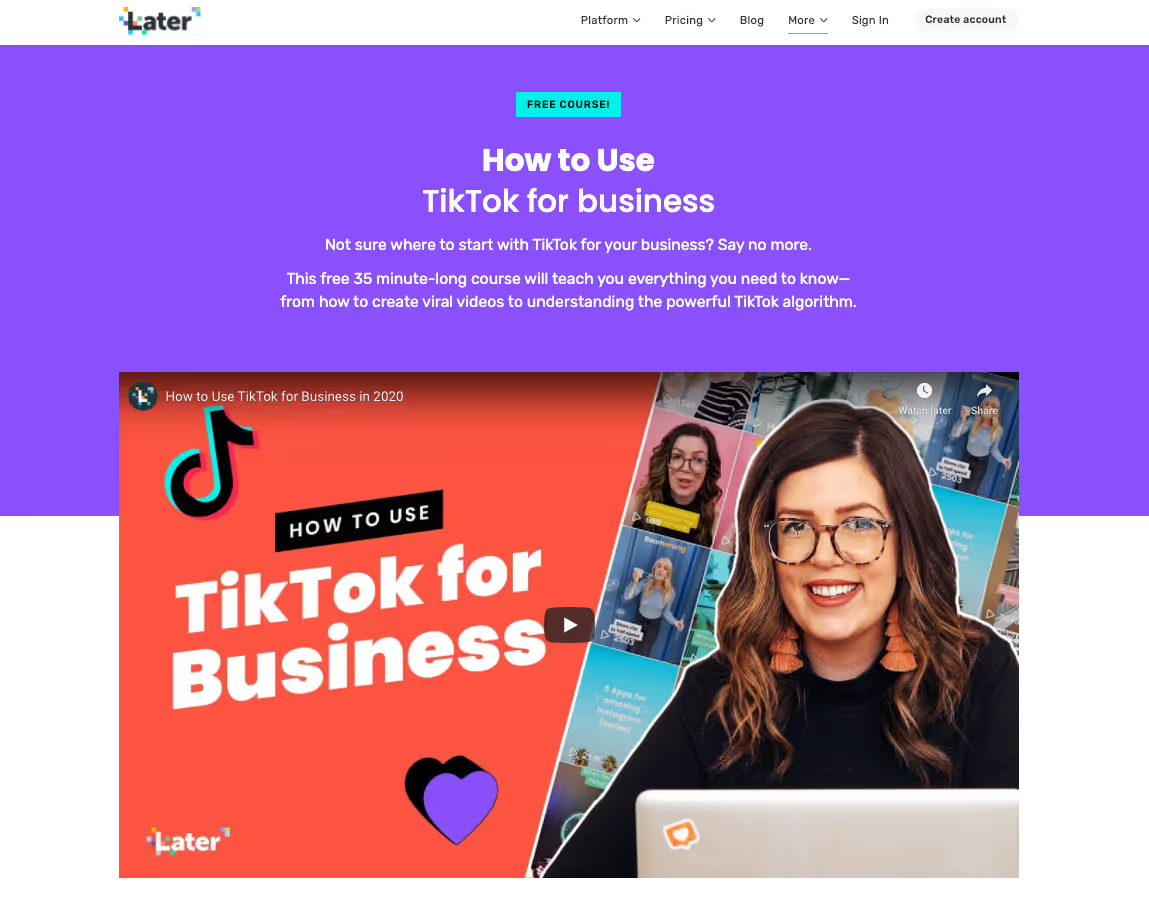
Video content and employee advocacy help position Later as a trusted authority. Empowering Later’s roster of experts helps them build a personal connection with users at scale.
Take stock of the channels and marketing strategies you’re already investing in. Find ways to deliver more delightful experiences by adding video into the mix.
A video production workflow that scales with ease
Many marketers assume video marketing involves lengthy lead times and large production teams.
This is mainly due to how many traditional production agencies still use old school playbooks. Dozens of middle-men have a stake in the creative process. Not only does this bloat production timelines, but it’s also incredibly expensive.
By the time a creative brief has reached the talent needed to produce that content (such as videographers and animators), most of the budget has already been used up.
For us marketers, this amount of bloat is unacceptable. Simplifying the process is critical in order to scale efficiently and get it all done within budget.
Once we boil the video production process down to its core 11 components, it starts to look far more manageable. These components are:
- Pre-visualization: Marrying content strategy and visual research, this stage involves gathering reference materials from sources like YouTube, Pinterest, and Instagram—as well as other films, animations, and aspirational video content.
- Script: An important step to streamline the rest of the process, your script communicates the content, flow of information, tone of voice, and supporting visual cues (motion design, visual motifs, etc.). Good scripts define the narrative and how you’ll communicate your message while keeping viewers hooked.
- Storyboarding: Each “panel” of your storyboard communicates visual elements, content, imagery, and the layout for your video content. Most importantly, it allows all stakeholders to agree on the video’s direction to reduce expensive and time-consuming revisions later on in the process.
- Music production and voiceover: Sourcing background tracks (known as the “music bed”) and voiceover talent early on will aid editors, animators, and motion designers throughout the process. It informs the flow, pacing, and overall “vibe” of your video.
- Animatics and skeleton edits: This is where imagery, audio, and stock footage are used as placeholders for the final edit. This allows editors to build pieces of the final product as new videography and animation assets are delivered.
- Shoot day: Coordinate videographers, locations, and any direct-to-camera talent (unless someone from your team will step in front of the lens). Batching shoots for several videos at once helps to accelerate the production process.
- Editing: Footage, motion graphics, and animation is gathered and crafted into a finished narrative. For some projects, this process will be ongoing from stage three onwards.
- Colour Grading: The process of balancing and altering colors to capture a specific look and feel. This includes raising lighting levels in darker scenes.
- Visual effects (VFX): Can include simple environment alterations (replacing clouds shot on set with a bright, sunny sky), stylized sparkles from a magic wand, or complex set replacements (actors shot on green and blue screens).
- Animation & motion graphics: These two are used interchangeably and can be added to live video or used as a storytelling vehicle for the entire video.
- Rendering: The final product is signed off, rendered, and exported. Your video must be rendered in the right format for the purpose and platform you intend to use it on.
Great video content used to require dozens of directors, producers, and creatives. But the workflow outlined above is lean and simplified, speeding up the production process end-to-end. It removes unnecessary expenses, all while ensuring the final product is perfect.
Much of this process can be done once and replicated with templates. For example, coming up with motion graphic elements that can be reused in the same way across dozens of social media videos.
Another point of friction when producing video content is the fear of stepping in front of the camera. As Vidyard says, it’s a lot less scary when you’re not making it up as you go along:
“If you’re planning to record yourself, set aside a little time to determine what your message is. Plan out your main talking points. Make some notes.
“If you’re going to be in a scripted video production, ask to see the script in advance to review and get to know your lines
“Regardless of the situation, it’s always going to be easier when you know what you want to say.”
Preparing a script will help you feel more confident when standing in front of the camera. It also allows you to produce a tighter and more compelling message.
Detailed brand guidelines make this process even smoother. For example, Shopify’s brand style guide includes several detailed breakdowns of visual elements:
Typography, color, iconography, and even interaction states (e.g. how button colors change between clicks) have been given careful consideration.
Brand guidelines allow Shopify’s team of creators to produce beautiful experiences without dozens of unnecessary and frustrating revisions.
While creating video content may seem like a daunting process, it becomes far easier after the first project. Start with a pilot to get your production house in order. Document the process and standardize elements into a visual style for your brand guidelines.
For example, when we begin working with new video marketing clients at Grizzle, we only commit to a single project in the first month. Once completed, assets are standardized and templated. This allows us to scale to eight video projects a month (and many more when repurposing for short-form video).
Imagine having a single video operation that serves all divisions of marketing and sales from one place. Over time, it becomes easier to test new ideas—without needing a six-figure budget for a single campaign.
Sourcing video talent
The workflow above exists to make life as easy as possible for all parties. But you still need the right people with the right skills to bring your projects to life.
If you’ve collected plenty of reference material, then a good videographer, motion designer, or animator can remove the need for a creative director.
The same goes for production crews. By boiling the process down to critical stages, you only need a single project manager or producer.
At a minimum, these are the people you need to take a video from idea to output:
- Videographer: Takes care of preparing the location, prepping your team or on-screen talent, and supplying filming and lighting equipment on site.
- Motion designer: Adds visual elements to your video content.
- Animator: Produces animated video from start to finish (or animated elements for live action).
- Editor: Takes the raw materials of your video and organizes it into a narrative based on your script. Good editors will obsess over timing to make sure your content is engaging.
- Producer or project manager: Sources and coordinates the right talent, locations, and assets. Ensures projects are kept on track and in scope.
- Content strategist: An in-house marketer or agency to take ownership of video ideation, premise, and promotion activity.
Batch stages of the process together. If you commit to a particular format or framework (and use a script and set processes), you can produce several video assets at once. This will reduce costs while allowing you to scale for a faster turnaround.
For example, if you’re aiming to create four long-form YouTube videos a month, shoot the live-action portion in one day.
When looking for talent, use job boards like Upwork, LinkedIn, and YunoJuno. You can also find specialists on websites like Soho Editors and The Voice Over Network.
Finally, take a leaf out of Wistia’s book and attract a crew that believes in your vision:
“Ideally, you should aim to hire a director, director of photography, sound producer, and gaffer (i.e., lighting technician and head electrician) who are all aligned with your creative vision and direction; any arguing or push-back will be a big time-suck once you’re on set.”
Streamline processes with video frameworks
Like any marketing activity, a proven framework helps you get started with less friction. You can then “break the mold” and test new and creative formats as you grow.
These frameworks provide you with the building blocks needed to share a narrative that keeps viewers engaged.
It’s easy for your audience to click away on the next shiny thumbnail they see. Your job is to keep their attention while adding as much value as possible.
Luckily, there are frameworks that work for every objective and video format. Here are four frameworks used among product-led brands:
1. Explainer videos
Explainer videos are typically used to communicate the benefits, features, and problems your product solves.
High-quality animation and motion graphics are key, as they allow for engaging and entertaining storytelling while keeping your customers wanting to learn more about your product.
But there’s a trap many fall into when writing explainer video scripts: focusing too much on outlining well-known problems.
Users are smart. They can fill the gaps on how a tool applies to their specific use case. The first 10 seconds should “call out” your audience by their challenges before moving on to specific, relevant problems and the features that solve them.
For example, many SaaS explainer videos spend 30 seconds outlining pain points that the viewer is already fully aware of:
With some careful scripting, these surface-level pain-points can be simplified into two sentences. This demonstrates you “get” your audience while quickly cutting to the chase.
Specific pain points can be tied to features and JTBD. For example, this line:
“Stand out from the crowd with stunning templates that go way beyond the standard PDF.”
Can be repositioned to:
“Make a great first impression with prospects and decision makers with stunning proposal templates.”
Not only does this framework get to the good stuff quickly, but specific solutions and outcomes are also associated with each feature set.
Companies are flogging a dead horse by reminding users of their surface-level problems. And we’re bored of it. Get to the point and go deep in order to stand out. Here’s a simple structure you can use for your next explainer or product video:
- Introduction: Two or three sentences, no more than 10 to 15 seconds. Be succinct and get specific with the problems that really inflict pain on your users.
- Core features: Introduce your product and get right into it. Showcase three or four of your core feature sets, including outcomes and what makes them different.
- Social proof: Feature customer reviews, G2 ratings, and testimonials. Show your audience why they should trust you.
- Call-to-action: Ask the viewer to take the next step in the relationship.
2. Webinars
Webinars are a tried-and-tested format for lead generation. But they have a positioning problem.
Take a look at the majority of webinar landing pages, and you’ll notice a lack of compelling copy. Great webinar landing pages make users truly want to turn up and watch them.
Content positioning is a principle we use on all our content at Grizzle. It’s a statement we include in all of our briefs. The sole job is to answer the question: “How will this content be compelling, different, and better?”
When someone sits down to watch a live webinar, you’re in control of their time. If it’s a topic they care about, it’s hard to switch tabs and watch later without completely losing attention.
One of our favorite webinar formats is the case study. As TwentyThree put it, it’s a great way to build trust and move prospects along the sales funnel:
“The format is a great way to bring your case studies to life, either by repurposing your video or written case stories or creating an entirely new one.
“You can either interview the client or let them talk about their experience. However, the best case studies all have one thing in common: great storytelling. You should ensure that your speakers have a proper narrative and storyline, including the problem, the resolution, and the (happy) ending.”
To effectively position your webinars, you must do three things:
- Go deep on a topic
- Overload your content with value
- Communicate every single thing a viewer will learn (and what they can achieve) in your landing page copy
Here’s a webinar framework you can use to structure your training:
- Topic Introduction: Open up with a story that connects with your audience (while remaining relevant to the topic). Avoid talking about your product at this stage.
- Expert Introduction: Once you have their attention, introduce yourself (or any experts you’re collaborating with) to ease skeptical minds. Why are you qualified to be teaching this?
- Introduce what they’ll learn: Briefly provide a high-level overview of what you’ll cover and why each element is important.
- Value, value, value: Treat the rest of your webinar like a how-to blog post. Provide actionable steps, strategic advice, data, and third-party examples to help visualize each principle in action.
- Conclusion: Wrap up overarching themes. Remind them why this topic is important and what they can achieve by taking action.
- Call-to-action: What’s the next step? Craft an offer that guides the user forward in their journey.
Creating beautifully designed slides will differentiate your webinar, keep your audience engaged, and improve the experience. Go all-in with your slide designs to make an impact.
3. Long-form video
YouTube is the second largest search engine in the world. For SaaS and product-led teams, it’s a blue ocean opportunity due to how many marketers are sleeping on it.
For example, Semrush uses its YouTube channel to produce educational and product-led video content:
The video above teaches viewers how to find keyword opportunities with low competition, featuring the Semrush platform as a way to fulfill relevant JTBD.
[[component]]
Plan and batch several projects at once. Spend a couple of weeks producing four scripts. If you’re producing direct-to-camera format, shoot all four of them on the same day. This will accelerate the production process and increase your publication velocity.
Alternatively, you can use a “remote” format by utilizing voiceover talent (in-house or external) overlaid to animation and motion graphics.
4. Social video
Bottom-up SaaS is an increasingly popular go-to-market approach. Targeting your end users and generating freemium users helps you build advocacy across entire organizations large and small.
Because of this, social media is a critical product-led marketing channel. Social video content helps you build thought leadership and connect with your audience at scale.
While the sheer production quantity needed to get traction may seem daunting, there are three methodologies you can use to accelerate the process:
- Employee advocacy: Individual contributors and leaders hold a wealth of knowledge. Create a program that makes it easy to get them in front of the camera and share it.
- Repurposing: Take your long-form videos and podcast episodes and cut them up into shorter snippets.
- Hire creators: Build out a team of video and social talent to build and execute on a multi-channel content strategy.
For example, cold email SaaS brand Lavender blends all three of these methodologies together, making a big impact on social that’s amassed 28,000 followers on their LinkedIn company profile alone:
Here, Lavender’s social marketer, Will Aitken, uses short-form video to outline a cold email framework that their users can test. It just so happens to be even more effective when used with Lavender’s product.
Build processes and systems around internal talent and existing content assets. Find employees who come alive and feel natural in front of the camera. Make life easy for them to share their expertise with your audience.
Video marketing made simple
We created this process to cut the fat and waste from video marketing.
Reducing bottlenecks in the process makes a cinematic level of video quality a realistic goal for any marketing team.
Simplify the process by hiring the right people and putting the necessary processes in place. Try it once and produce templates from your first project. Scale your efforts to increase production velocity and start engaging users on a personal level.
Get started with Grizzle.