Playbooks and guides by Grizzle


According to current understanding of Google, engagement factors like time on site are a key ranking factor. If someone clicks our result and ends their search there, it sends a strong signal that we’ve created content that satisfies their query.
To grab their attention during their search, your page title and meta description must communicate the value they’ll get from your content. But most importantly, it’s got to stand out from the ocean of same-old content on the SERPs.
Attack of the content clones: State of the SERPs in 2021
Search for any given keyword – especially competitive ones – and you’ll likely see a number of similar headlines:

For example, results for the term “what is vat” all provide similar answers to the same question, which can be bucketed into three categories:
- What is VAT?: Repeating the query back to the searcher in an attempt to prove relevancy
- How much is it/how does it work?: A common question people have when looking for information about VAT
- Complete guides: Content positioned as definitive resources
For marketers looking to stand out, taking a skyscraper or 10x content approach is pointless. Building a comprehensive guide that covers the basics is table stakes.
We need to find a truly unique angle that nobody else is covering and delivers on that unique promise.
In a recent conversation with Rand Fishkin, we talked about an article he wrote about outreach tips. He was disappointed with the results he found when searching for articles on the topic, and so he positioned his content accordingly:
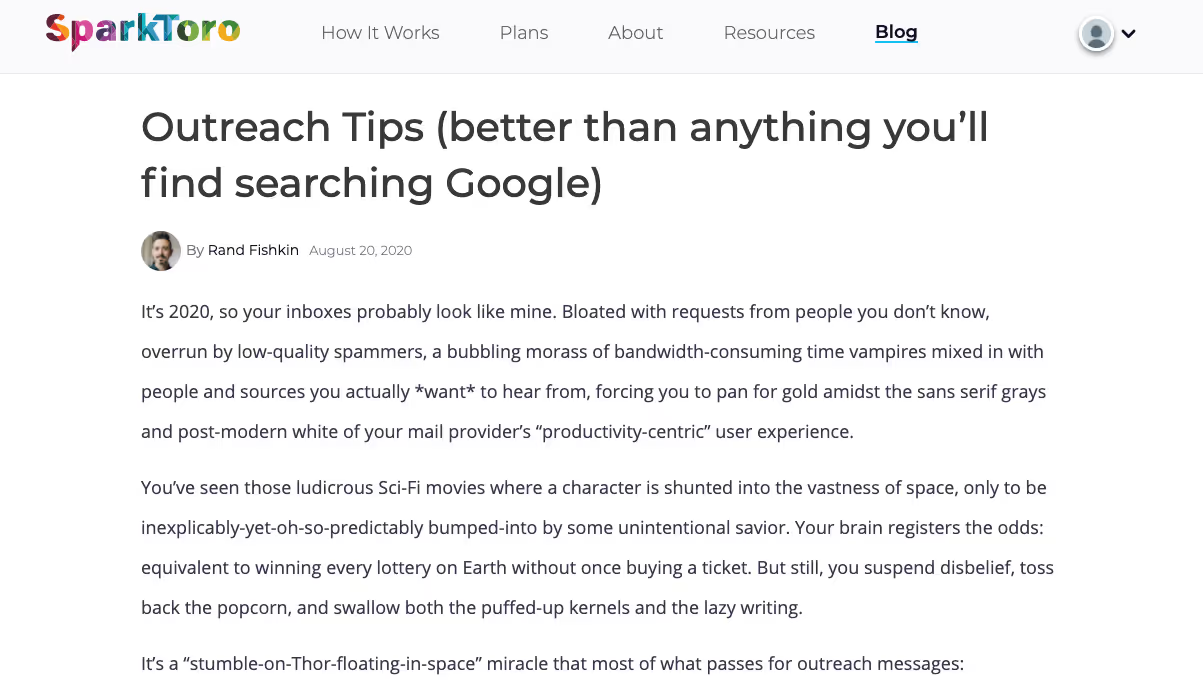
He took a slightly controversial approach, but it paid off. During our chat, we discovered that this article ranks at the top of page one for “outreach tips:”

Look at the results above. Which of these headlines stands out the most?
This might seem like a risky move, but there’s a method in the madness. We marketers have come to expect lackluster results when searching for broad keywords. As someone who personally sits within this target audience, I feel this frustration. Rand’s article stands out because it’s breaking the mold. The promise offered by the page title is more compelling than its counterparts.
So, how would we take a similar approach for a topic as dry as “VAT”? The rest of this guide will cover our framework for writing attention-grabbing page titles and meta descriptions. If you’re looking to increase organic CTR from the SERPs, read on.
Researching angles for killer page titles
Your page title is the first thing your audience will notice. So you’ve got to make it exceptional.
Reverse-engineering the SERPs is a good place to start, depending on how competitive your primary target keyword is.
For example, we’ve already identified several angles for our “what is vat” article:
- Defining what VAT is
- The fact it’s a guide
- How much VAT is
- The full definition “value-added tax”
“SERP-stacking” these themes to communicate a well-rounded, comprehensive article is one approach we can take. But for this topic, we’ll quickly blend-in – which is the opposite result of our goal.
So, let’s take the microphone to our audience. The best way to do this is literally getting them in front of a microphone, conducting customer interviews around their challenges and needs.
Another scaleable approach is searching for relevant keywords on Quora. This will provide us with audience sentiment, and uncover potential angles that competing content has failed to include. Here’s what we find for “what is vat”:
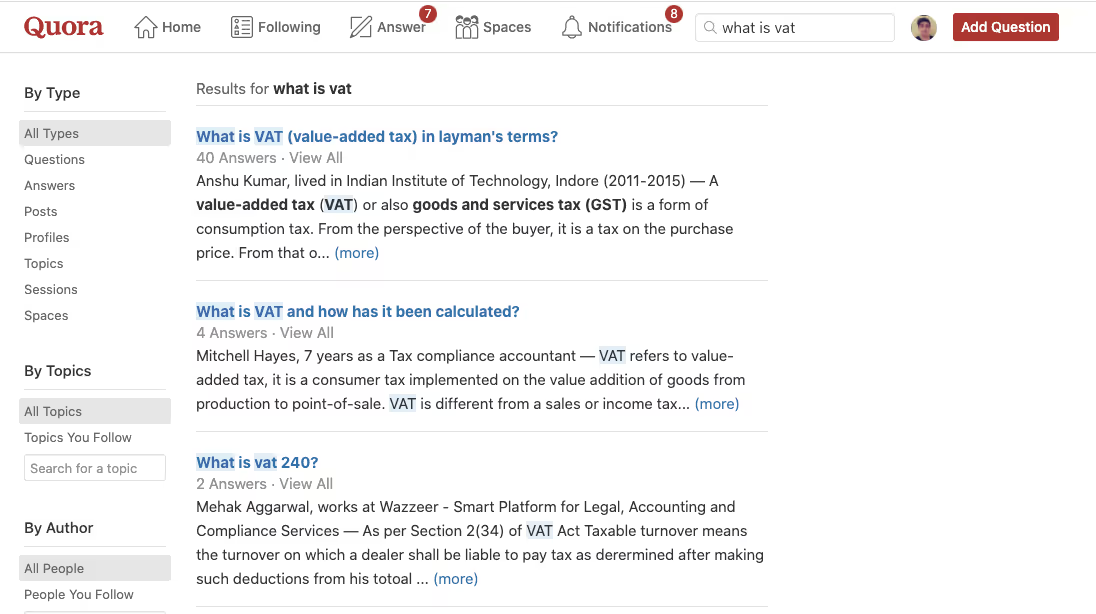
Immediately, I see a huge opportunity in the first result. Here, someone is asking for an explanation in “layman’s terms”. Nobody is making this promise in the SERPs.
Twitter is another great source of insight. But since nobody is tweeting about VAT in this context (and honestly, why would they?), I’ll use “sales pipeline” as an example instead:
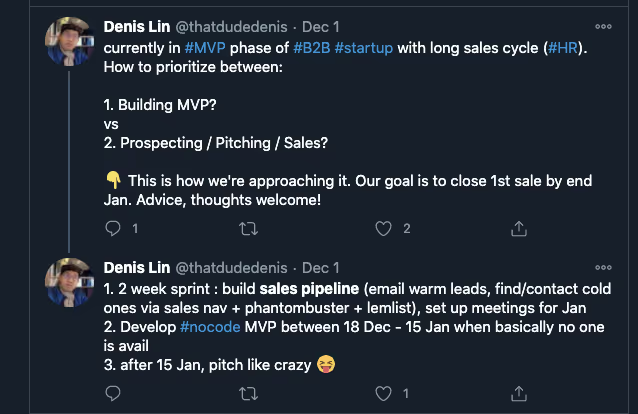
I see two potential angles from this single tweet:
- Why You Should Build Sales Pipelines Before MVP
- How to Build Sales Pipeline & Close Your First Sale
If you’re writing for a startup audience, you’ve just coupled a topic (building sales pipeline) to the priorities and pain-points (before building your MVP and getting the first sale) of your audience. This insight will become tremendously useful in a moment.
Value-driven meta descriptions
I don’t know about you, but I rarely read meta descriptions.
I’m more of an “open-in-new-tab-and-judge-the-introduction” kinda guy.
Still, meta descriptions are important for communicating the value of your content to searchers.
This is your opportunity to show them your content will answer their most pressing questions. It’s also a chance to get them clicking on your content with anticipation.
We use a framework that takes one or all of these approaches:
- See what common themes arise on the SERPs
- Summarise what our content covers
- Look for questions people are asking elsewhere
Let’s take another look at the SERPs to build a more complete picture of searcher needs. For our “what is vat” article, these are the themes that keep coming up:
- “Current VAT rates – standard 20% and rates for reduced rate and zero-rated items…”
- “…is a tax applied to purchases of goods or services and other ‘taxable supplies…”
- “…broadly based consumption tax assessed on the value added to goods and services.”
- “For a business, VAT plays an important role and can be charged on a range of your goods and services.”
- “…it stands for value-added tax and it adds to the cost of nearly everything you buy in the UK.”
- “Value added tax, or VAT, is the tax you have to pay when you buy goods or services.“
Unlike page titles, there’s a tremendous amount of validation in these page descriptions. While a strong page title will stand out, our meta description should reaffirm they’ll find what they’re looking for.
In a way, Google has already done this for us. The elements are all here on page one. We just need to apply it to our own content.
The more a particular phrase or theme arises, the more we should be inclined to use it. Based on our findings, a possible meta description for our “what is vat” guide could be:
“VAT (currently at a rate of 20%), is value-added tax on purchases of products and services. Learn how to calculate it and what it means for your business in this complete guide.”
But as we’ve already discovered, there’s more to the story than the SERPs offer us…
Bringing it together & creating cohesive metadata
We have everything we need to craft attention-grabbing page titles and meta descriptions that communicates our content’s value.
Let’s start with our page title – which, from our research, is a no-brainer:
“What is VAT? A Layman’s Guide to Value-Added Tax”
Here, we’re demonstrating that we truly get our audience. We’re essentially saying:” “VAT can be complex, so we’re giving you content that’s easy to understand”.
We’re also communicating the fact it’s a guide, building context around the positioning of our content and setting expectations.
[[component]]
Next, let’s revisit our meta description. While it’s nice and comprehensive, this first draft comes in at 177 characters. As the recommended limit is 155 to 158 characters, we need to cut some of the fat.
After revisiting the SERPs (and putting ourselves back into our audience’s shoes), we’ve come up with the following:
“In this complete guide to VAT, you’ll learn how to calculate value-added tax and what it means for your business (current rate: 20%).”
This description communicates the following:
- Re-affirm the context (this result is a complete guide)
- You’ll learn how to calculate it
- Why it matters for your business
- The current rate
Including the current rate of VAT brings the answer to the SERPs itself. We’re providing utility in the SERPs for anyone who needs this information immediately.
Standing out, intelligently
You spend so much time producing and distributing your content. But metadata is part of the puzzle that often gets neglected.
Page titles and meta descriptions should make up a critical part of your content creation and promotion process. Without it, nobody will click-through, which means Google will likely decide your content is not relevant enough.
I know writers who craft ten or more headlines for their content. Take the same approach with your page titles and meta descriptions, and you’ll see your CTR soar.

If you want to start meaningful conversations, build trust, earn a spot in the consideration set, and convert leads, you must invest in high-quality content.
Why low-value content creates terrible experiences
Low-effort content translates as low-quality content. It’s generic, teaches nothing new, and barely skims the surface when it comes to actionable advice that helps readers solve problems.
This incentivizes buyers to seek complete answers elsewhere and actively ignore your content in the future.
As such, content that doesn’t solve problems and looks like everything else is a race to the bottom.
It’s true that if you get on-page SEO right and answer search queries just enough to masquerade as depth, it might rank. But articles optimized for search alone destroy credibility because the moment buyers dig in, they’ll notice they’re thin as a rake.
Thin advice creates terrible experiences because:
- It leaves out the “why”: Sharing “why” gives readers key contextual information that helps them understand the value they’ll get from your content. It’s intriguing, relatable, and pokes at shared pain points which fuel the audience’s desire to find out if it provides solutions.
- It doesn’t explain “how”: If readers don’t know how to fix the problems you poked at, or achieve jobs to be done (JTBD), they’re left with more questions than answers. If the “why” verifies there’s work to be done, the “how” practically bridges the knowledge gap. Including one without the other is the fastest way to harm brand equity and lose trust.
- It skips examples: Examples bring the “how” and “why” to life. They allow readers to picture themselves taking action based on the insights they’ve learned from specific use cases. If a marketing initiative generated impressive revenue figures by following a specific playbook, for example, the reader can apply those insights to their unique situation and pick and choose which gems to implement. Bad content leaves readers without clear paths forward.
- It doesn’t inject unique insights: Unique insights help you build credibility and stand out from the crowd. It’s where you share your point of view and lived experiences, add something new to the conversation, take a contrarian stance, or showcase results. Without it, you’re missing the most significant factor of all: differentiation.
To differentiate and create memorable content that keeps your business top of mind (and adds you to the consideration set), you must go beyond the basics.
A reliable way to differentiate yourself is by injecting creativity into your content. Learn how to build trust and a competitive moat in our article on using creativity in content marketing.
A “velocity-first” strategy that prioritizes publishing speed and traffic over quality content can do more harm than good.
If you generate tons of traffic through organic search and deliver a terrible experience, users will bounce, look elsewhere, and remember your brand for all the wrong reasons.
It also does you no favors in building brand awareness and establishing credibility with decision-makers.
Grizzle’s founder & CEO, Tom Whatley doesn’t mince words on the subject:
The power of quality content (and why you shouldn’t settle for less)
Instead of playing to a crowd that leaves after the first few songs, put a show together where the audience craves an encore.
Like a phenomenal concert, quality content engages from start to finish and empowers your audience to convert and become loyal fans.
Based on experience and first-party results, we know this to be true. But powerful third-party data from an industry titan is empirically persuasive.
According to Semrush’s State of Content Marketing 2022 Global Report, 55% of respondents said improving the quality of their content was the top tactic that contributed to their overall success last year. 61% noted that “making content more authentic” helped their content rank organically. And, 40% plan to invest their budget in building better quality written content.
The hard work you put into a content strategy that prioritizes quality is worth its weight in gold because it acts to future-proof your content. When it’s time to fire up your production line, your work today can pay dividends for years to come.
That’s because quality evergreen content can be continually repurposed and redistributed. And SEO-driven content can be optimized and improved upon consistently to show your audience and Google that it’s still relevant.
For example, Ahrefs grew to an eight-figure ARR company and achieved 65% growth year-over-year by prioritizing quality over quantity. One of their primary tactics is updating their best-performing SEO-driven articles and re-distributing them.
They don’t publish low-effort search articles, celebrate the fact that they rank, and then rewrite those articles down the line. That strategy would provide a terrible user experience (for reasons we’ve described) and waste your time and money.
The only way to build a future-proofed content marketing program is to start slow and lay a strong foundation.
Practically, this involves:
- Defining your editorial standards: These are the rules you’ll follow to build and uphold your reputation and effectively serve your audience. They define who you are, how you’ll represent yourself, and how to communicate effectively. The editorial standards and guidelines must be reflected in the final product whenever you create content. Otherwise, you’re left hoping it’s relevant, credible, polished, and correctly formatted, which isn’t strategic.
- Building a strong content operation that leverages great writers: Crafting quality content requires an expert’s touch. You need a team that understands how to dig beneath the surface with in-depth research, ask leading questions that extract useful and relevant information from SMEs, structure a narrative that’s logical, cohesive, engaging and easy to digest and polish it to the point of perfection. Beyond that, your content operation must follow core project management principles so that your editorial calendar, content production workflows, and SEO audits run smoothly.
Once this foundation is in place, you can ramp up your production and publishing frequency.
For example, we’ve spent years working with a SaaS brand that we now produce 15 to 20 articles a month for. We can maintain quality at this scale because of the editorial standards and operational workflows we took time to establish at the beginning of our engagement, and the results speak for themselves:

As Tim Soulo, CMO of Ahrefs says, you can grow traffic by publishing often, but if you want to grow traffic that converts, prioritize quality.
We recommend starting with a publishing cadence of one article per week, then ramping up. But before you drive the car, you need to assemble an engine that will last.
We’ve explained why editorial standards and a strong content operation are critical. Here’s explicitly how to build those functions.
Establish editorial standards that help you deliver unmatched value
Similar to how you write mission, vision, and values statements when building a business, editorial standards serve as the foundation for your content creation process.
Without them, you and your team have no way of knowing if what you create represents your brand and communicates your position effectively and deliberately.
Start by defining what quality content looks like to you and how you’ll create it. Make sure that everybody that will touch your content has access to this guidance, and update it as needed.
This way, you’ll have a resource that team members and stakeholders can refer back to, and a process by which to hold everybody accountable to detailed standards.
To stay organized, break your editorial standards into three categories: goals, values, and integrity.
1. Editorial goals
These outline the reasons behind why you’re creating content and who you’re creating it for.
For example, if a content marketing goal is to increase user acquisition, an editorial goal could be to create content that:
- Educates potential buyers on why your product or service is the right choice
- Helps buyers make purchase decisions
If you have more than one content marketing goal, ensure each one gets an editorial goal counterpart.
This way, every single piece of content you create will be tied to your overall content strategy, positioned to serve your audience, and set up to help you reach your end goals.
2. Editorial values
Editorial values describe how you’ll provide meaningful experiences to readers. If you want to reach your editorial goals, you have to build credibility and trust with buyers—and valuable experiences are the best way to do that.
Continuing with our example of wanting to increase user acquisition via educational content, to deliver editorial value, it’s key to define how you’ll differentiate from the competition.
One way to do this could be to share actionable insights supported by owned data and personal experiences. You could also share opinions on industry trends (i.e. whether or not you agree with them and why). This will help you to:
- Create unique content that’s incredibly comprehensive and compelling
- Build credibility, become an industry-leading brand, and gain the trust of buyers
Along the same vein, decide which content formats will work best to help you reach your goals.
For example, educational content that teaches readers how to do something, or presents a new strategic way of thinking, often works best with “How to” formats. Whereas opinionated positions that allow you to take a stance on industry trends work best as the “thought leadership” content.
Defining these details before you begin creating content helps you present each topic in the most digestible and impactful way possible.
3. Editorial integrity
Editorial integrity ensures that the content you create upholds your brand reputation and reflects your preferences (e.g. your tone of voice and writing style).
The best way to maintain editorial integrity is by building and maintaining detailed content guidelines.
These help you get clear on preferences for formatting, typography, punctuation, tone of voice, how to cite, attribute, and present stats, facts, and sources, what competitors to avoid including in your content, what partners to mention, internal and external linking best practices, and what CTAs to add throughout.
Here’s what the “Key information to keep top of mind” section of our own content guidelines looks like:
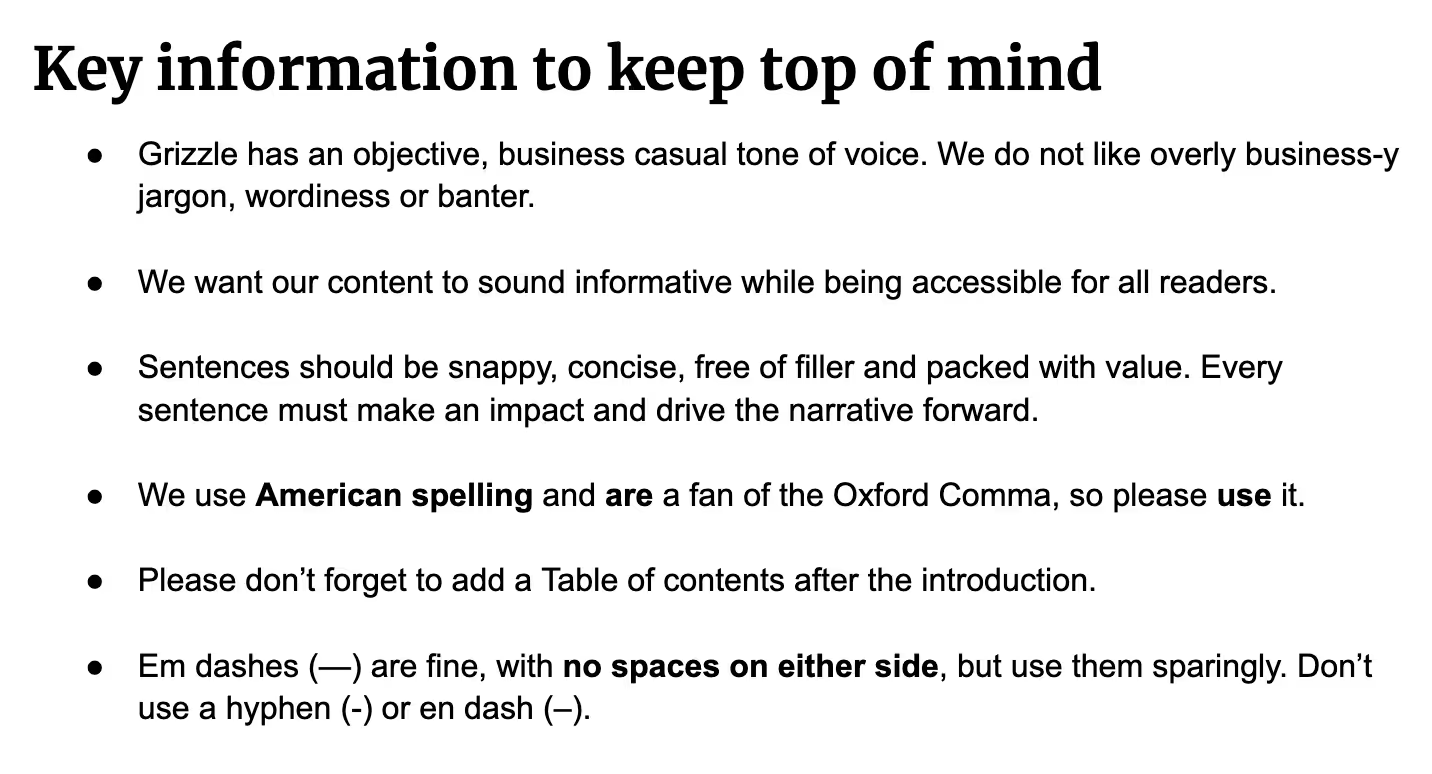
Besides content guidelines, you can also create a “Getting started writing with BRAND” resource that acts as an onboarding guide and gets writers and editors up to speed with your editorial standards.
Sections can include:
- What BRAND does
- BRAND’s writing style (with detailed examples)
- BRAND’s content goals
- BRAND’s products (and how to represent them in content)
- Link to BRAND’s content guidelines
This is a great way to amalgamate editorial goals, values, and integrity standards in one centralized place to stay organized.
With your editorial standards defined and mapped out, you’ve laid a strong foundation to refer back to throughout the content production process.
They’ll act as a true north for why you’re creating content in the first place, how exactly to do it effectively, and hold every person involved accountable.
Build a strong content operation that engineers quality in its sleep
Editorial standards without a strong team to execute them are akin to a stack of paper blowing in the wind. Or, a book of poetry written in a language that the reader doesn’t understand.
To ensure your standards are followed and upheld, you must enlist a team of A-players that understand the importance of quality content, how to create it, and how to run a tight quality control ship.
Here’s how we recommend hiring first-rate writers and editors, running smooth content workflows, and getting key feedback from stakeholders and SMEs so expectations are always aligned.
1. Hire writers that understand the power of quality (and how to produce it)
Strong writers first and foremost must understand the importance of valuable content.
This wasn’t always the case, unfortunately. This is why we still hear the “velocity-first” argument echoing through social media conversations.
Because quality wasn’t always a priority, sometimes less experienced writers are more valuable contributors than experienced ones. It’s easier to train somebody on how to write a strong paragraph than the principle behind why a strong paragraph matters.
Of course, newer writers can take longer to bring up to speed, and there is a large subset of experienced writers that have always prioritized quality regardless of what Google had to say about it.
We’ve reviewed thousands of applications over the years and trust us, we have seen it all.
So, how do you separate the great from the good? Run a paid pilot project.
Here’s the process we use Grizzle:
- Choose a topic that aligns with your goals: This helps you gauge whether candidates have subject matter expertise on topics that matter to your brand or are brilliant researchers that can craft compelling narratives based on detailed analysis.
- Create a test brief: Share information about your target audience, write an angle that explains how you want this piece of content to stand out, and build a detailed outline. This helps you see how well they follow instructions and evaluates critical thinking skills.
- Split the project into two milestones: Milestone one tests ~250 words and gives you a taste of their writing style and ability to introduce a topic, make an argument for why it’s important, supplement it with an example, and add a takeaway (all key elements of quality content). Milestone two is ~750 words and tests their topical knowledge in more depth, ability to answer questions/intent fully, how well they analyze and present results, and creative chops.
- Gauge how they fold in feedback: Feedback is a key part of the production process. The best candidates take in your feedback and turn around excellent edits that hit the nail on the head. As long as the feedback you provide explains what changes you want, and why, they should turn around spot-on edits without much effort.
You’ll still need to onboard and train new writers so they’re aligned on your content strategy, editorial standards, and expectations, which is where a “Getting started writing with BRAND'' document really shines.
2. Run a smooth production line and prioritize continuous feedback
If you’re disorganized, creating content can be a hectic process. There’s always something to create, review, give feedback on, publish, promote, audit, and optimize.
Disorganization will negatively impact quality and waste valuable time and resources.
As a bare-bones basic, you need an editorial calendar. It’ll help you commit to publishing content on a set cadence, and you can work backward from the “live” date to schedule production stage milestones.
But that’s not enough. To stay organized and on top of quality control, you must create and follow dedicated workflows and project management processes to ensure nothing slips through the cracks or is rushed.
First, establish your content production stages. Then, build processes and SOPs for each one. These may vary depending on your process and needs, but generally, a content production line is made up of these stages:
- Brief
- Outline
- Draft
- Editorial
- Repurposing
- Publication
- Promotion
- Optimization
Each stage must be accompanied by a custom workflow and should follow a waterfall project management methodology (i.e. a prescriptive set of steps that’s actioned before moving to the next stage).
For example, after you create a brief, share it with SMEs and stakeholders to get their feedback within X time frame (two days is a good turnaround time). Then, action their feedback the following day and ship it back for a final look and sign-off before creating the outline.
Repeat this “do” and “review” process throughout each stage so that key stakeholders can contribute thoughts, ideas, and feedback before you expend effort that may go to waste. When you continuously align expectations, you save time and resources.
Of course, before you ship the first draft over, your editorial team should run a developmental and copy edit, accompanied by a proofread, to ensure it’s aligned with the brief and outline and is in a presentable state.
I break down the difference between the three editing types and how they fit together in this thread:
To ensure people complete the tasks in your workflows by assigned deadlines, enlist the help of a project management tool like ClickUp, Airtable, or Asana.
3. Spend time finding great editors (aka your ace in the hole)
Speaking of editorial, great writers should compose an excellent draft and run a self-edit, but great editors are the glue that bring it all together.
They have an out-of-this-world-like ability to see through content like the matrix and spot exactly what needs to be done to up the quality level.
They also deeply understand how people read content online. The Nielsen Norman Group published research on Eye Tracking and discovered that when people arrive on a page, they quickly run a content appraisal.
During these few seconds, they’re assessing the “nature, quality, importance, and potential value of the page’s information.”
Two critical elements they scan are headings and introductions. They want to understand if the content aligns with their query, if it appears credible, and if it will be useful to read.
Misaligned headings and fluffy introductions are credibility killers. Great editors know this and ensure each element hooks, compels, and ties benefits to outcomes.
Introductions full of generalizations and aspirational filler are boring and don’t give buyers a reason to learn more. Introductions that poke at pain points, make a compelling argument and clarify what the reader will learn if they keep reading pique curiosity and are difficult to click away from.
Regarding integrity, editors also fact-check every internal and external source to ensure it’s correct, original, and accurately interpreted. This isn’t always easy to do, but sharing an article with 100% accurate and credible information goes a long way in building trust, so it’s worth the effort.
Prioritize quality, or lose the long game
You have two choices: prioritize quality or play the dopamine game.
The dopamine game costs less and might generate quick traffic but provides a terrible user experience, kills credibility, and barely converts.
The quality play is a long game. It requires upfront effort, and you won’t see results immediately (unless you have a sophisticated distribution strategy, a diversified content portfolio, and align content calendars with other goals beyond search).
It requires a bigger investment, but provides an excellent user experience, helps you achieve your goals, and has a bigger ROI in the long run.
Of course, there’s a bonus option three, and that’s where people like us come in. Nobody said that you have to produce quality content alone.
Leveraging experts with proven systems and processes that get results allows you to have your cake and eat it too.

In this article, we go beyond content marketing basics and cover the principles behind content that generates a high average time on page, builds emotional resonance, and drives conversions. I also share before and after examples of edited content and show how small changes can make a big impact.
1. Create emotion-driven content to plant persuasive seeds
Your content is an asset that will help you achieve a goal, like increased conversions, more website traffic, or credibility that lands you in the consideration set.
But what job-to-be-done (JTBD) does it fulfill? How can you strategically motivate, empower, and influence the decision-making process—even in long sales cycles?
If your messaging doesn’t align with readers’ JTBD, it won’t resonate. Attempting to connect with or persuade readers solely with logic and data discounts the emotional motivators behind buying decisions.
Emotional motivators are future-based desires. They range from wanting to grow confidence to feeling a sense of belonging to building a successful business..
Consumers feel most aligned with their favorite brands when they experience trustworthiness (83%), integrity (79%), and honesty (77%). But even when a brand is trusted, it often still fails to speak to its customers’ emotional drivers.
This missed opportunity costs money. Fully connected customers are 52% more valuable:
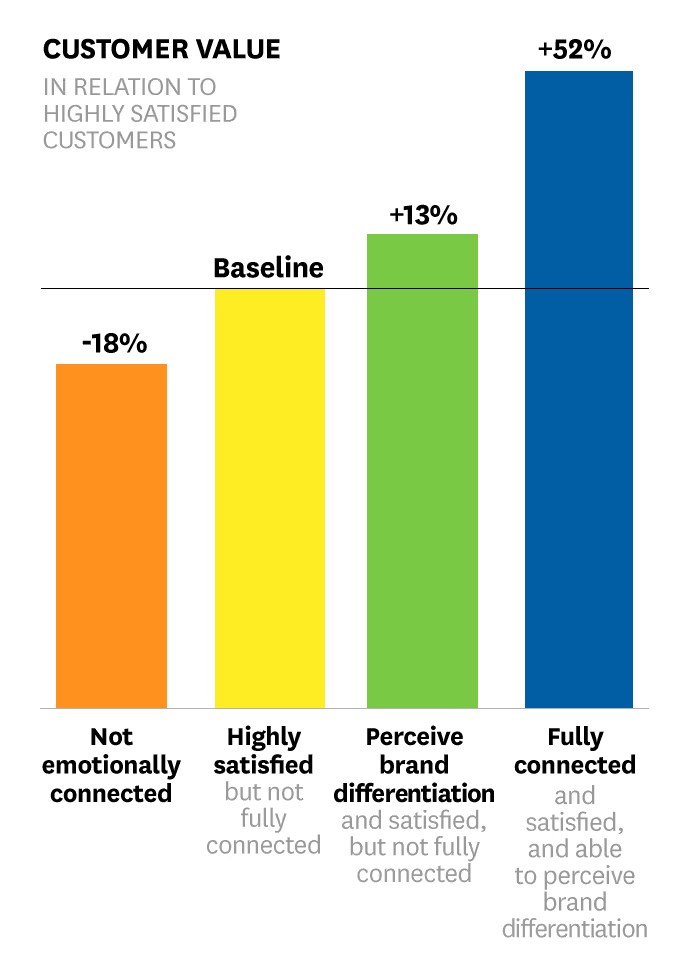
Emotional drivers vary based on your brand, category, customers, customer segments, and stage of the buying cycle. Conduct research (surveys, phone calls, data-driven insights) to uncover the key motivators that drive your audience, then execute emotion-driven content.
Here are a few ways to do that:
Inject storytelling into your narrative
It helps to think of your content as a conversation between yourself (the narrator) and your audience (the reader).
The bridge is storytelling, which is all too often left out of a data-driven narrative:
“Content that relies only on data to tell your story can end up falling flat. Worse, it can overtake the heart of the matter—creating stories that align with your strategy and speak on behalf of your brand.”
To get to the heart of the matter, return to your emotional motivator research to answer:
- What keeps your audience up at night?
- What do they dream about doing/achieving?
- What makes them trust information and what makes them wary?
- What kind of content do they find compelling, and why?
- What’s their primary JTBD and what emotional driver is that tied to?
As you build your story, continuously confront your readers' pain points or desires. This will create a personalized experience that helps them understand, connect with, and trust your solutions.
For example, Patagonia’s audience is primarily driven by the desire to feel a sense of belonging and to protect the environment. The team behind the outdoor brand knows how critical it is, therefore, to make their audience feel like they belong.
I wrote about how they do this in an article on storytelling for the CXL blog:
“Their Climbing Stories, for example, showcase anecdotal experiences, often told in the first person. They’re full of tips and tricks, practical methodologies, and recommendations. Stories from the mountains, as told by Patagonia’s customers themselves.
Emotionally, they make the reader feel like they’re part of something bigger. Practically, they inspire new and improved purchases to solve a challenge (e.g. how to pack for alpine climbing).”
Patagonia cleverly builds trust and resonance by creating a space where their customers can tell stories to each other.
Lavender, an AI email assistant software, also masterfully uses storytelling to connect with its audience. At time of writing, they’ve grown to 26,000+ followers on LinkedIn by posting humorous videos that are universally relatable.
Their target audience is sales reps, who’s biggest pain point (and barrier to success) is getting their emails ignored.
Watch how they address this common struggle, and position Lavender as the hero, in this short yet brilliant video:
If you’re already a fan of Lavender, this makes you smile because you’ve experienced a massive uptick in email opens like Kyle Coleman:
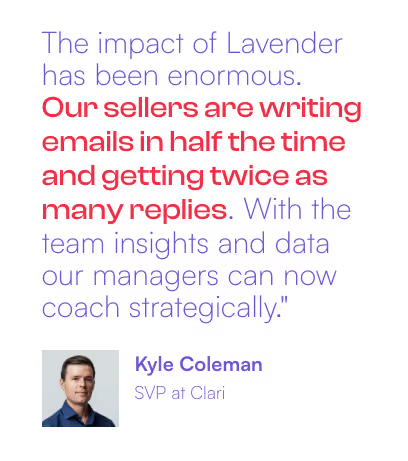
If you’re a potential customer, this makes you curious and eager to see if what they’re boasting holds truth.
Storytelling, whether owned or leveraged, is only one way to plant persuasive seeds. Let’s look at another.
Spike emotional resonance with creativity
When everyone sounds like each other, people are drawn to innovative ideas. Creativity is a strong way to differentiate and create memorable content that stays top of mind.
Done right, it entices audiences to think in new ways, consider new concepts, and overcome skepticism. When you offer value in a way that no one else does, it builds trust, which is paramount in gaining a competitive advantage.
However, if you recall, trust alone won’t move the needle. You need to use creativity to speak to those high-impact motivators that drive purchases.
One way to do that is to bring experts into the conversation. Sounds simple, but many content marketers still rely solely on third-party data to drive first-person narratives.
SMEs can help you find unique angles, make contrarian points, or speak to why established norms work so well.
They’re also personalization powerhouses. Hearing how a like-minded expert approaches a problem, overcomes a boundary, or achieves a desired outcome makes it easier to picture doing the same thing in your own life. It humanizes the topic—in turn, humanizing the brand.
For example, Semrush has a customer segment that’s driven by a desire to succeed at work and in their personal lives. To speak to those drivers, they need to make their customers feel that by using their product, they can lead more meaningful lives.
They did just that in a newsletter that shared SME insights through an emotive storytelling lens. Told through the eyes of SME Gaby: SEO by day, DJ by night:
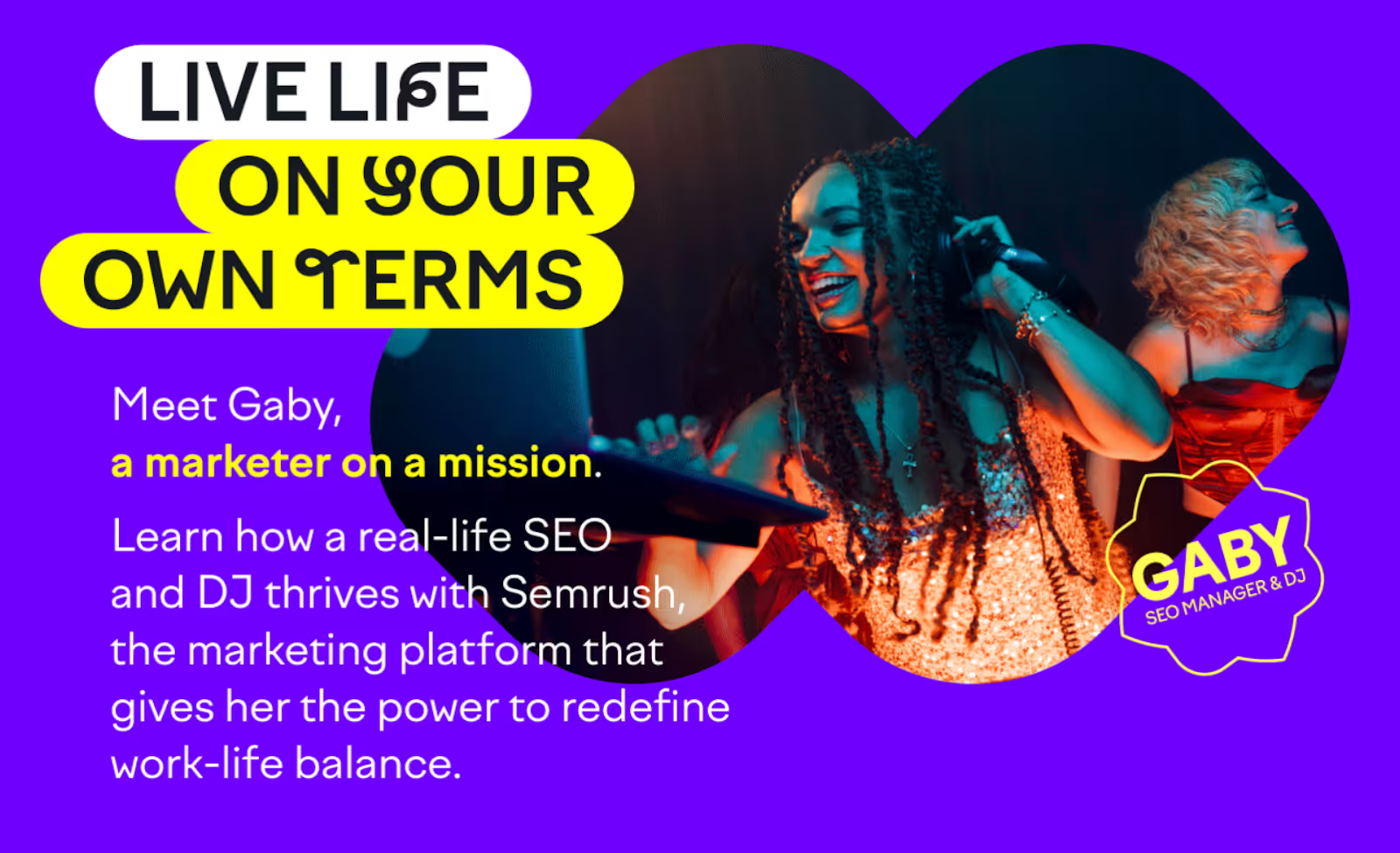
Gaby lives life on her own terms—an image that evokes freedom and worth. Through Semrush, Gaby can redefine her work-life balance and experience the best of both worlds.
While Gaby doesn’t share any expert tips per se, her position (SEO specialist at Peacock) and lifestyle (thriving DJ and aspiring producer) is creatively positioned to add credibility to the conversation.
It’s a masterclass in spiking emotional resonance. Anybody with a desire to live life on their own terms will feel inspired to check out how Semrush can aid their journey.
2. Drive your points home with relatable examples
Want to kill emotional resonance before it has a chance to work its way into the subconscious and influence decisions?
Brands devote countless hours to strategy and research, only to miserably underperform on execution. They’re proud that they’ve come up with a solid roadmap, but refuse to spend the necessary time building editorial standards that will allow them to produce high-quality content at scale.
One of the biggest differences between mediocre and valuable content is the ability to overcome the generalization gap:
Too many content marketers make a point and then leave the reader hanging. Where's the takeaway, example, or actionable advice?
Yes, content needs to be skimmable . Even if your reader is lazy or in a rush, you shouldn’t be.
Explain the “why” behind the “what” to remove guesswork and add value
Never miss a chance to explain your point further. That could leave the reader guessing and motivate them to find the "why" somewhere else.
For example, if you write a sentence like, “X is especially true because of Y”, you need to explain why Y matters.
Take this before and after as a case in point.
Before: “It's clear that the user experience Podia facilitates is valuable, particularly in a mid-pandemic world."
Ok, but why?
After: “It's clear that the user experience Podia facilitates is valuable, particularly in a mid-pandemic world where people have extra time, a desire to learn something new, and an unparalleled impulse to connect with others."
Most people can relate to feeling isolated and yearning to connect during a pandemic. Now, you’ve not only explained why, but you’ve connected with your audience on that crucial emotional level.
This adds a human element to your content. It’s what helps you go beyond the role of a robotic business trying to sell something to make a profit. It shows that you understand because you feel it too.
Nobody wants to feel like they're being sold to. Everybody wants to feel seen and heard.
Similar to how sales superstars master the art of connecting with their prospects on a personal level, use specificity to drive authentic connections.
Show, don’t tell to prove authenticity
These days, “take my word for it” doesn't fly. Not when social proof and word of mouth influence buying behavior, purchasing decisions, and brand loyalty above all.
A Deloitte study finds that, in order to bring authenticity into the digital age, you need to lead with purpose and center the human experience:
“Purpose answers an all-important question, ‘Why does a company exist?’—and the answer can serve as the beacon for all organizational decision-making.”
To prove authenticity, make sure to demonstrate exactly how you accomplish your goals. If you have permission, inject social proof by centering a real customer story that personalizes your data.
For example, Co-Founder and Co-CEO Alina Vandenberghe understood the power of a strong brand before she started Chili Piper. Its brand has managed to differentiate amongst steep competition like Salesforce.
Peep Laja of CXL writes:
“I've been watching the meteoric rise of Chili Piper. So many lessons to be learned from this company.
Their net revenue retention is super high (which also landed them an amazing valuation during their series B, like a 20x multiplier on ARR).”
Alina Vandenberghe wrote an article on how they built the brand from the inside out. She doesn’t simply talk about the journey, she gives specific examples of how they skyrocketed brand awareness and audience building:
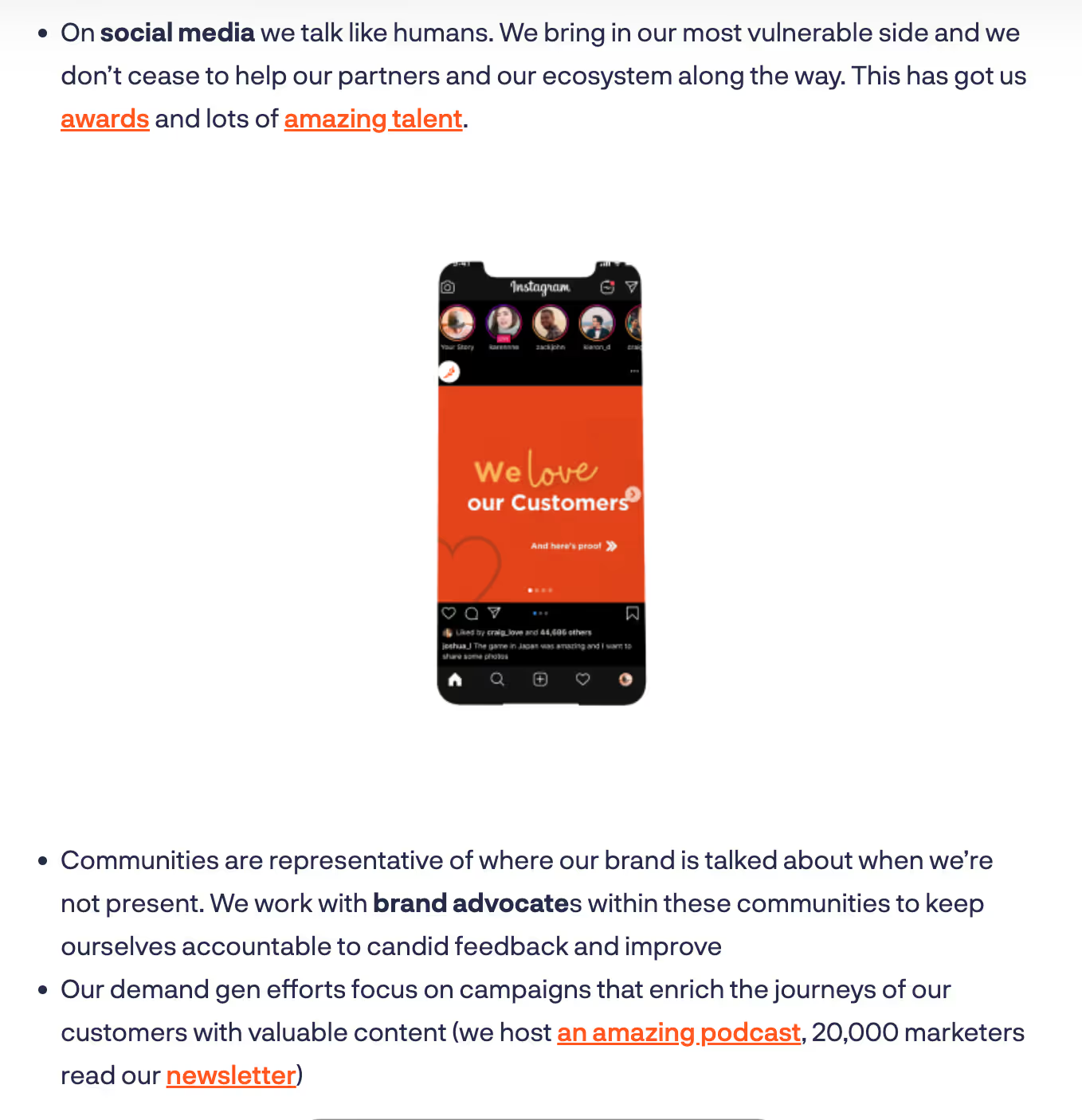
Authentic content often correlates with transparency. When you give away your ‘secrets’ for free, people feel more connected to your purpose and want to come along for the ride.
3. Declutter your copy and avoid redundancy
This may seem basic, but even advanced content writers struggle with wordiness and redundancy.
We all have publishing deadlines breathing down our necks. But if you’re starting to feel like you’re prioritizing quantity over quality, catch yourself.
Figure out why your sentences are averaging 20+ words and set up a strategy to reset and refocus.
Create a process for self-accountability to stay on track
At Grizzle, our writers create a detailed outline before getting started to make sure they avoid waffle. A comprehensive outline acts as a roadmap to follow, which reduces the chance you’ll repeat key points (which adds friction to the reading experience).
But if you’re a short-outline, write-as-you-research kind of creator, catch yourself at the end. Take a few hours away from your draft and revisit it before you publish.
Your message needs to be simple, clear, interesting, and skimmable. Complexity and wordiness do you no favors and certainly don’t give you an intellectual upper hand.
Content marketing isn’t intended to mimic dissertation’s, argumentative essays, workflow documentation, or anything else that calls for longer prose.
To declutter your copy, focus on these key copywriting principles:
Use active not passive voice to empower your reader to take action
Active voice is easier to skim and empowers the reader to take action.
Why? Because we're putting the power in their hands.
Rather than telling the reader that something can happen to them, we want them to feel like they can take charge and make it happen for themselves.
This ideally leads to the reader clicking a CTA or internal link, which works to build a stronger connection and gets them closer to becoming a customer.
For example:
Passive voice: “If you don’t have a mathematics degree, gaining professional qualifications like these is likely to boost your career prospects.
Active voice: “If you don’t have a mathematics degree, pursue relevant professional qualifications to boost your career prospects."
The language is more actionable and likely to inspire and energize the reader.
Another example:
Passive voice: “To optimize the time of your sales team, utilizing a data-driven marketing automation approach is key.”
Active voice: “To optimize your sales team’s time, utilize a data-driven marketing automation approach.”
It’s cleaner, easier to read, and tells the target audience (in this case, sales managers) exactly what to do (i.e. learn from data and automate repeatable tasks).
Rather than a solution that reads like half-baked advice, active voice empowers the reader to take matters into their own hands.
Trim the fat to get to the point
Never use more words than you need to. To quote William Strunk Jr., co-author of “The Elements of Style”:
“Omit needless words! Omit needless words! Omit needless words!”
People skim, but when they do land on a section of interest, they need to be engaged.
If your sentences twist and turn and are full of words that don’t really need to be there just to further make a point that you feel is important then you’ll lose them in a heartbeat.
See what I did there?
Let’s try that again. If your sentences are redundant and wordy, your readers will leave.
Here are a few examples of how to trim the fat:
Before: “To start making a plan, sit down and ask yourself the following questions:”
After: “To formulate a plan, ask:”
Before: “Affiliate marketing is often paid out by getting a free product or service.”
After: “Affiliate marketing is often paid via product or service payouts.”
Before: “To get more likes on Twitter than you’re currently getting; to squeeze everything you can out of a post, you need to approach content tactically."
After: “To get more likes on Twitter, approach content tactically.”
Your reader gets the same point, faster. Cutting superfluous words is not about cutting value. Quite the opposite. It creates more value because it’s easier to understand.
Avoid redundancy to preempt boredom and cultivate your character
I think of redundancy in two buckets:
- Repeated words or phrases that are overused and thus redundant
- Repeated ideas that are unnecessary because you’ve already made your point
Avoid both types.
Here’s an example of redundant words:
Before: “The roles begin to diverge once you take technical skills into account. Sales engineers have technical skills that allow them to identify patterns that someone without technical expertise may miss.”
See how the phrase technical expertise is starting to sound like a tongue twister?
After: “The roles begin to diverge once you take technical skills into account. Sales engineers have the industry expertise to identify patterns that an untrained eye may miss.”
That’s a lot easier to get through.
Let’s look at one more example.
Before: “When working with potential customers, technical sales engineers can explain complex concepts in a customer-friendly way. They use their knowledge to explain to potential clients how the product works and what makes it unique.”
After: “When working with prospects and leads, technical sales engineers can explain complex concepts in a customer-friendly way. These experts can demonstrate exactly how your solution will produce desired results and what makes it unique.”
Variety makes copy more compelling. Nobody wants to read the same word over and over. At best, it will make your copy look sloppy. At worst, it will look like keyword stuffing, which is the fastest way to appear robotic instead of a relatable, human narrator.
Redundant ideas are harder to neatly demonstrate as they often pop up throughout content rather than in the same sentence or paragraph.
For example purposes, I’ve condensed redundant ideas into one paragraph:
Before: “When pitching to investors, use data to dial up the pain and show how trends in digital adoption could harm business if they don’t act fast. As an example, [company name] outlined the opportunity investing in digital transformation presents. They hit stakeholders with some pain, and then showed them how they can turn it into an opportunity.”
After: “When pitching to investors, use data to dial up the pain and show how trends in digital adoption could harm business if they don’t act fast. Then, use examples to outline the opportunity on the other side of these pain points. As an example, [company name] used qualitative and quantitative data to demonstrate risk and showcase outcomes.”
The difference is nuanced but important. The first is slightly repetitive, and the second makes the same point without any repetition.
In the first example, the writer makes a point that you should ‘dial up the pain’ then ‘outline the opportunity’ this pain presents. They wrap up the paragraph with the same exact point, stated differently. It’s still effective, but ever so slightly repetitive, which we don’t want.
The second example wraps the ‘use pain to then outline opportunities’ point into the entire paragraph. Thus, they make the same point, but in a uniquely different way. It flows smoother and fit better into a seamless storytelling narrative.
It’s impossible not to repeat your ideas throughout a piece of content writing, but in doing so, make sure they flow seamlessly and aren’t obvious repetitions of one another.
This way, by the time your reader gets to the end, you’ve driven your point home so smoothly that they fully understand your argument but don’t feel exhausted or bored by repetition.
Key takeaways
Content marketers that master emotional resonance thrive. Content marketers that create strategies built to spike emotional resonance, then execute them with a quality-first mindset win.
Devote equal time to strategy and execution to build a competitive advantage and an army of loyal fans.

This article breaks down how Headspace generates over 720,000 monthly organic visitors. You’ll learn how this ecosystem helped generate over 2 million paying subscribers for Headspace and how you can apply these lessons to a SaaS content marketing strategy.
The Headspace content strategy: delivering value through content ecosystems
The Headspace product is itself a content platform. It exists to guide people through basic meditation principles, inviting them to subscribe and take advantage of features to expand their meditation journey.
But you don’t need to be a paying customer to reap these benefits. Every piece of content is designed to deliver value and educate their audience regardless of membership or means..
The Headspace home page prioritizes this mission before presenting product features:
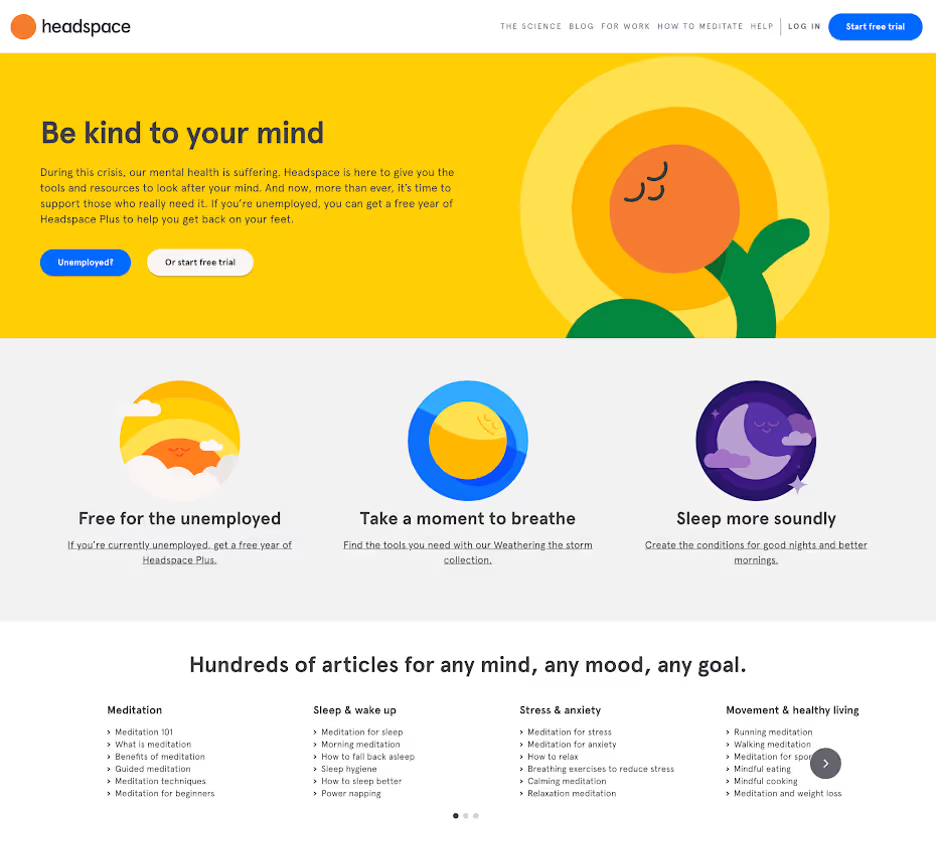
There’s a blend of urgent and evergreen content. If you’re new to the meditation scene, there’s plenty here for you to get started no matter your experience level.
Here’s what else Headspace does exceptionally well:
- A deep understanding of their customer personas—no matter where they are in their mindfulness journey
- Dedicated to over-delivering value on evergreen topics
- Rapid and agile responses to trends and major shifts in the world (e.g. when they offered free subscriptions to users affected by the COVID-19 pandemic)
- Cheerful and engaging branding that’s present throughout every blog article, video, and design asset
This strategy ensures their audience finds the information they need to start their meditation journey immediately.
This is what great content should do; inform, educate, and entertain in a way that builds awareness. Most importantly, it gets them invested in your product.
For SaaS and tech brands starting with content marketing for the first time (or those looking to improve their existing strategy), here are some lessons you can take from Headspace’s approach:
- Set the context: Why do you exist in the world? What are you hoping to help your customers achieve? This must be present in everything you create and publish.
- Conduct qualitative research: Data is critical for developing a content strategy. But you must talk with your customers to gain a true understanding of their needs. Ask them what they struggle with and what their goals are.
- Map needs to topics: Help customers solve these challenges by creating content on specific topics. Map your content to each pain-point. Identify trends that you can capitalize on.
- Go where your customers are: As part of those conversations, find where your customers are most active. Which channels, communities, social platforms, and publications have their attention?
- Build a community: Go one step further and become that channel. Create a space to let your audience come together, building a community around your product.
For example, martech brand Mutiny has created a community that brings senior marketers and revenue leaders together—both online and in-person:
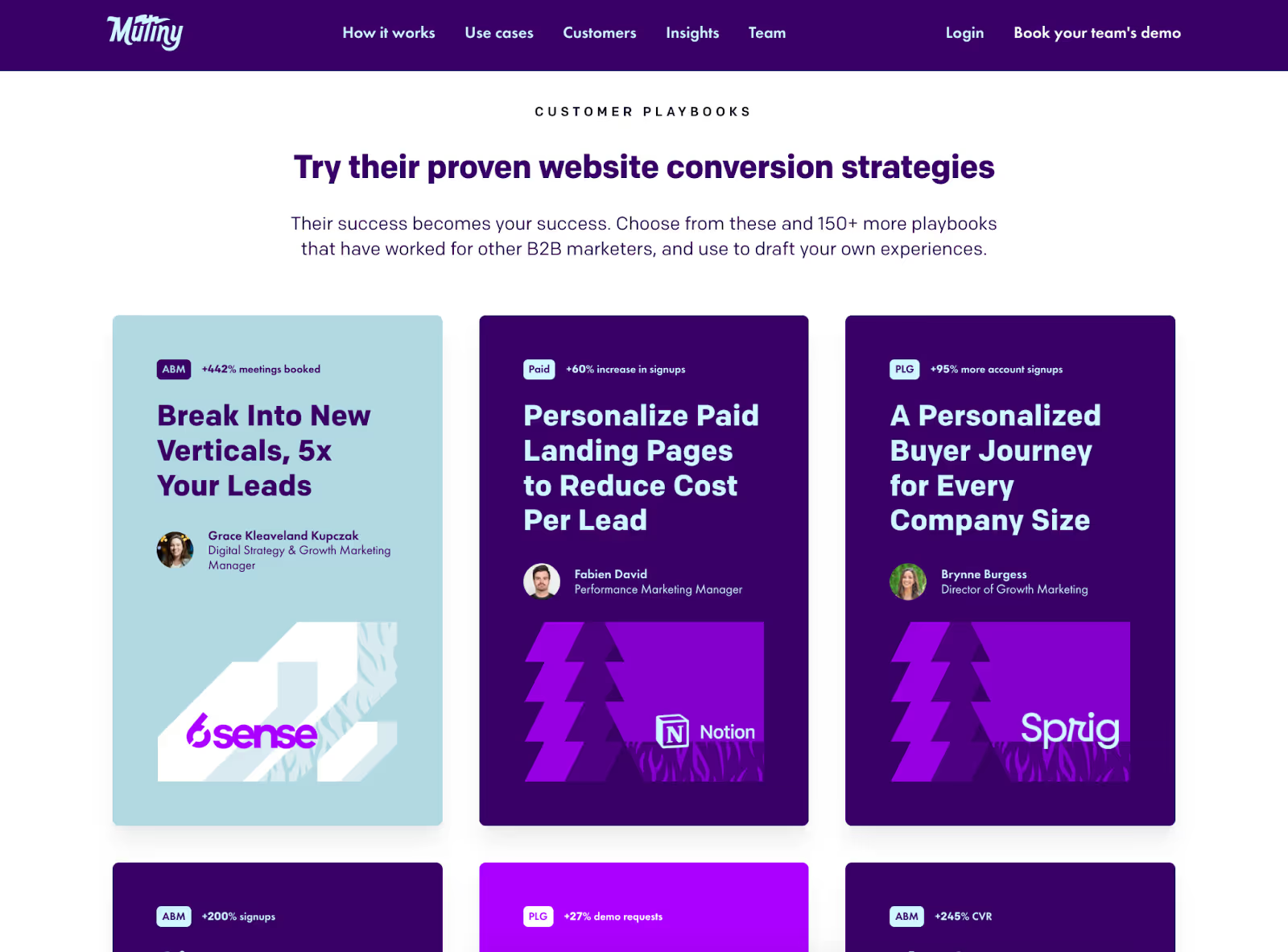
Not only does Mutiny’s community bring advocates and buyers together, but they also use it as a platform to share their stories. This philosophy transforms their customer into the hero, allowing the broader Mutiny audience to learn from their peers.
Your content strategy must serve your audience and align with your business objectives. Before publishing anything, ensure it accomplishes both of these outcomes.
Creating SEO-driven content in a competitive market
Headspace’s dedication to value-driven content helps them rank for highly competitive keywords like “meditation” and “mindfulness”:
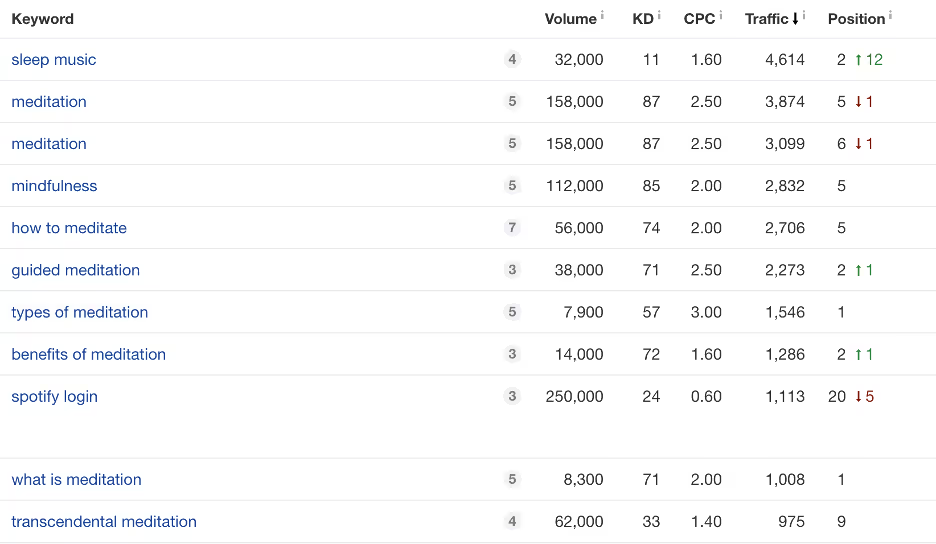
Collectively, the 143,000+ keywords they rank for generate over 720,000 visitors a month (according to data from Ahrefs).
To put that into perspective, you would need a monthly paid media budget of $619,000 to generate that traffic volume.
Let’s break their SEO-driven content strategy down further, starting with this content hub on “meditation basics:”
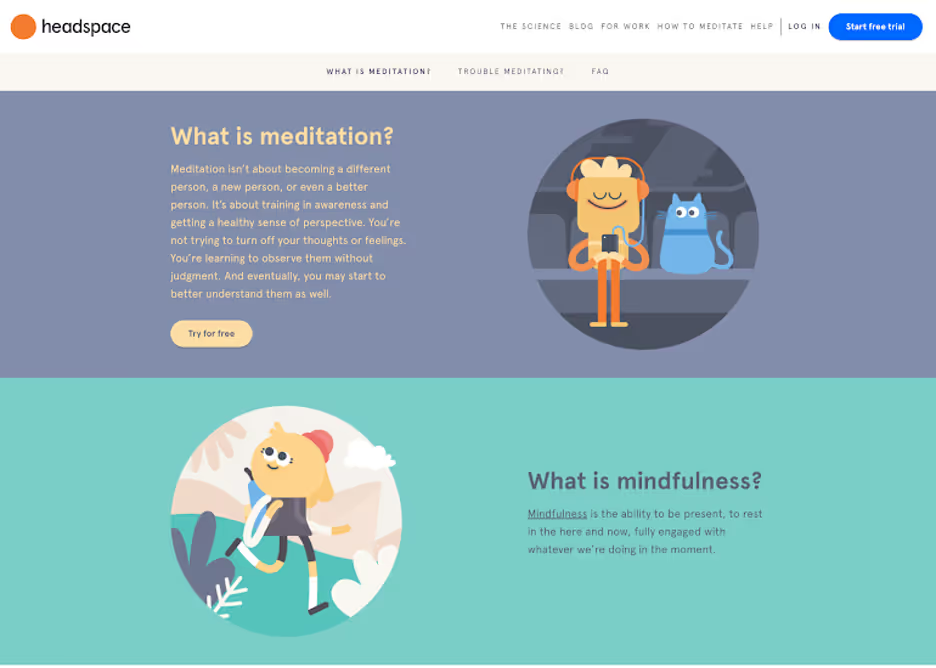
Using a hub-and-spoke approach, Headspace can create content around more specific topics, building out a comprehensive resource. This helps them build topical authority and rank for highly competitive keywords.
For example, this page currently ranks at position #9 in the SERPs for the term “transcendental meditation:”
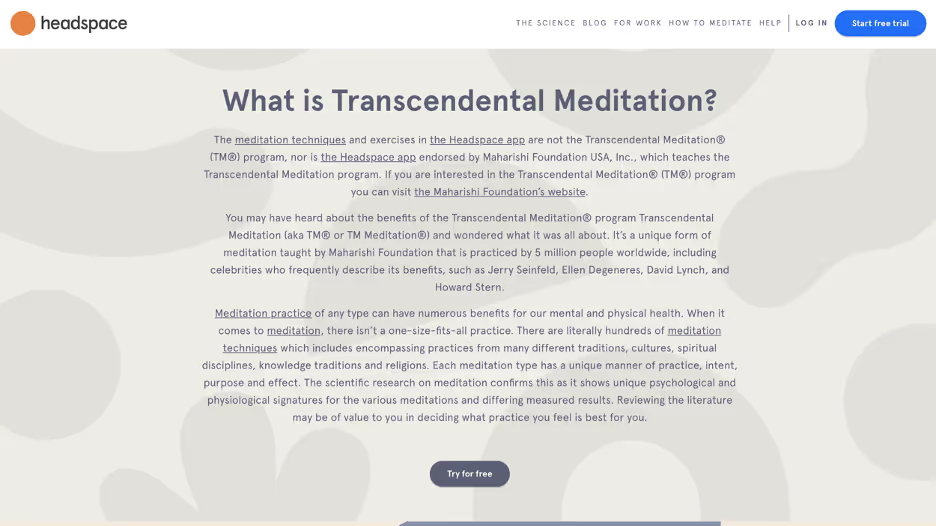
This article builds credibility and authority—both in the eyes of readers and the Google algorithm—by:
- Using objective data from third-party sources to back up claims
- Covering the basics of TM without overwhelming the reader
- Wrapping the content in a beautiful UI to keep readers engaged
The result is an incredibly engaging piece of content that organically attracts readers and backlinks.
Optimizing content for better results
A deeper analysis of Headspace’s blog presents several opportunities to improve results.
First and foremost, it could benefit from a more editorial-friendly format. In other words, remove the landing page style and reposition them as articles by expanding on each section.
Furthermore, according to Clearscope, there are several opportunities to include new themes that will help improve rankings:
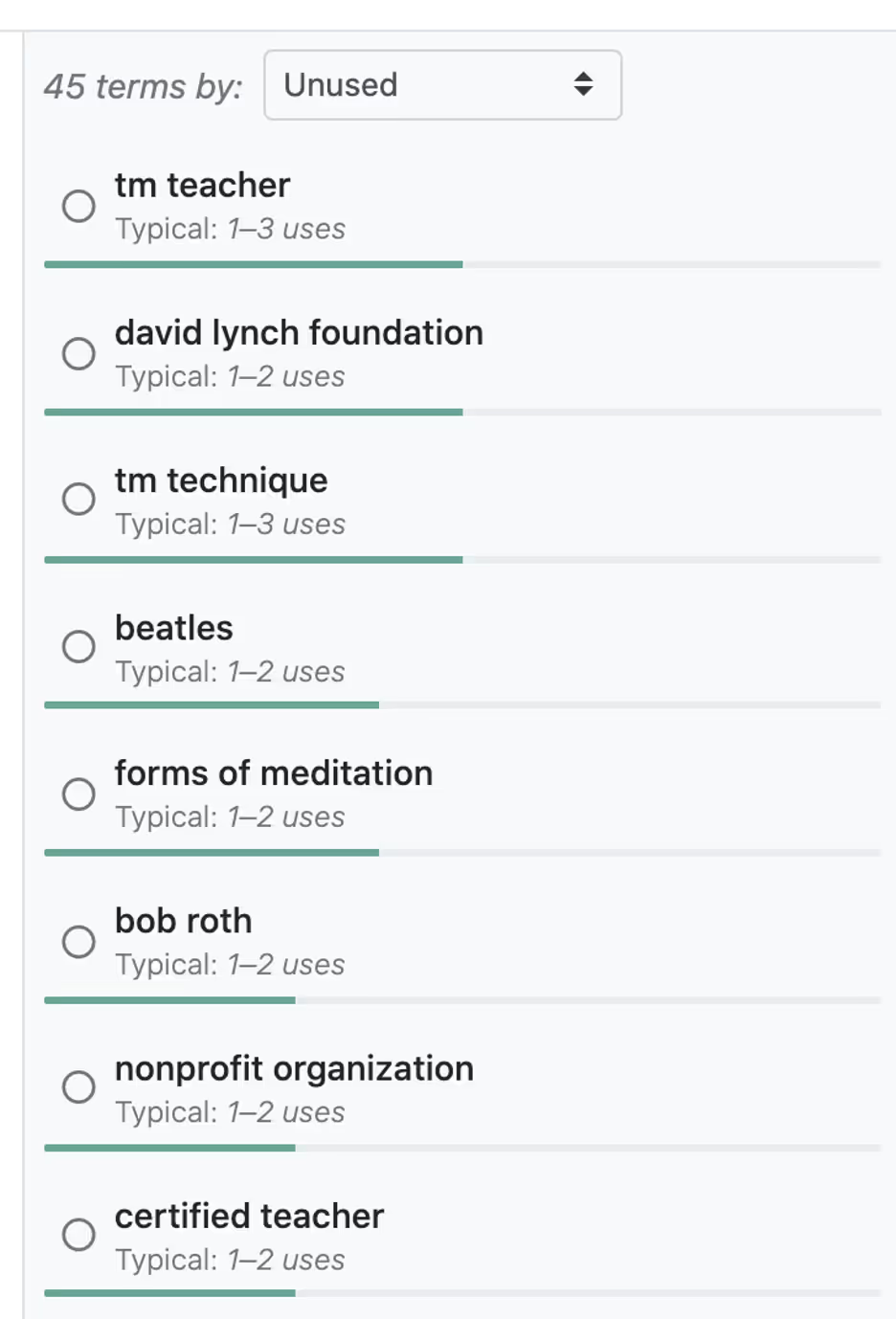
The same goes for their blog content. For example, this article ranks at position #17 for the term “high functioning depression,” which generates over 17,000 searches a month:
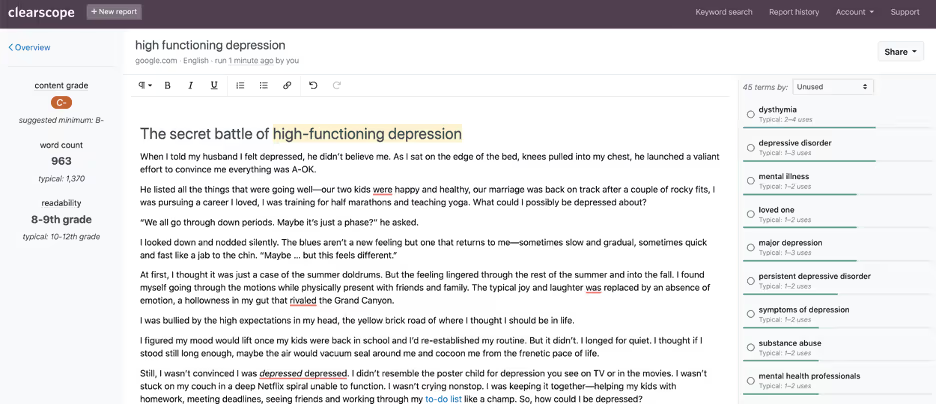
As you can see on the right-hand pane, there are several themes that the article could include to improve search performance.
I explore this in more depth in the video below:
Adopting a content optimization process can improve traffic and future-proof your content. It requires you to tend to your content like a garden. A publishing schedule and distribution act as soil and fertilizer, but you must water and prune those plants to see them flourish.
Charming and educational video content (generating over 120 million views)
Headspace's YouTube presence embodies the high-quality, educational content they're known for:"
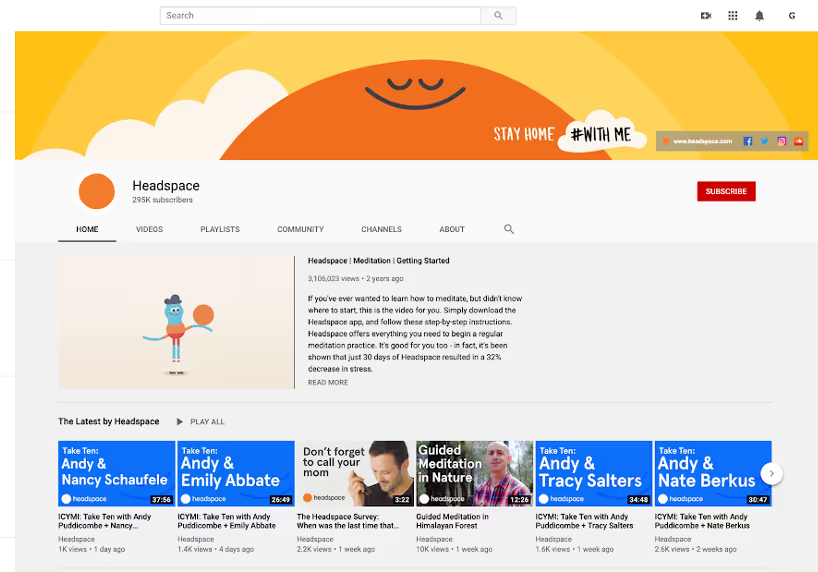
Their presence on the world’s second-biggest search engine is impressive, with over 500 video uploads to date. According to Social Blade, Headspace’s YouTube channel generates an average of 658,543 views every day:

Their YouTube channel offers a cohesive experience that shares educational content around relevant topics.
Many SaaS and tech brands treat YouTube as a dumping ground for webinars, product demos, and sales enablement content.
This is a mistake. While you may attract views, you won’t build an engaged audience hungry for your next upload.
Thanks to their commitment to high-quality video content, Headspace has generated over 620,000 subscribers.
However, the question remains: how do they use YouTube as a standalone marketing platform? To answer this, let’s dig deeper into one of their most popular videos on understanding dark thoughts:

Based on the comments, we can deduce that paid media—namely pre-roll ads—has driven the majority of these 139 million views.
Despite this, it still garners a high level of engagement—with more than 14,000 likes and over 900 comments from people who find the disruption welcome.
We’ve discussed how content can fuel your paid media efforts in the past, and Headspace is proof that it works.
YouTube is also the second biggest search engine in the world, another factor that Headspace capitalizes on:

This particular video ranks for the term “meditation” and has generated over 80,000 organic views in four months.
In short, video is a critical component of Headspace’s organic and paid acquisition strategy. It generates clicks, educates their audience in entertaining ways, and drives new users.
Creating exceptional video content at scale
Producing high-quality video used to be a mammoth task. However, it’s not as expensive and time-consuming as it used to be.
By establishing visual styles and adopting proven video frameworks, producing video content at scale is now simple and affordable.
Headspace uses constraints to publish beautiful video content consistently. There’s a clear visual style, with each video focusing on a specific purpose:
- Short guides: Beautifully animated videos that provide advice on specific topics
- Interviews: Long-form videos where Headspace’s founder, Andy Puddicombe, interviews experts and thought leaders
- Direct-to-camera: A scripted format where Andy sits in front of the camera to provide meditation advice
They’ve also created several “limited video series” around specific topics. One example is “Sleepcast,” an audio series providing free bedtime meditations:

Applying constraint to your video marketing allows you to scale up production while maintaining a high bar for quality. Commit to specific frameworks and batch elements of the production process to maximize resources.
For example, if you’re looking to publish four direct-to-camera videos a month, batch the live-action portion across one or two days.
Use your social media presence to set audience expectations, create a cohesive experience for viewers, and get them excited for future videos.
Digital PR, link building, and getting featured by Bill Gates
Headspace have gained their fair share of press attention. With mentions from CNBC, Forbes, and even Scientific American, they’ve effectively climbed the attention ladder.
Done right, digital PR contributes to brand awareness and helps you connect with prominent industry influencers.
Headspace’s digital PR activity took on a life of its own when they caught the attention of Bill Gates. In his own words, the product helped him go from meditation skeptic to believer:
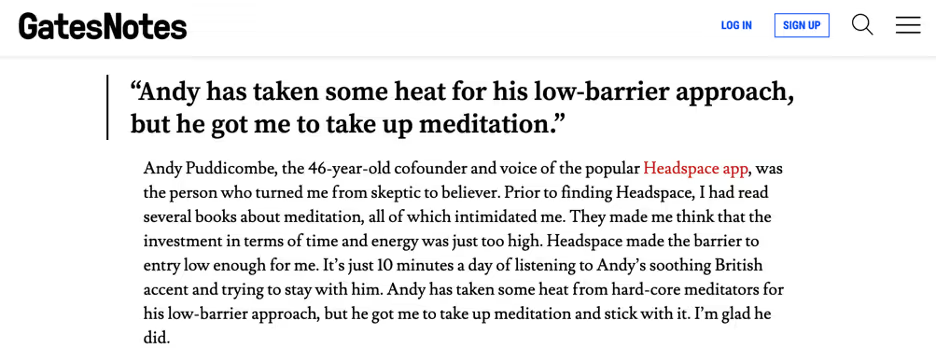
Headspace consistently get picked up by publications for several reasons:
- They create exceptional content in a variety of formats: This includes blog and video content, as well as “traditional formats” such as books. Package and position your content in new ways to open up distribution opportunities.
- They simplify complex ideas: The science behind meditation can be daunting. Andy and the team have broken this into digestible chunks, seen throughout their entire content ecosystem.
- They produce owned data: Journalists are hungry for new studies and data to cite. It helps them back up their content, make accurate claims, and increase their stories' credibility. Create data-driven content, become a go-to resource, and generate backlinks in the process.
Headspace goes one step further, partnering with scientists and organizations to conduct their research. Not only does this amplify their reach, but it makes these studies more credible:
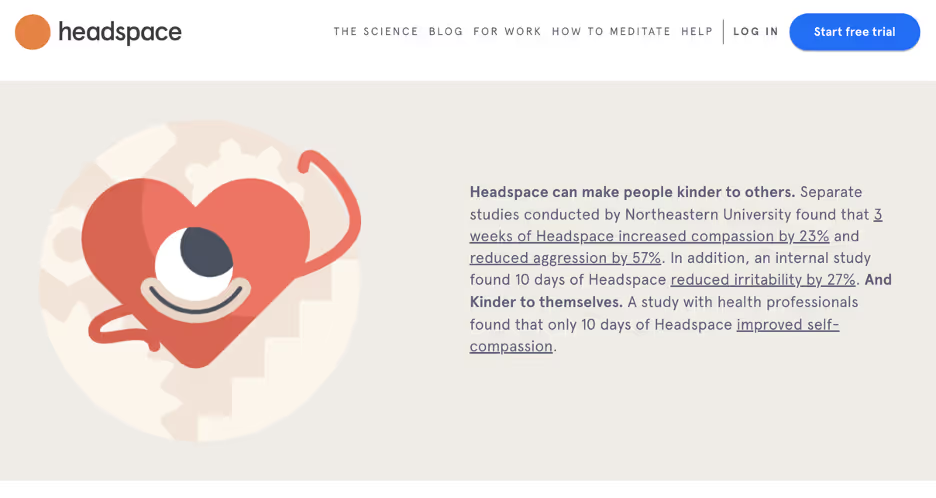
This approach can help fuel your link building efforts. Do this by creating assets that allow creators and brands to enhance their content. Experiment by creating content around highly shareable formats:
- Thought leadership: Expand on a topic and deliver delightful experiences. Make your content so comprehensive that others can’t help but link to it.
- Studies and research: Use owned data to conduct research and report on trends. Survey your audience about their experiences or thoughts on specific topics.
- Infographics & visual content: Content creators are hungry for illustrations, graphs, and infographics to include in their content. This helps them make their content more valuable and engaging.
Social media scheduling tool Buffer took a data-driven approach to digital PR with their “State of Social” report:
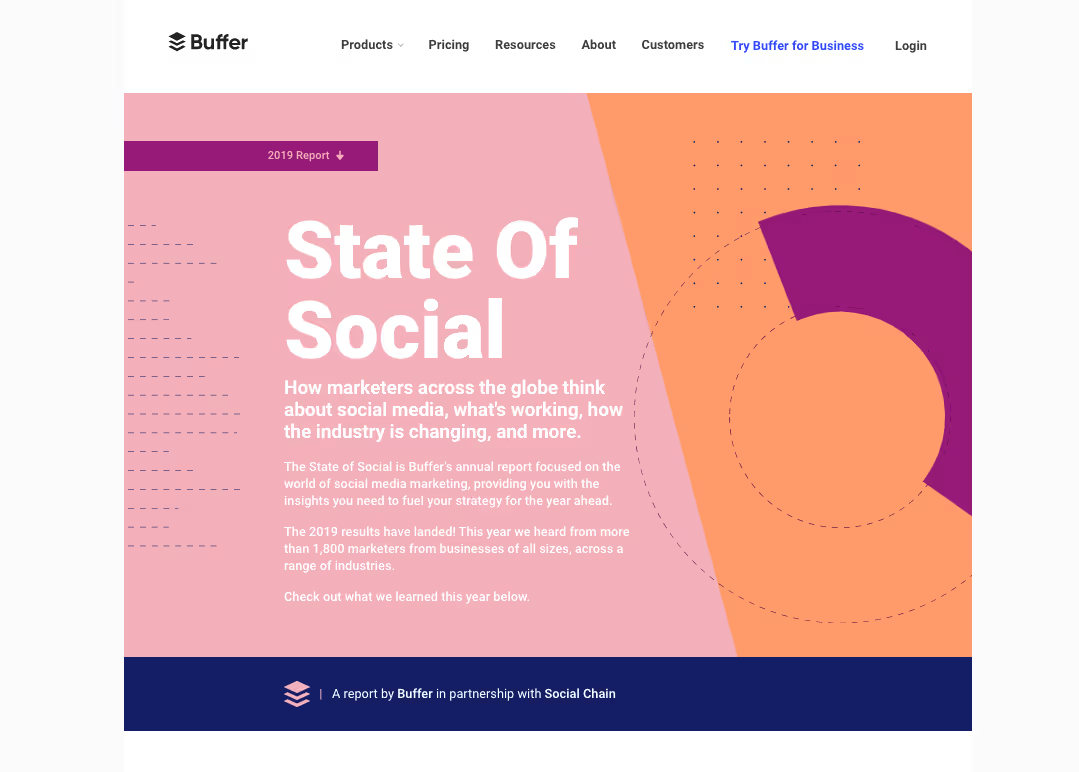
Over 100 blogs and publications cited this report in its first 14 days of publication. At the time of writing, it now has over 1,280 referring domains.
Developing strong relationships is a critical ingredient for digital PR. Cold outreach has its place, but establishing partnerships and collaborating with other brands is more effective in the long term.
Why? Because editors, bloggers, and journalists get bombarded with generic pitches every day. Instead, find ways to collaborate and help everyone win.
For example, we recently helped a martech client get featured in several publications and blogs by creating content with other marketers. Using this approach, we achieved a 37% response rate and a 44% link acquisition rate.
It’s not just about links. These conversations will lead to other business opportunities that ultimately help you capture a wider audience.
Building a personal brand around Andy Puddicombe’s expertise
Founders often start their business around a problem they have first-hand expertise in. It’s essential to get that expertise out into the world.
To date, Headspace Founder, Andy Puddicome, has talked at leading conferences like TED, SXSW, and The Ellen Show:
His story is compelling and easy to connect with. The journey that led him to create Headspace is full of valuable lessons we can use when adopting a meditation practice.
No matter the size of your company—or your role within it—you can share your voice and story to build connections and bridge the gap between brand and customer. This works best for:
- Founders and CEOs: Become the face of your company. Connect with influencers and connectors in your space. Those relationships will last a lifetime when the time comes to step away from the spotlight.
- Marketers: Same goes for growth, demand generation, and content leaders. You can make your job easier by becoming the face attached to every blog post, guest post, or video. You’ll achieve results for your company while advancing your career in the process.
For example, May Habib, Co-founder and CEO at Writer, uses LinkedIn to share content around generative AI and product updates happening at Writer:
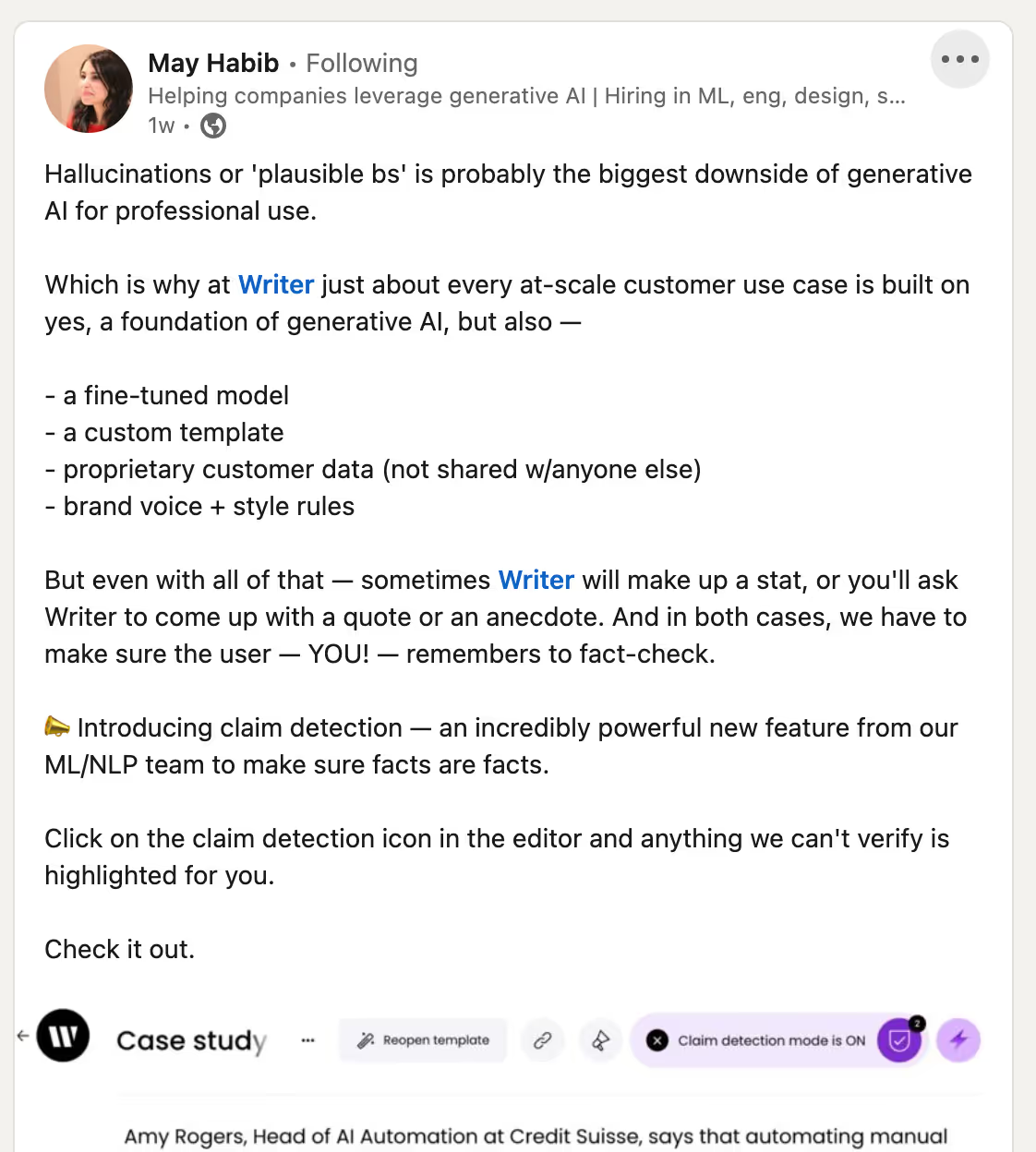
People connect with other people. Building a personal brand and human presence is important for both startups and enterprise companies alike.
Converting readers and viewers into paid subscriptions
No matter where you look, Headspace offers one clear call-to-action:
“Download the app.”
This kind of CTA can often be a huge ask when selling complex or high-ticket offerings. For product-led SaaS or tech brands like Headspace, it makes absolute sense.
Let’s look at what the customer journey from “awareness” to “subscription” may look like for a single user to understand why:
- They browse YouTube and get suggested a video from Headspace teaching a specific meditation technique
- They watch the video and decide to read more about the concept on the Headspace blog
- They follow a link to another article and decide to download the app and follow the free 10-day meditation program
The Headspace content ecosystem contributes directly to user acquisition. From here, they can deliver more value in the app with free lessons, using relevant CTAs and offers to convert free users into paid ones—the classic freemium model.
In this sense, the Headspace product is part of this content ecosystem. It makes sense to drive app downloads from blog posts, YouTube videos, and other owned content assets.
For SaaS and tech brands, the offers and CTAs you use across your content will depend on the complexity of your product, solution, and the nature of your sales process.
You might offer a newsletter CTA to build an audience and slowly nurture them into leads. Or, you could offer a free trial or demo of your product. This is especially effective when crafting crafting bottom of funnel content.
Headspace can nurture free users with three methods:
- Email marketing (newsletters, announcements)
- Mobile push notifications (retention)
- Product marketing (adding new free content)
For example, the email below invites free users to dive back into the app if they’ve not tried a meditation after a specific period of time:

The CTA encourages the user to learn the basics, easing them in by addressing a time-based objection: it takes three to 10 minutes.
Users are far more likely to continue their journey and invest in a monthly subscription if they consume free content within the app.
Build a content ecosystem
Any B2B or SaaS brand can learn something from Headspace.
They’ve built their content strategy on the premise of delighting, educating, and empowering their audience at every touch-point. It’s no wonder they’ve created a product loved by millions of users.
Great content marketing establishes a strong foundation for trust to emerge—all while contributing to critical growth goals needed for success.
Start with your existing customers. Discover why they value your product and put more of that into the world. Do this across your selected channels, and you’ll quickly build a brand your audience loves.

In this article, you’ll learn how to create a digital PR-driven link building strategy, the content formats that generate natural backlinks, and how to achieve a link acquisition rate of 44% from your outreach.
Link building and the law of shitty clickthroughs
Most link building advice focuses on tactics like “broken link building” and the “skyscraper technique.” However, these approaches quickly lost their effectiveness due to how popular they became.
People bombarded link creators with emails that followed the same framework:
- A personalized first line containing a superficial compliment
- Details on the broken or outdated links in their content
- A request to replace it with newer, “better” content
It’s not an attractive offer. You’re competing with dozens of SEOs following the same advice, even using identical email templates word-for-word. Some people suggest nurturing link creators on social before reaching out, but this is both time-consuming and insincere.
This results in burning relationships before they’ve even begun. There’s a misalignment between common practice and what link creators care about.
The more link creators are exposed to an approach, the more they’re aware of the intent behind it and the less effective it becomes. It’s the law of shitty clickthroughs in action.
The solution: produce creative and data-driven content
The link building practices above lack three critical elements to successful, long-term link building:
- Creating something truly interesting;
- Providing link creators with something they value, and;
- Intelligent, well-targeted outreach.
This means producing data-driven and creative content while establishing long-term partnerships with link creators, not treating them as commodities.
This philosophy is how we’re able to generate an average response rate of 37.5% and a link acquisition rate of 44% across our B2B digital PR campaigns.
Two proven principles must act as the foundation for your digital PR and link building campaigns:
- Data: Collect data in the form of studies or benchmarks, or curate existing and third-party data to create a unique narrative
- Creativity: Produce assets, media, and tools to ride trends and delight audiences
Let’s dive into three specific formats that employ these principles, along with examples from brands who use them:
1. Become a go-to source of data with industry reports
Studies and data-driven reports are a tried-and-tested approach to digital PR. They help link creators back up their claims while offering readers new insights.
However, most industry studies fail to share something new. If they do, it’s executed in such an uninspiring and uninteresting way that they capture little attention.
This low bar for quality means it’s easy to stand out for marketers willing to put the work in. Providing a better experience, using good content design principles, or building interactive user experiences give link creators something attractive they can use in their stories.
For example, Mailmodo has positioned their State of Email 2023 report as a product they’ve heavily invested in:

Mailmodo improve the report’s perceived value by:
- Collaborating with other SaaS brands during the production and promotion phases
- Communicating the value of the ebook with benefit-driven copy
- Increasing social proof by adding the Product Hunt “#4 product of the day” badge, further cementing its positioning as a standalone product
Buffer is another example of how great content design can improve performance with their State of Social report:
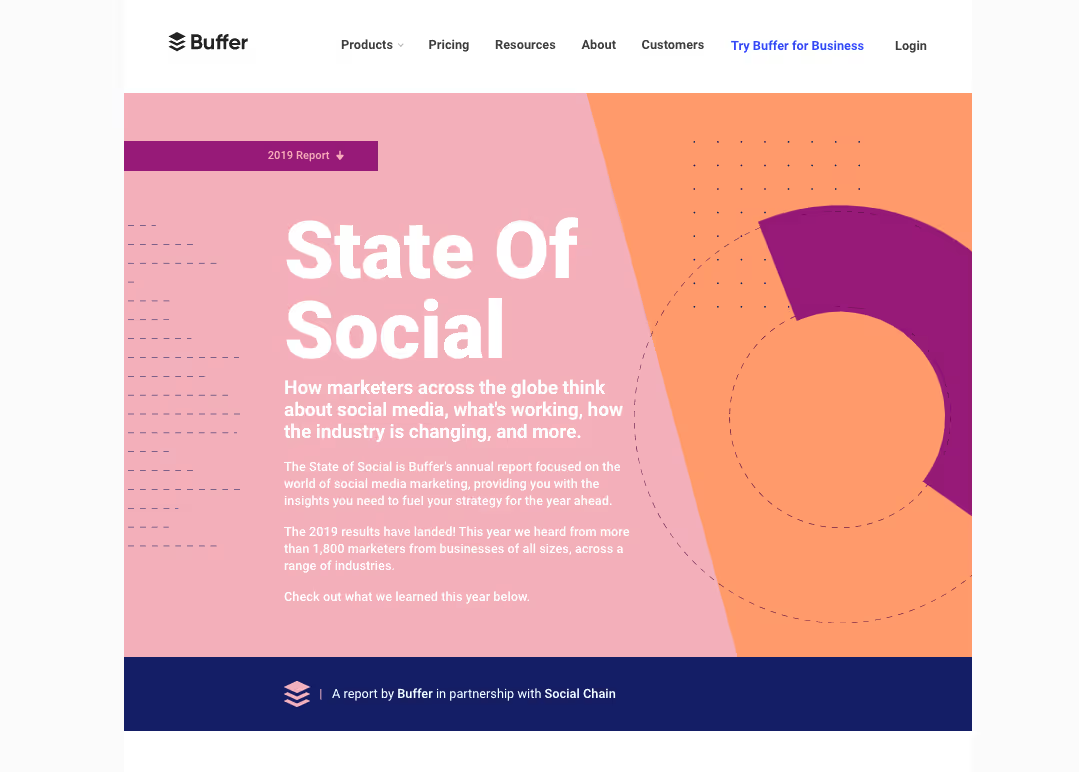
At the time of writing, Buffer’s report has generated over 2,800 backlinks across 1,220 domains—including mentions in Entrepreneur, HubSpot, Search Engine Journal, and other leading business and marketing publications:

While these reports generate little search traffic, the increase in domain authority combined with intelligent internal linking lifts all ships.
1. Find a relevant and unique angle
All great data-driven projects start with a unique angle. For example, dozens of sales studies are conducted every single year. Pipedrive is one of the few to create a statistically-backed, journalistic-style dive into the state of diversity and inclusion in the sales workforce:
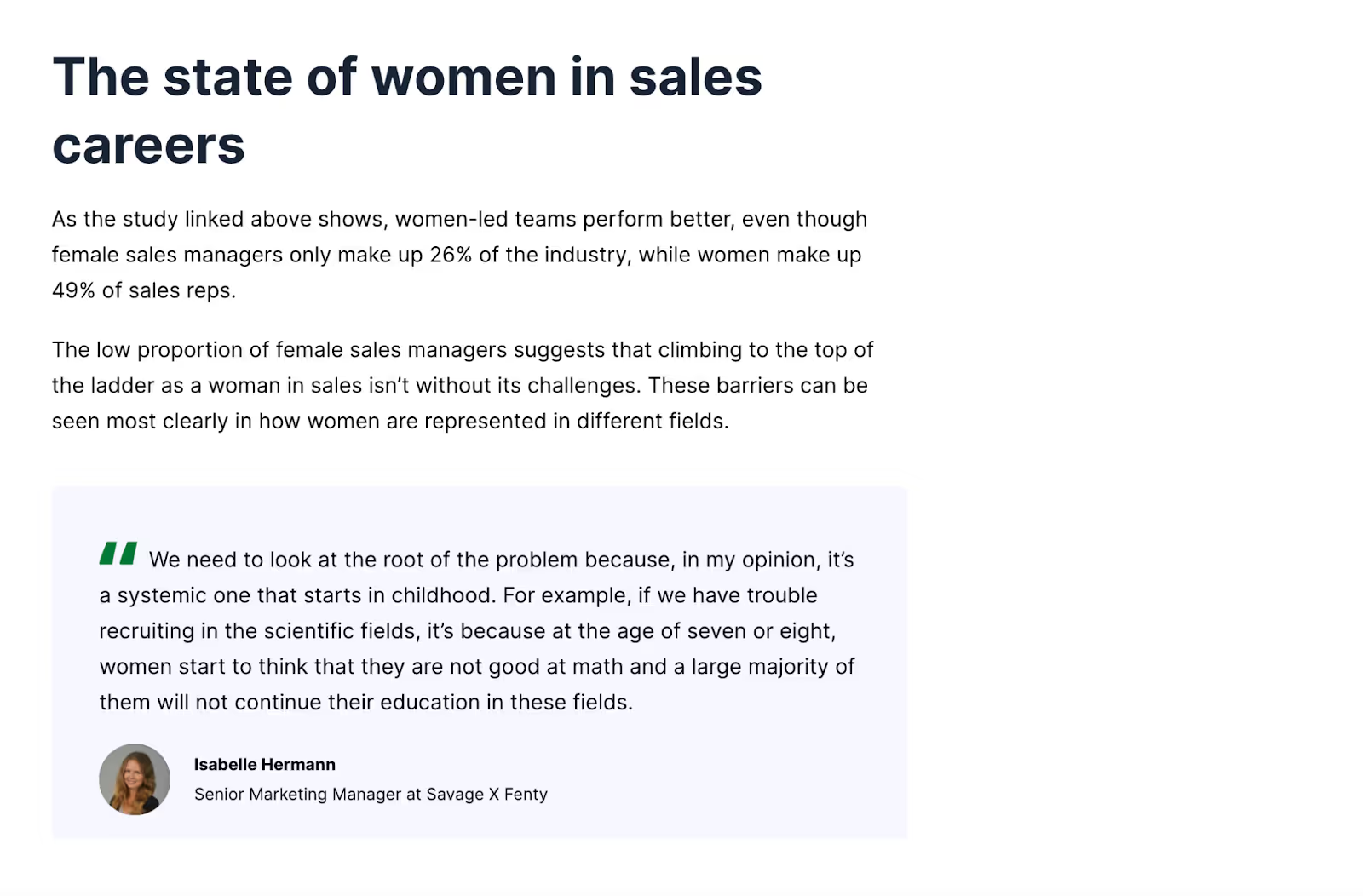
Find an evergreen angle, or uncover a newsworthy trend that’s top-of-mind in the industry zeitgeist. You can do this by:
- Following influencers who regularly share industry updates
- Using tools like SparkToro or BuzzSumo to identify emerging trends
Focus on rising trends that are most relevant to your brand, product, and audience.
Furthermore, prioritize those where you have experiences, stories, and expertise to further hypothesize around the data. This is how you position yourself from a “resource hub” to a true thought leader.
2. Collect and source statistically significant data
The most challenging part of this process is sourcing a statistically significant dataset.
We’ve found the most effective methods of collecting data are:
- Analyzing owned product data. For example, an email marketing platform organizing open rate benchmarks across industry segments.
- Scraping publicly available data. For example, scraping the backlink profiles of data-driven content from Ahrefs.
- Industry and persona surveys. For example, collecting 500 to 1,000 responses from content marketers for a “State of Content Marketing” survey.
- Collaborating with other brands. For example, offering an audience intelligence brand to analyze their owned data to produce a benchmark report.
Collecting data is just the first step. Finding if there’s a story worth sharing requires careful and honest organization of the dataset you’ve collected.
Finding a data analyst to help you is key. The best analysts also understand that the way data is framed will inform the narrative. Get them involved from the very beginning of your project to ensure good data hygiene and accuracy.
3. Package up key findings for link creators
While data is the foundation of great data-driven content, presentation is key. Accompany your data with beautiful visual assets that content creators and journalists can easily embed in their content.
For example, Pipedrive repurposed the most interesting findings from their State of Sales report into a blog post, complete with easy-to-share infographics:
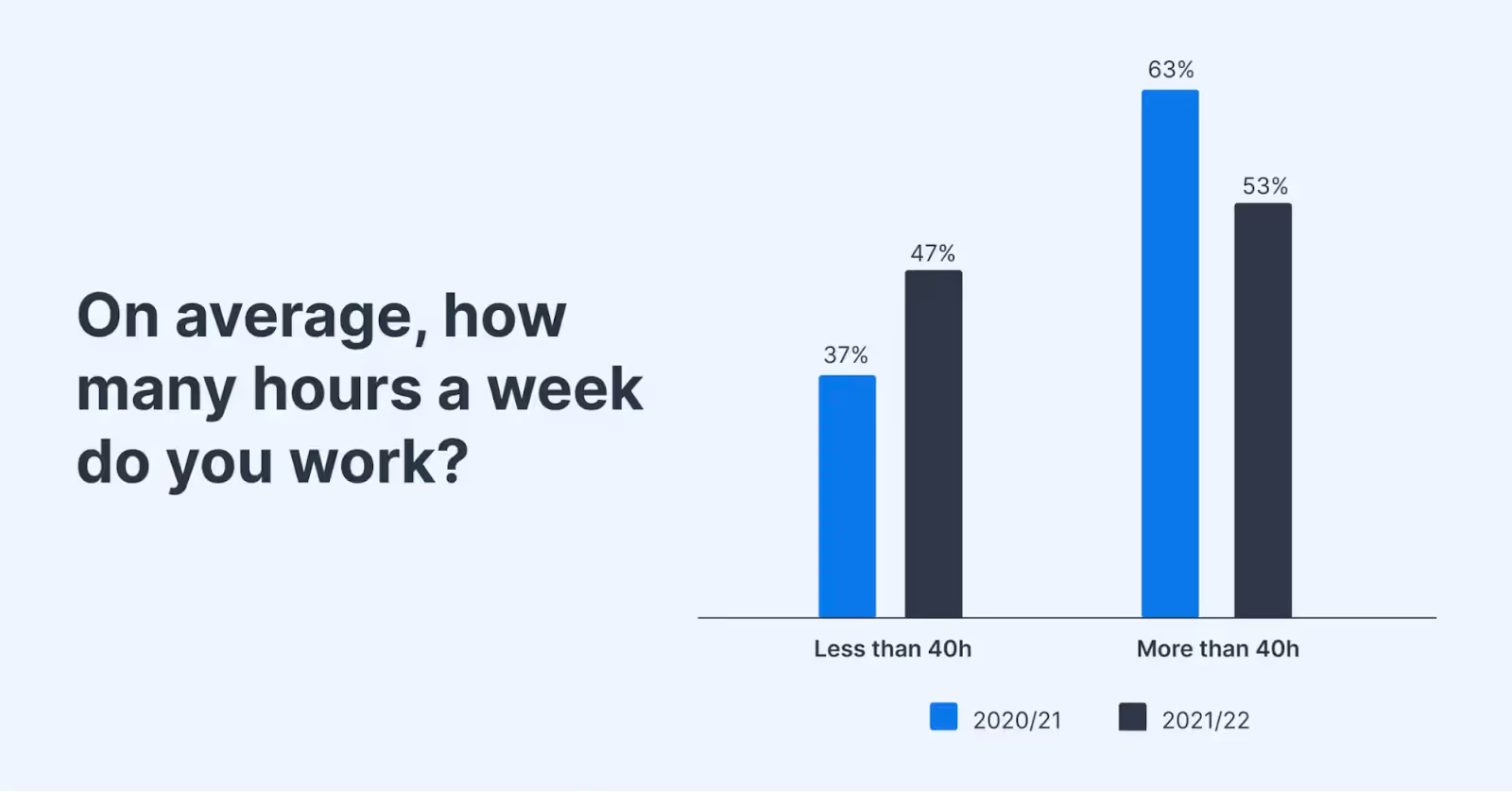
This makes earned content more engaging for readers while extending the reach of your owned content. As more people organically discover your story, the more natural links you’re likely to generate.
Add your opinion to build thought leadership around your findings. Include this in your outreach as commentary to empower journalists to tell the full story.
2. Elicit emotional responses with video content and documentaries
While there will always be a place for information, stories allow you to build a stronger connection with your audience and, importantly, the buyers considering investing in your solution.
The term “B2B” can be misleading. We’re really marketing to the people within an organization. Using media to share your customers’ struggles and successes not only establishes deeper connections, but help improve content marketing and SEO performance in the process.
For example, Mailchimp Presents is a solid example of using documentary-style video content to share customer stories. Creating their own Netflix-style platform, each series focuses on various topics in the realm of entrepreneurship, business, and the future of technology:
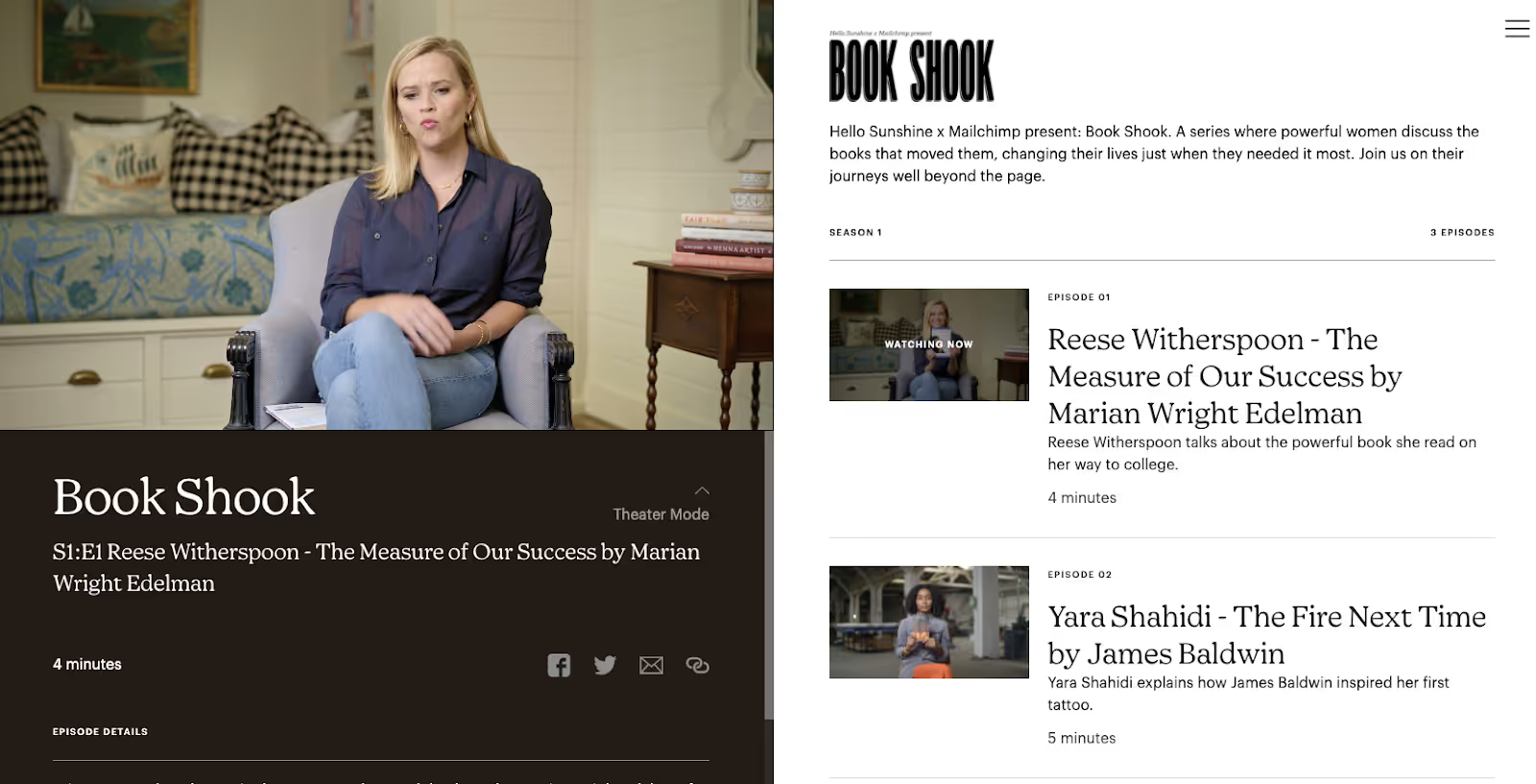
Their series “Book Shook,” as illustrated above, partners with influential and successful women like Reese Witherspoon and Jameela Jamil to share the books that have influenced them:
Mailchimp’s collection of video content is a tremendous source of backlinks, garnering media coverage every time they launch a new series. Each series launch is met with bursts of coverage followed by sustained backlinks:

How to create video content at scale
The best marketers make sure their brand gets out of the way of a good story. They make sure their customers or partners are the star, elevating the struggles and successes that their audiences truly care about.
Black Fish covered the corruption of Sea World, but the story was really about Tilikum.
The first step is to find your muse. What story do you want to tell, and who does it belong to? This can include experts within your organization, but don’t forget to look outside and ask yourself: who else would our audience be interested in learning from?
Next, decide on a format. Will it be an episodic series, a one-off video for YouTube, or a podcast?
Understand which formats and platforms your audience is already familiar with and cater to those tastes. Kristen LaFrance does a terrific job of this with Shopify’s Resilient Retail:
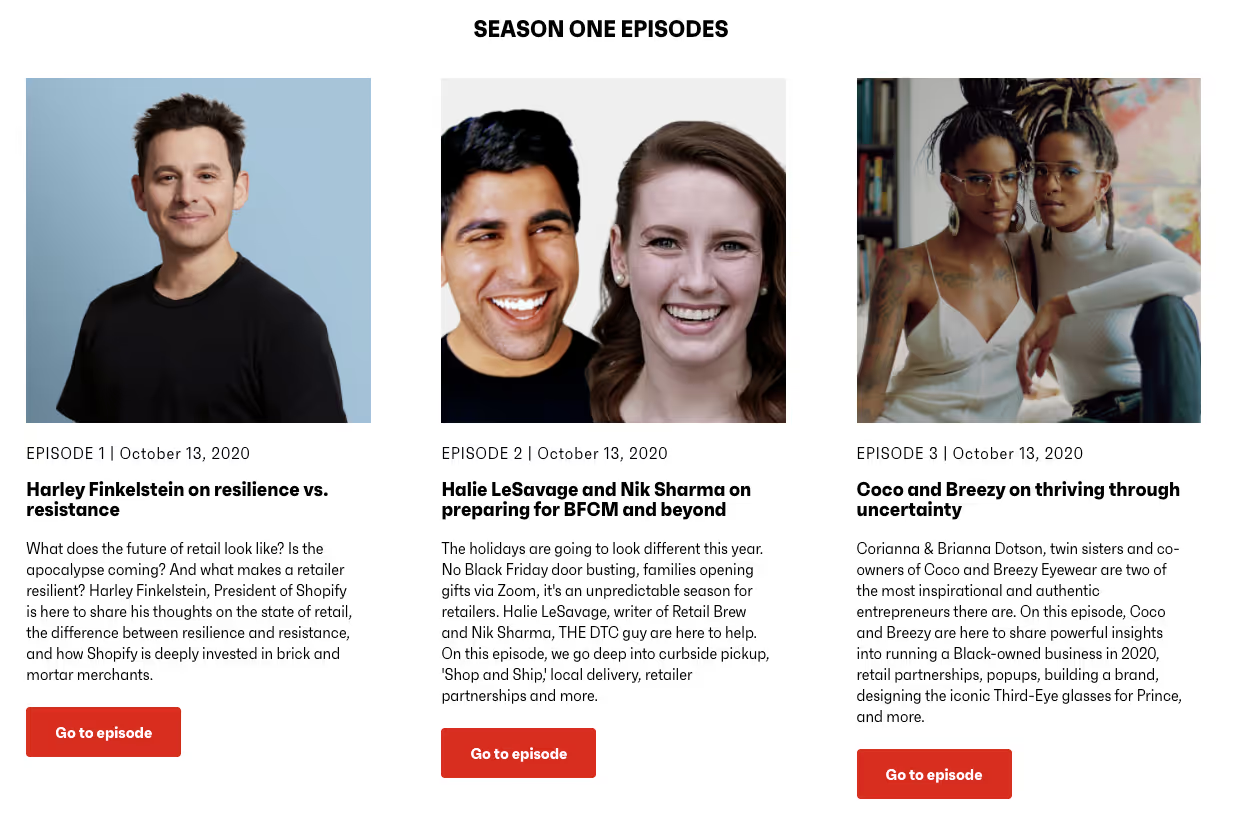
Don’t forget about the repurposing power of your content. Each video can be repurposed into podcasts, short-form video for social, and long-form blog content. Recycle it over and over again for maximum visibility.
Video content production can seem daunting, but it’s not nearly as complex or expensive as it used to be. Check out our complete guide to video content production to learn more about scaling your video marketing.
By starting small, you can replicate Mailchimp’s approach to building a media brand centered around high-end production values.
Collaborate with other creators to enrich your stories while helping them access a wider audience to capture as much attention as possible. This improves the quality of your content, broadens the stories you can share, and gives you access to a wider audience in the process.
3. Generate buzz and excitement with standalone resources and tools
Launching standalone products, tools, and microsites can generate vast amounts of buzz and attention. A great example of this is Mention’s Influencer Marketing Stack:
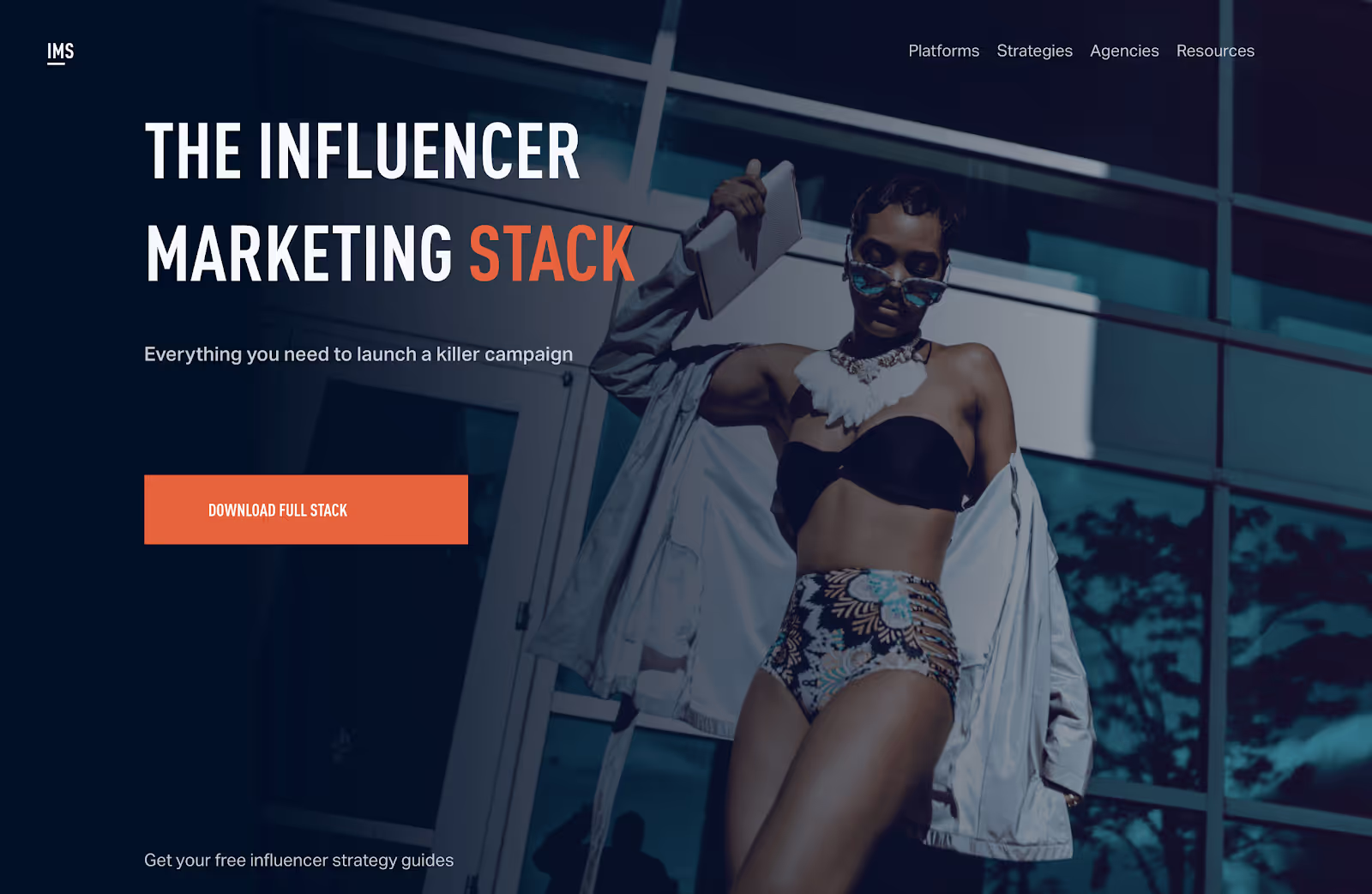
This standalone resource has generated over 1,900 upvotes on Product Hunt and over 847 backlinks from publications like Inc., The Next Web, and Content Marketing Institute.
Here’s what Mention did that helped make this resource a success:
- They exceed value expectations: The microsite provides tools, a directory of agency vendors, and how-to information that marketers can learn from.
- They partnered with top brand: Collaborating with the likes of HubSpot, Later, and BuzzStream extended their reach while increasing the authority of the resource.
- They followed a deliberate launch plan: Mention didn’t achieve success by accident. They coordinated with partners and advocates to make as big an impact as possible on launch day.
Not only do microsites and standalone resources serve your audience, they also provide link creators with a source they can refer to in their own articles and stories.
How to rapidly create and launch resources and tools
Even when building products for digital PR, you must start by discovering what the market is hungry for—or at least curious about—and validating it. Just like you would any other product.
Talk with link creators you already know for their opinion on your project. Share its purpose and how you plan on delivering value to your audience. Ask them for their opinion and validate its coverage potential.
Customer research is critical for finding new angles and validating what you’re building. We’re not building a startup here, so a burning problem isn’t required. However, your resource or tool should provide utility and garner some level of excitement.
If you’re building an app or software, enlist the help of in-house engineers or an agency like Grizzle. Alternatively, use no-code tools like Bubble and Webflow to build an MVP without technical know-how.
The same goes for microsites. Building standalone experiences is easier than ever, thanks to no-code development tools and website builders.
Create something worth linking to
If your link building KPIs look a little flat, consider evaluating what you’re creating and how you’re reaching out to link creators.
Most journalists, bloggers, and influencers are always looking out for new stories to cover. However, if you’re not seeing the results you expect, it’s likely they’ve seen what you’re offering a thousand times.
Reverse engineer where their attention is going. Think beyond skyscraper content. To acquire links, offer something truly interesting. Do away with superficial outreach and see your response rates soar.

In this article, you’ll uncover a compelling argument for taking more creative risks, the importance of expanding your frame of reference, and learn specific methods to build a competitive moat around your content and brand.
Why creativity is more important than ever in an AI-generated world
The late futurist Jacques Fresco once said:
"Creativity takes known elements and puts them together in different ways.”
Jacques’ work was famous for its creativity. He consistently challenged the status quo in city design, resource management, and social engineering. This reimagination of how to use modern technology was born out of frustration at the lack of industrial innovation.
Today, your audience feels that same frustration due to how common bad content has become.
Blog articles have rapidly lost their zest and originality. As marketers compete for the same keywords, they rely on identical frameworks as their competitors.
But buyers can see that most SEO-driven articles are unreliable and copy each other, which undermines their trust in Google as a source of information.
What’s worse, tools built on top of OpenAI and ChatGPT are exacerbating the problem. While this will ultimately make our jobs as marketers and creators easier, in the present reality they’re being misused to create terrible experiences.
Consumers are already calling out media brands who churn out low-quality content. Just take this comment from a recent Unilad post:
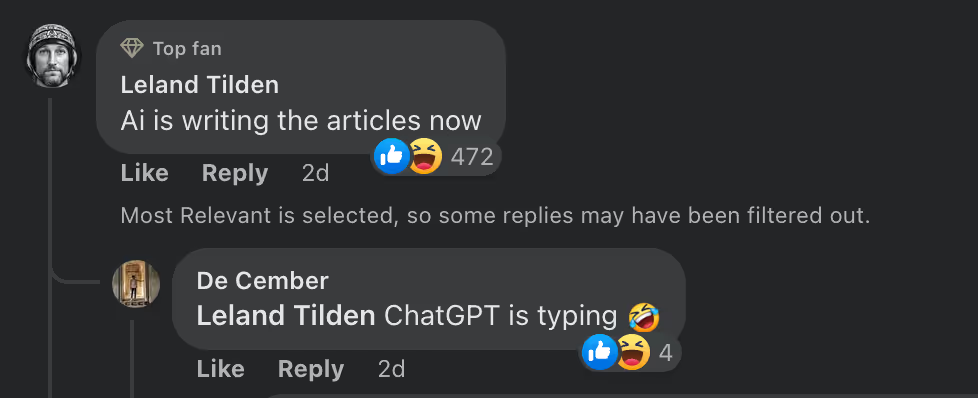
How do we alleviate doubt and delight readers? How do we offer an experience that surprises them and builds trust?
Injecting creativity and doing what robots can’t is the only way.
Use creativity and benevolence to build a content moat
Creativity elevates your content and builds trust with skeptical readers.
As Jacques Fresco said, this requires putting “known elements” together in unique ways.
But we still need to generate business results. Content that generates the lion’s share of attention does so for a reason: it fulfills search intent.
The problem is, everyone ends up copying each other. Trust is eroded as your customers bounce from one article to another.
Creative applications to SEO-driven content helps your content stand out. It keeps the reader on the page, sending engagement signals to Google. The longer a user sticks around, the more likely they are to take action.
Let’s say you’re writing an article on relationship selling. Typical advice for this topic includes “giving value” and “solving objections.”
However, based on your experience, you know it’s important to build intimacy by counter-intuitively challenging prospects and introduce them to their peers.
This perspective offers a unique approach to relationship selling into your article. It builds trust with your readers and creates a stack of value.
Why go through so much trouble for a single piece of content? Because it’s the only way you’ll break through your audience’s “B.S. shield” created by copycat and low-effort AI content.
In their “How People Read Online” report, Nielsen Norman Group found that there are two components to building trust in content:
- Credibility: The user believes you have the ability to provide the information they’re looking for.
- Benevolence: The user believes you have good intentions for providing that information.
One participant of the study shared their experience reading an article from Cleveland Clinic about the health benefits of kombucha. However, despite reading the entire thing, they decided to find a second opinion:
“[The Cleveland Clinic article] was very pro-kombucha. Which is why I was like, I’m going to look somewhere else.”
They ended up reading a Healthline article that shared both the positive and negative effects of kombucha. Healthline offered a complete and impartial perspective. In turn, the reader learned to trust Healthline on the topic over Cleveland Clinic.
Benevolence is an often overlooked element of establishing trust, which is impossible to do if you’re only emulating other articles in Google or relying solely on what AI tools give you.
Broaden your inputs to uncover new creative ideas
Creativity isn’t an ephemeral characteristic. Remember, creativity is simply the act of “putting known elements together in different ways.”
New creative endeavors, therefore, require us to do two things:
- Collect new inputs (such as content, conversations, and data from new places)
- Expand your frame of reference (by investing in new experiences or experimenting)
As a B2B content marketer, a practical way to broaden your inputs might involve researching what other industries are doing to promote their products.
For example, if you’re charged with growing enterprise software, you might find unique content formats in the ecommerce world.
But there’s so much more to it than this. To drive these principles home, let’s explore three specific methods for collecting new inputs to elevate your content.
1. Pay attention to how journalists tell stories
A good hook will communicate why readers should care about your message and earn their attention to continue reading.
Take this example of an introduction found in a blog post on digital transformation:
Digital transformation is a global business phenomenon, capturing the attention of enterprises in every industry and spurring major investment.
Learn why digital transformation matters now, what successful initiatives look like, and how to avoid common pitfalls.
It’s unlikely this introduction makes you feel emotionally invested to continue, even if you’re eager to learn about digital transformation.
Let’s compare this with an introduction from The Atlantic, taken from an article titled “Coffee really does make you happier:”
“I remember the night I fell in love.
“The year was 1977, and I was 12 years old. A neighbor kid’s parents had bought an espresso machine—an exotic gadget in those days, even in Seattle. There was just one Starbucks in the world back then, and as luck had it, we lived within walking distance. The neighbor kid and I bought a pound of coffee and had about eight espressos each. Feeling fully alive and inspired to get closer to the universe, I climbed onto the roof of his house. In the process, I cut a gash in my stomach on his gutter. Bleeding profusely, I marveled at how intense the stars were.”
Not only is an emotional connection made, the story is relevant. The headlike makes a promise before the click, and the introduction sets the reader up to go on a journey that’s likely to have a satisfying payoff.
Using relevant stories will hook readers in and keep them engaged throughout your entire article. When relevant, they can quickly communicate what’s possible with your advice and help your audience relate to your experiences (or those shared by third-party contributors, subject matter experts, etc.)
If you get abstract with this approach, make sure to get to the point quickly. For example, when I shared the story about Jacques Fresco, you may have wondered how it was relevant.
While it hopefully piqued your interest, I didn’t expect to keep your attention for long. So, I made the story succinct and quickly tied it back to the underlying point I wanted to make.
You can use this journalism-inspired technique to create a pattern interrupt. Done right, stories can offer a welcome respite in industries known for dry or technical language.
Here are some methods for finding a worthy subject for your journalism-inspired stories:
- Historical figures and industry legends: Share the lessons learned by those who paved a new way of doing things. Lay the foundations for your argument by blending timeless stories with current issues.
- Underdogs: Avoid leaning on unrelatable lessons from brands like Apple and Coca Cola. There are plenty of small businesses and startups that have achieved a more relatable definition of success. Few can emulate the actions of a billion-dollar brand, but most can apply the principles that helped a business generate its first $100,000.
- Behemoth backstories: If you must use a Fortune 500 brand to make a point, go back to its roots. Marketing blogs love talking about Apple’s branding, but nobody talks about Steve Jobs’ time as a video game designer and his Buddhist pilgrimage to India.
- Individual contributors: Celebrate how practitioners achieved a specific goal. For example, by breaking down the nuances of Apple’s product photography to provide relatable takeaways.
Finally, don’t neglect your own experiences. You have a tremendous amount of wisdom to share.
2. Find an investigative angle with complementary or conflicting data
Many content marketers and writers have a habit of using stats to back up ideas they’ve already committed to.
But it only works if that data is statistically significant, presented honestly, and adds value to the reader.
The best writers use data to share additional perspectives while offering the most suitable conclusion for the reader.
Take this piece on mushroom intelligence from Psyche:

The entire article is a science-backed exploration into the behavior profile of mushrooms.
Here’s how the writer talks about an experiment involving beechwood:
When researchers followed the transfer of nutrients in the lab, further remarkable discoveries were in store. In a tray of soil, hyphae were observed to make contact with a block of beechwood. [...] The fungus in these experiments showed spatial recognition, memory and intelligence. It’s a conscious organism.
They then use data taken from several studies to to interpret how different mushrooms behave:
The behavioural complexity of fungi increases when they interact with living trees and shrubs rather than dead wood. Some of these relationships are destructive while others are mutually supportive. Pathogenic fungi can be very cunning in how they feed on plants and evade their defences.
The author provides an in-depth analysis of fungi, generating over 10,000 shares on social media— a tremendous amount of engagement for a story about mushrooms.
Taking an investigative approach to data-driven content can provide unique angles for your content.
For example, our article on the backlink profile of Buffer and other SaaS brands took a very different direction to the one we originally intended.
The investigative journey that fueled this article looked liked this:
- Use seed data: We started our investigation with this Semrush study, which found that “only 22% of respondents are creating original studies and data-driven content” and “24% say they rely on external publications (digital PR) or guest blogging” for distribution.
- Check your assumptions: Many SEO studies have found that links do matter when growing search traffic. If this is true, why is nobody creating data-driven content, which has been proven to generate links?
- Ask a better question: Do how-to articles, definitive guides, and other SEO-driven content formats still generate links? From our experience, link building outreach that relies on these formats is ineffective.
- Apply your first investigative layer: To answer these questions, we identified data-driven content from 10 well-known SaaS brands and collected backlink data from Ahrefs.
- Add a second investigative layer: We found that these data-driven articles generated an average of 847 backlinks. However, this still didn’t answer whether or not they get more backlinks than editorial and SEO-driven content.
- Add a third investigative layer: We dug deeper into Buffer’s most linked-to pieces of content to find an anecdotal answer.
- Identify the conclusion: Not only does Buffer’s “State of Social” report stand out in terms of backlinks, but we found it was 293% faster to generate the first 100 links to this report than their most linked-to blog article.
Imagine if we stopped at the Semrush study. This article would have looked like every other piece on data-driven content.
Curiosity is the only thing you need to uncover engaging narratives, and access to the data that fuels them is often democratic.
Allow yourself to be proven wrong. If you find two sources that contradict each other, dig deeper into both.
Are there differences in sample size or representation of survey respondents? Use these methodologies to your advantage. Share your findings to tell a story that helps your customers solve their problems.
We talk all about how to use stats honestly and with integrity in this episode of the Demandist podcast.
3. Establish an expert committee to poke holes in the status quo
Subject matter experts (SMEs) can inject your content with credibility.
If the content on page one of Google looks similar, they’re likely exacerbating the same falsehoods.
SME insights can help you break the cycle of false information by calling out what conventional advice gets wrong.
This can build trust with your audience—especially if you debunk an unspoken yet well-known falsehood.
Going back to our article on relationship selling, we found that most blog posts oppose the idea of being likable.
However, our internal SMEs with decades of experience selling to the c-suite inherently disagree. And they can prove it.
Not only will this angle make your content stand out, it will undermine the falsehoods your competitors amplify, giving your audience more reason to trust you.
Jakub Rudnik, Head of Content at Scribe, uses this approach to make his content more original:
As a trained journalist, I look for opportunities to bring in experts wherever possible. Who is the best-case source? What other sources can offer different perspectives? This may not be completely original, but so few content marketers are willing to take these steps.
Get SMEs invested in your content by making it worth their time:
- Batch conversations into topical themes: Schedule one call a month to discuss a single theme or series of articles.
- Communicate asynchronously: Allows SMEs to share their expertise in their own time with Slack voice messages.
- Fuel their personal brand: Many SMEs aim to elevate their message to build awareness. Offer to repurpose your blog content into a LinkedIn post or Twitter thread for SMEs to share with their audience. Better yet, get it featured in a guest post.
SME insights will also help you build E-E-A-T. Featuring the voice of known experts sends a signal to Google that your content is credible, establishing you as an authority in your topic cluster of choice.
Inputs shape your outputs
Creativity is suppressed if we drink from the same altar. Outputs become homogenous and we end up creating the same thing as everyone else.
To inject your content marketing with creativity, collect new inputs and broaden your horizon with new content formats.
Build a moat by doing what nobody else is willing to build. Watch as it provokes thought, influences the conversation, and builds trust with even the most skeptical audience.

In this article, we’ve compiled “link acquisition velocity” data from Buffer’s backlink profile and 10 of the top SaaS blogs to answer this question.
You’ll learn where data-driven content fits in the content ecosystem, how to get started, and methods to accelerate your organic growth with digital PR experimentation.
The discrepancy between blog content creation and link acquisition
92% of the 1,500+ marketers interviewed in a study conducted by Semrush say they invest in blog content. Further, 89% said they rely on organic search for distribution—making SEO the most popular distribution channel.
However, only 24% said they rely on external publications or guest blogging (what we call digital PR) and 22% said they create original studies and data-driven content:
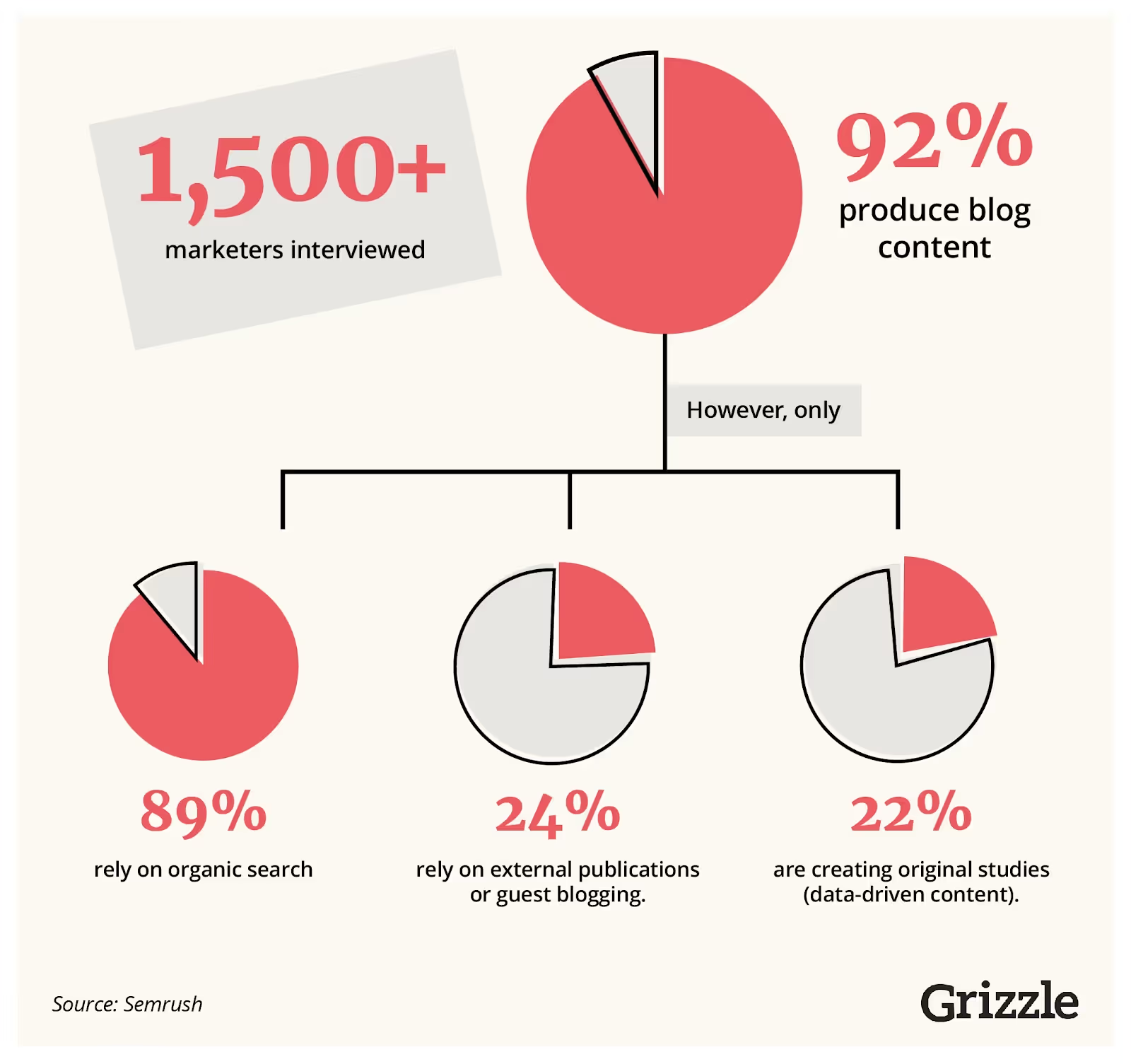
If data-driven content generates more links than editorial content, this means that over 75% of marketers are leaving opportunity on the table.
But is this truly the case?
How Buffer generated 100 links in 14 days
Buffer is well-known for its social media marketing content.
On top of in-depth editorial content, they also produce data-driven studies like the "State of Social" report:
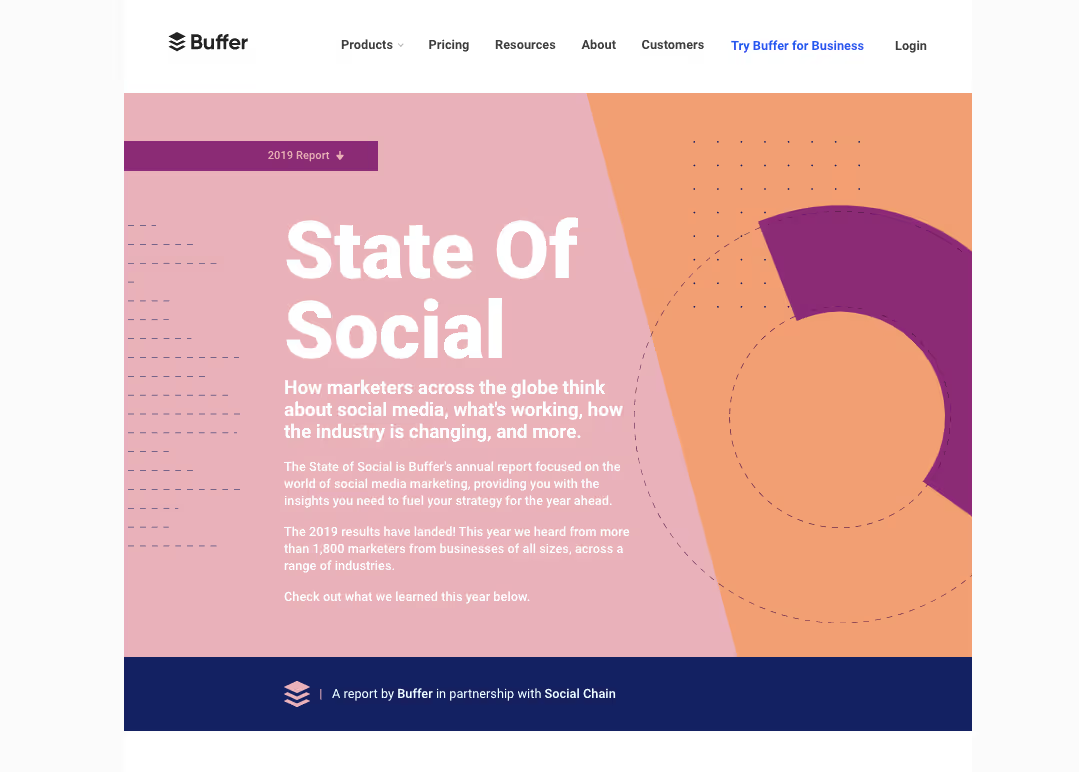
Here, Buffer surveyed 1,800 marketers about their social media strategy, presenting their findings wrapped in a bespoke UI.
At time of writing, there are over 1,280 referring domains (RDs) pointing to this single piece of content.
Let’s compare this to the top 10 Buffer blog articles that rank for position 1 on Google (ordered by search volume):
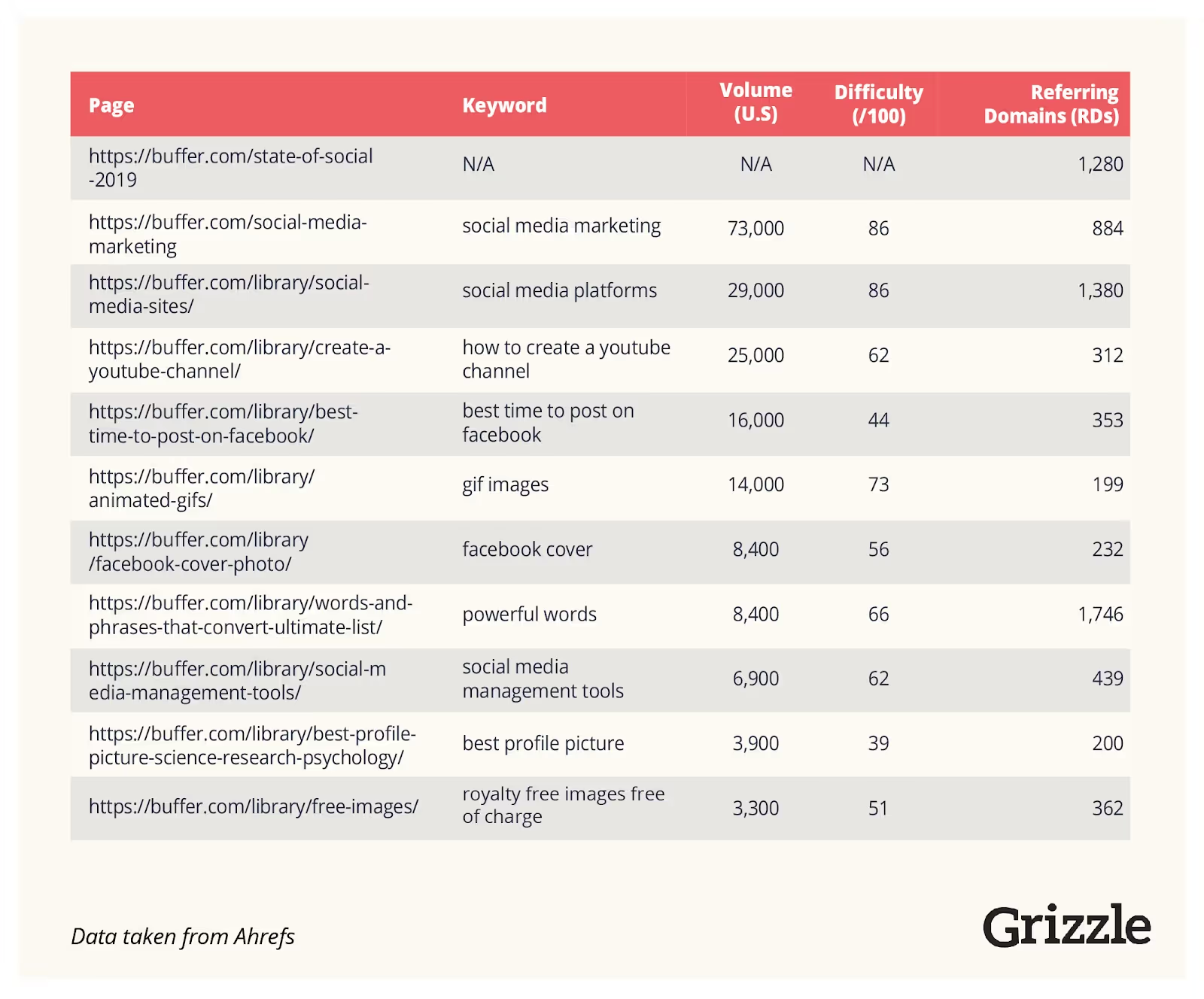
From this data we observe:
- The average number of backlinks from unique referring domains (RD) across their top 10 articles is 373.45.
- “Social Media Sites” is a clear outlier, generating more than 1,300 RDs.
To gauge the impact Buffer’s content has on their link building efforts, we’ll use a proprietary metric called link acquisition velocity (LAV).
LAV is a measurement of how quickly it takes for a piece of content to generate a specific number of backlinks. Let’s say your goal is to generate 50 links, and it takes 32 days to reach that goal. That piece of content would therefore have a LAV of 1.56:
LAV = No. Links Generated / No. Days Taken to Acquire Them
Focusing on LAV allows you to experiment and iterate, which is critical for SaaS brands with long-term distribution and digital PR programs. If you find a specific content format has a higher LAV than others, you can deploy more resources with a higher level of confidence that they’ll perform.
When experimenting, it’s a more reliable metric than total links as it gives a greater sense of demand for a specific type of content in the market.
Going back to Buffer’s link profile, let’s compare LAV between their “State of Social” report and “Social Media Sites” article:
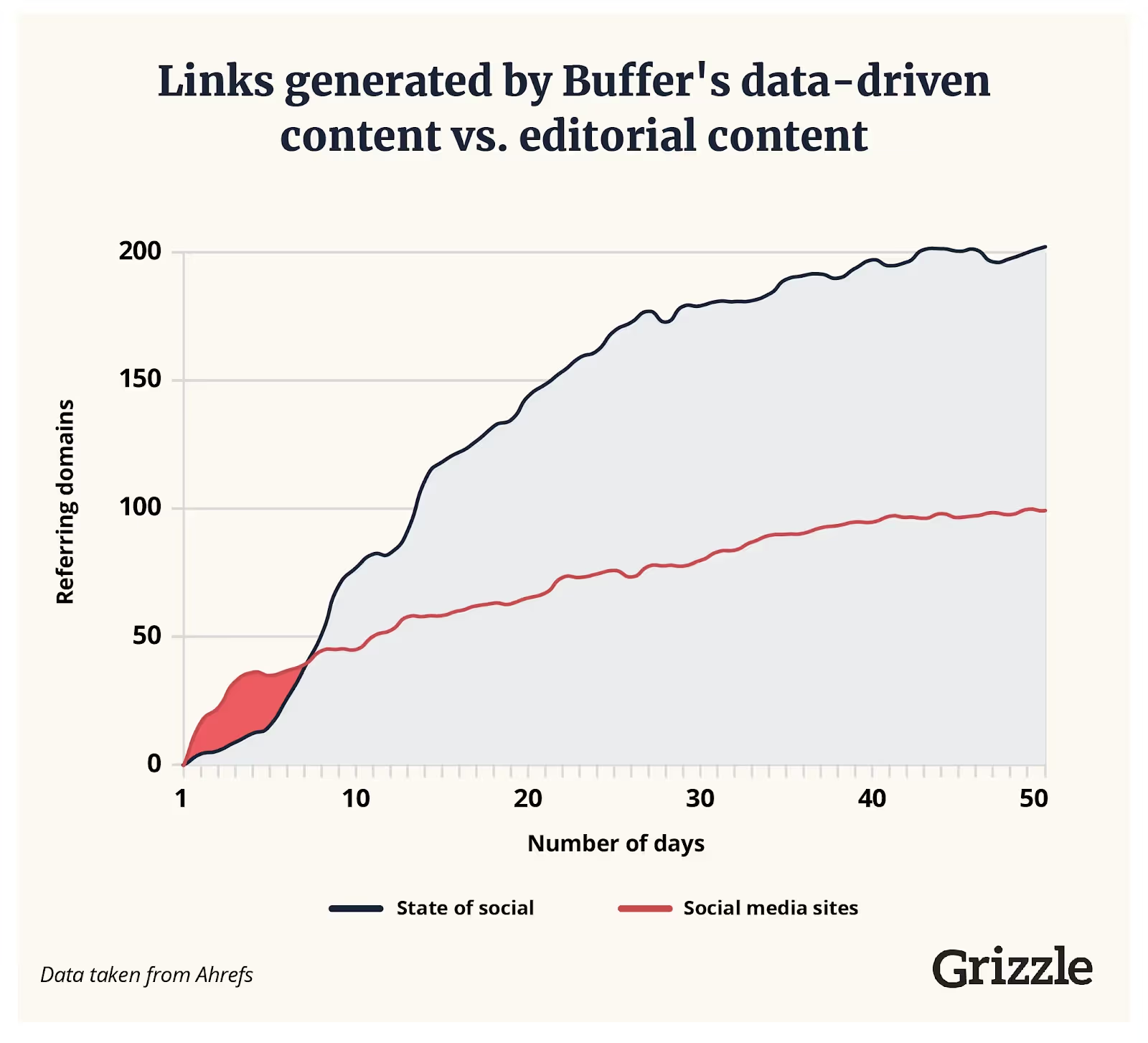
According to this data, LAV was 293% greater for “State of Social” than “Social Media Sites.”
Furthermore, “State of Social” generated 243% more links than “Social Media Sites.”
Before drawing any conclusions, we must factor in how Buffer has brand equity and a large existing customer base on their side. They already have the attention of other bloggers and journalists they can launch to in order to gain traction.
Where do other SaaS brands stand?
Data-driven content is one of the most linkable assets a B2B brand can produce.
But Buffer might be an outlier. Where do other SaaS brands stand when it comes to data-driven content and digital PR?
We’ve compiled a table of data-driven reports produced by 10 SaaS brands (including Buffer) and the number of RDs and backlinks they’ve each generated:
The number of RDs vary, even for well-known brands. However, considering the first result in Google has an average of 3.8x more backlinks than pages ranking at positions two to three, even a dozen or so links can make a huge impact.
The best way to generate backlinks is by producing content that link creators are hungry for. Clearly, for B2B and SaaS companies, these formats include proprietary data, studies, analysis, and expert commentary.
A key issue is that data-driven content doesn’t necessarily generate search traffic as a standalone asset. Not many people are searching for “state of social reports.”
So, to improve the performance of content across your entire topic cluster, use intelligent internal linking practices.
For example, Ninja Outreach increased search traffic by 40% just by fixing the internal linking between blog articles:
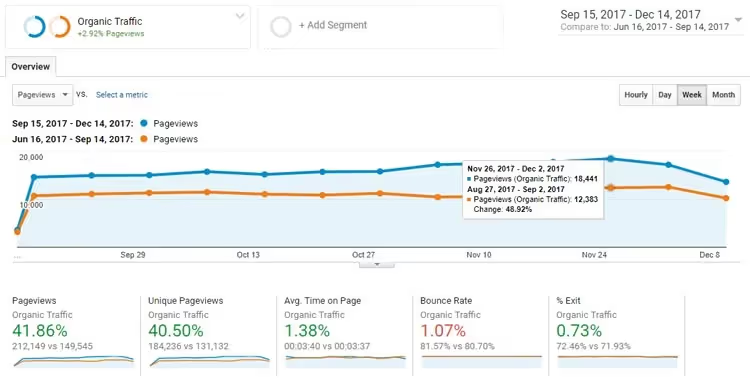
To further back this up, Google has explicitly said that internal links are important;
“Google must constantly search for new pages and add them to its list of known pages. Some pages are known because Google has already crawled them before. Other pages are discovered when Google follows a link from a known page to a new page.”
Building a digital PR strategy at the intersection of expertise, data, and growth
Based on this research, we can conclude the following:
- Links are critical for organic growth
- It’s far easier to generate links to data-driven content than editorial content
- Internal linking impacts organic traffic across our entire content portfolio
- Editorial content generates large amounts of search traffic for high-volume keywords (when done right)
Embedding data-driven content into a hub and spoke strategy is the best way to generate links and accelerate organic growth across the board.
A hub and spoke model that integrates data-driven content looks something like this:
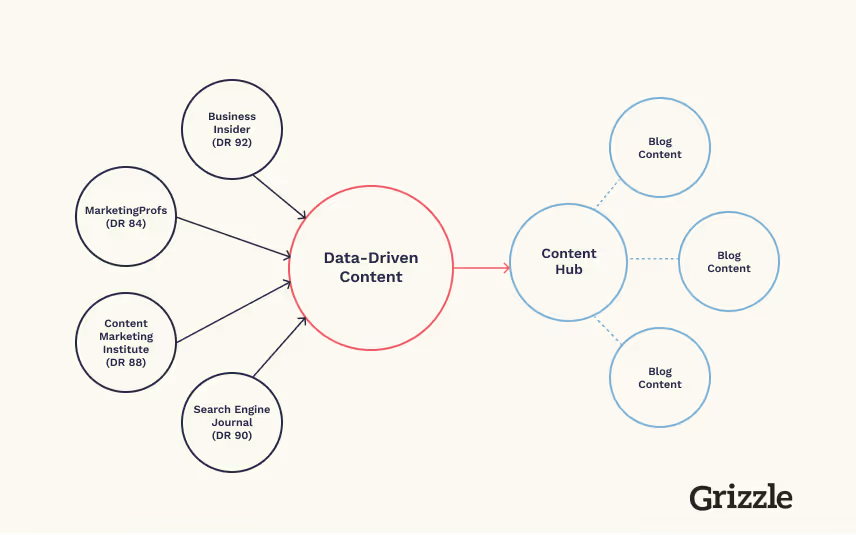
Here, data-driven content acts as an "entry ramp" for backlinks to enter our content portfolio.
Let’s say your goal is to generate links from publications with a high domain rating (DR). Doing this increases the page rating (PR) of your data-driven content, which is then passed down to your content hub and blog articles, further boosting your topical authority.
Your data-driven content ideation should fit in the sweet spot between:
- What journalists and editors are hungry for;
- What the market is talking about;
- Your growth and demand generation priorities.
For example, if you’re looking to build topical authority in the “talent acquisition” space, consider running a study on “top hiring challenges among HR managers.” Avoid adjacent topics like performance management until you’re ready to enter that arena.
The same goes for promotion. Outreach and relationship building must be baked into your content distribution roadmap, allowing you to establish content-channel fit.
[[component]]
Reduce uncertainty with digital PR experimentation
Many SaaS marketers invest huge amounts of resources into data-driven content.
This can make a big impact, as link creators love to cite original sources in their own content. While no marketing endeavor is guaranteed to get results, the time and money involved in data-driven content creation may seem disproportionate to the potential ROI.
Therefore, a better approach is to run several low-effort experiments across a quarter or two.
This involves planning, producing, and distributing data-driven content, quickly, using the following process:
- Analysis & Ideation: Identify trending topics in the market and source data from owned or publicly-available sources. Create a unique narrative around your findings. Recruit subject matter experts across your organization to give commentary that link creators can use to build out their stories.
- Data-Driven/Creative Content Production: Package up your data and commentary in a way that link creators can deploy quickly and easily. This includes blog posts, visual content, and access to raw datasets (as long as it complies with data protection laws).
- Personalized Outreach: Get your content in front of the people it’s most relevant to. This is how you build long-term relationships and stand out in an inbox full of generic pitches.
Furthermore, give yourself multiple chances to win by coming up with several angles. For example, if a study on the “best cities for marketing careers” falls flat with marketing blogs, try recruitment or HR publications instead.
Build upon content formats with a high LAV by investing in more ambitious projects.
Diversify your content portfolio
Data-driven and creative content has been proven to generate links. If your goal is to accelerate organic growth, focus on the formats with a high link acquisition velocity (LAV).
Build out your topic clusters, produce content that link creators need, and utilize internal linking to create a content portfolio that ranks for even the most competitive keywords.

In this in-depth guide, you’ll learn the process we use to help brands like Pipedrive and Tide improve content quality, boost search visibility, and drive more user sign-ups.
Content maintenance: Detecting decay and improving conversions
Content maintenance is the process of monitoring your content and improving it based on leading metrics. This could mean adding new sections, editing and expanding on existing content, making technical tweaks like adding internal links, or testing new calls-to-action.
Why is this an important part of any organic growth program? Over time, a blog post will hit a peak of traffic. It will then typically lose traffic (slowly or dramatically) as it becomes outdated or competitors enter the fray with more up-to-date information.
This is especially true in fast-moving industries like social media or finance. Here, we see that a particular article quickly ranked for a highly competitive keyword in the social media space:
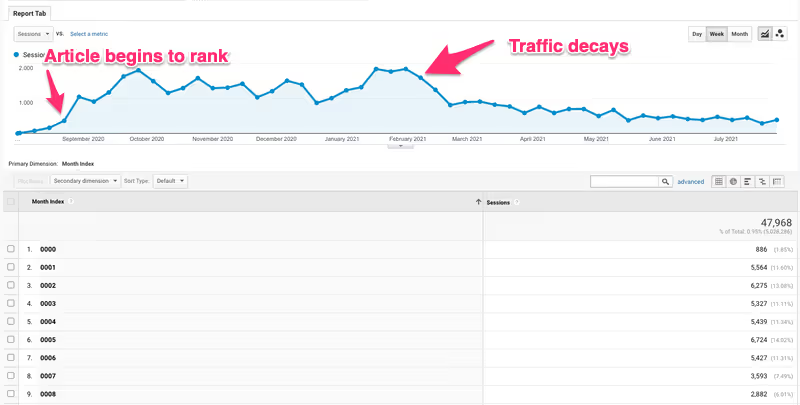
Due to the nature of the industry, other players create better content or update their existing guides to be more relevant. Slowly but surely, the article above was knocked from the top spot in Google.
Now imagine how this happens across an entire blog featuring hundreds of articles. Decay can add up to the tune of losing hundreds of thousands of unique monthly visitors.
So, how do we fix this problem?
Are you buying a car or investing in real estate?
Your blog acts as a portfolio of content and other digital assets. Much like brick-and-mortar investments become dilapidated through neglect, so does traffic and conversions that SEO-driven content generates.
Similarly, treat that same piece of content with care and respect, and you’ll see its value soar.
Content optimization systems don’t just protect you from traffic decay. They help you identify issues before they happen and take proactive steps to fix them. Similarly, they help you identify new and lucrative SEO opportunities.
For example, we helped a martech brand develop an aggressive SEO-driven content strategy to rank for highly competitive keywords in the paid media space.
Our goal was to solve their audience’s specific pain-points to demonstrate they’re the best solution for them while generating relevant search traffic.
One particular project was a “wiki” style guide, providing advanced information that provided readers with huge amounts of value.
We quickly captured the #1 spot in Google for our primary keyword, but over time ranked for the parent term. This presented an opportunity to increase traffic without creating a new piece of content.
We ran the article through our content optimization and refresh process and, in just 30 days, we increased search traffic to this single article by 301%:

The two processes that made this possible are:
- Content audits to measure the right metrics in a proactive way
- A content refresh and optimization process that puts data and audience needs first
Most marketers run quarterly or annual content audits. By the time problems or opportunities are identified, the competition already has a leg up. The longer you leave it, the harder it is to fix issues and capture new opportunities.
Instead, consider auditing your content weekly or monthly depending on the size of your content portfolio (i.e. the number of blog articles, landing pages etc. you have).
Similarly, a content refresh is more than simply adding the right phrases and terms to make content more relevant. It must fill newly identified gaps and overdeliver on value in a way that nobody else can.
To overcome these challenges, we developed the following content optimization process:
- Collect the right data
- Use a content audit tool to wrangle data and identify issues and opportunities
- Prioritize content optimization projects based on a) severity of issues or b) how lucrative each opportunity is
- Optimize each stage of the content journey (from SERPs to introduction to call-to-action)
- Track and monitor changes to pivot where necessary
The rest of this guide will cover these steps in detail.
1. Identify issues and opportunities with a content audit
The first step is to identify, wrangle, and benchmark the right data to identify issues and new organic growth opportunities.
A content audit that measures the entire content journey is key, which looks something like this:
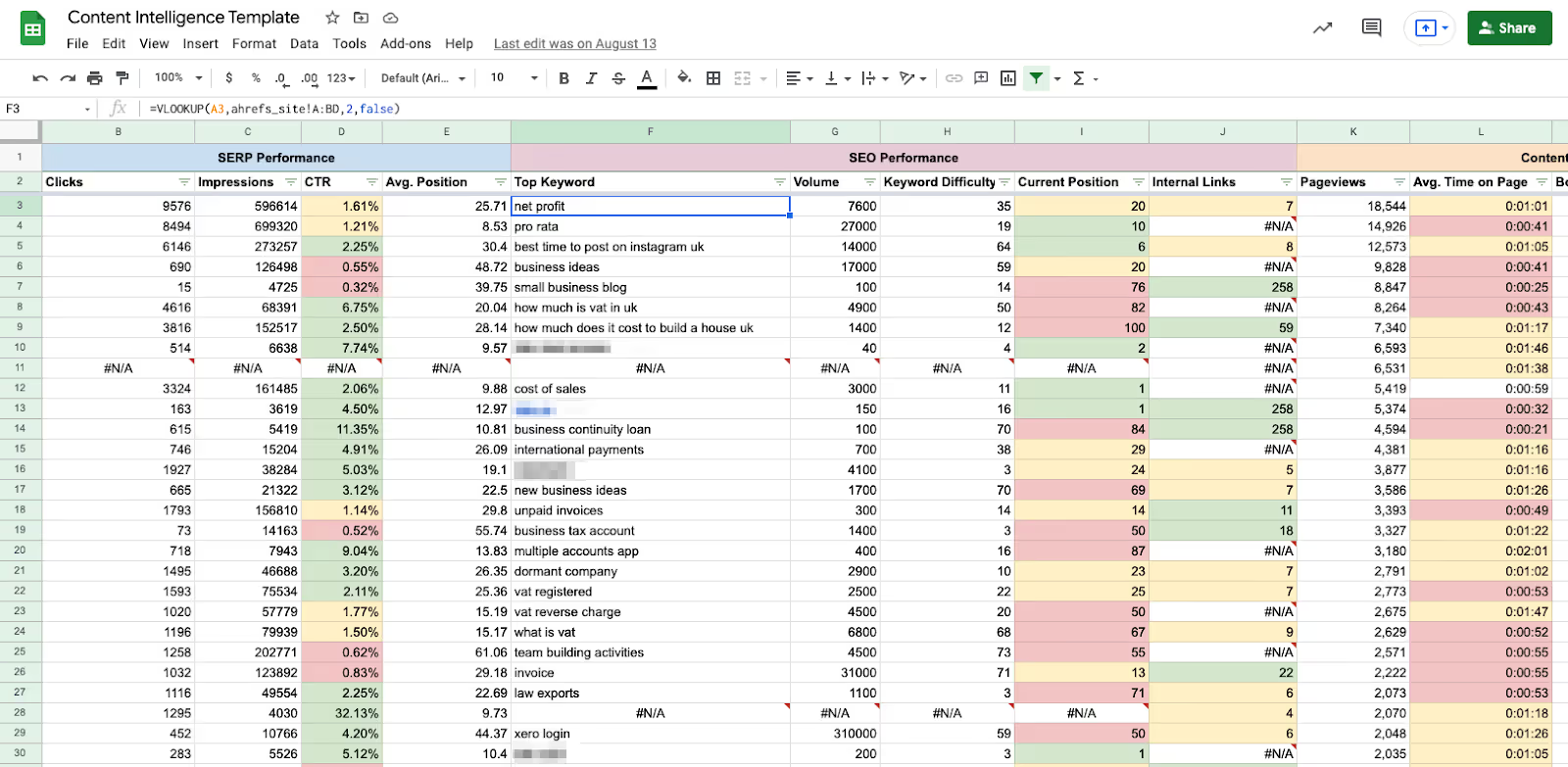
Here’s how to build a content audit tool step-by-step:
Collecting content performance data
Collecting content performance data only requires a handful of tools:
- Ahrefs/Semrush
- Google Analytics
- Google Search Console
- ScreamingFrog
- HotJar
Metrics are selected based on the reports needed to monitor each stage of the journey. For example, at Grizzle, we’d use data from a tool like Semrush to collect the following KPIs:
- Organic keywords that are being ranked across the entire site
- Specific keywords we’ve developed our content around
- Distribution and backlink performance
Similarly, you need engagement data, organic performance across each article, and conversions from Google Analytics.
Each of these data sources have their own sheet in the content audit, which looks like this:

Monitoring each stage of the content journey
Every interaction across that content journey can be measured. These interactions each play a part in the overall performance of your content.
Bring these metrics into a single view or sheet in this case to get a high-level overview of how content is performing across the entire journey. We call this the “Content Analysis” view, and is broken down by the following content journey stages:
SERP Performance
- Clicks
- Impressions
- CTR
- Avg. position
SEO Performance
- Top Keyword
- Volume
- Keyword Difficulty
- Current Position
- Internal Links
Content Performance
- Pageviews
- Avg. Time on Page
- Bounce Rate
- Conversions
- CR%
Distribution
- Organic Traffic
- Referring Domains
- URL Rating
- Dofollow
- Nofollow
Digging into SERP performance, you can see a “red amber green” (RAG) system under the CTR column:
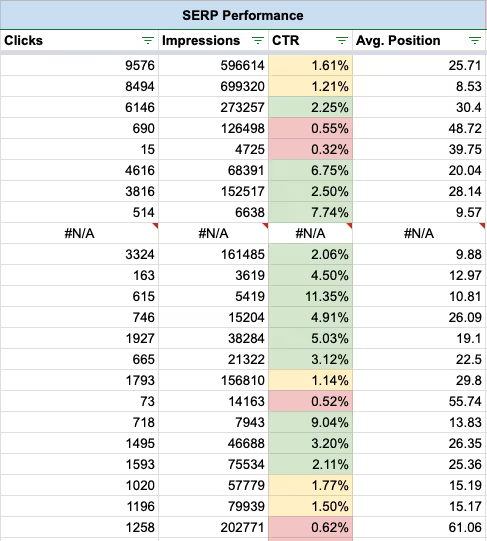
- Green means we’re hitting an adequate CTR from the SERPs. A healthy number of people are clicking through to our content when they search for something in Google.
- Yellow means things are “ok”, while red is a problem. As you can see, anything below a 1% CTR is cause for concern.
For SERP performance, CTR is our leading performance indicator. For SEO performance, there are two:
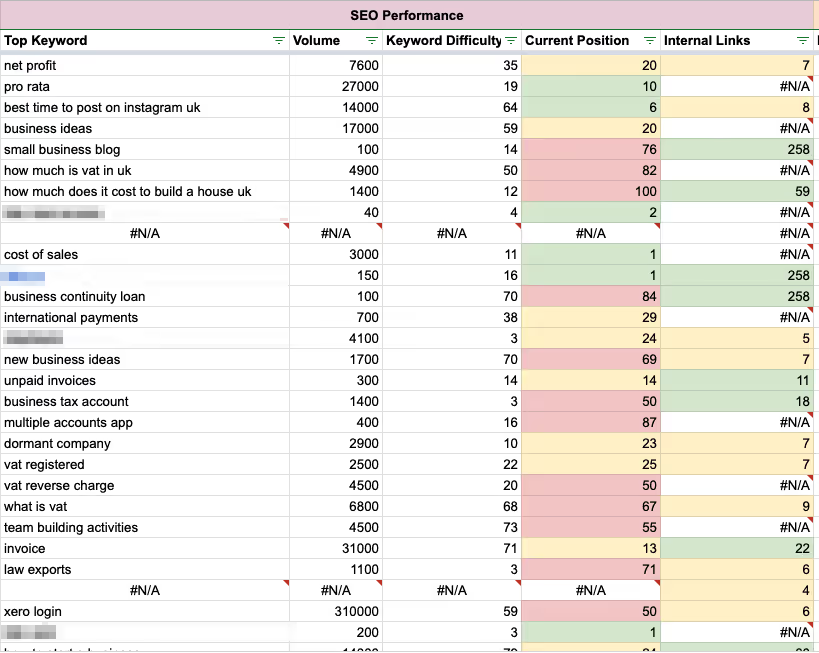
- Current position: Where content ranks for your “top keyword”?
- Internal links: How many internal links are pointing to this content from across the site
Note that “top keyword” is different to “primary target keyword:”
- Primary target keyword is what an article was originally written to rank for
- Top keyword is the keyword that the article ranks for with the highest search volume (no matter what position it’s in)
For example, in the report above, you can see that the top keyword for the first row is “net profit,” which has a search volume of 7,600. However, the primary keyword is “net profit margin”, which generates 2,600 searches a month.
Our content ranks for both, but the “top keyword” is not one we deliberately aimed to capture. We can use this insight to optimize content for broader keywords, increase search visibility, and capture more organic traffic.
This content audit may look overwhelming. For us, it started as a series of IF statements, VLOOKUPs, and conditional formatting. Start here and build out more sophisticated reporting as your systems evolve.
Once you’re monitoring opportunities and issues, it’s time to start fixing them.
2. Increase CTR and SERP performance
Why do people click on one search result over another?
Usually, it’s because the metadata aligns with what they’re searching for and communicates the benefits of the content.
This means your best bet of increasing CTR is optimizing page titles and meta descriptions.
Let’s start with page titles. When you search for a keyword, you’re often met with a series of results that look awfully similar:

Luckily, Google has done a lot of the heavy lifting for us. These are the results that it deems most relevant based on user behavior. In other words, when a user clicks a result, it sends a signal to Google that their attention was captured when searching for a specific query.
The more people do that on a particular result, the more Google deems that page the most relevant result, and thus, it ranks higher.
While this is an important signal, most marketers use the SERPs as their single source of truth when researching elements of their content. They’ll simply emulate whatever they see on page one of Google and make a few subtle tweaks.
When writing page titles, a better approach is to emulate what Google is serving while using the language of your audience. This will not only let your content stand out, but show users that you understand their needs.
There are a handful of ways to do this:
- Speak to your customers and ask them questions related to the topic
- Ask questions in relevant communities
- Use audience intelligence and social listening tools
For example, following on from the “what is VAT” search in our screenshot above, we find the following relevant posts in Quora:
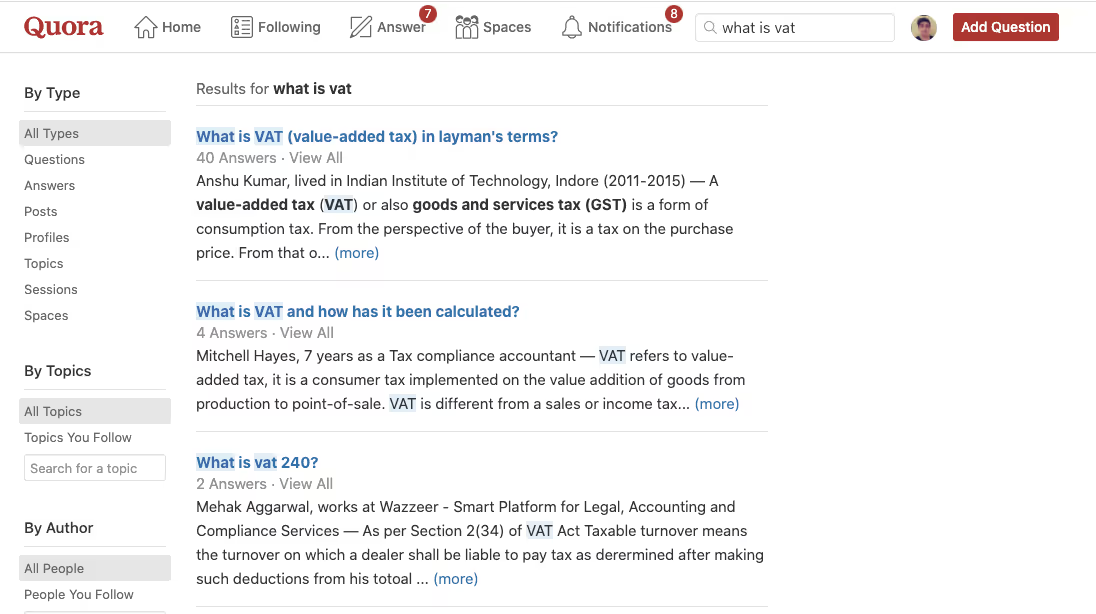
The most popular post asks for a definition in layman’s terms. Further research shows that our audience wants an easy-to-understand definition of what VAT is.
We can then take the language of this audience and use it in our page title:
“What is VAT? A Layman’s Guide to Value-Added Tax”
The same approach can be applied to the meta description:
“In this complete guide to VAT, you’ll learn how to calculate value-added tax and what it means for your business (current rate: 20%).”
Based on our topical research, we determined that the following elements are important to our audience and should be included in the article:
- A complete guide to VAT with everything they need to know
- How to calculate it
- Why it matters to their business in the first place
- What the current VAT rate is
We made sure our page title and meta description communicated these elements, first making sure that our content delivers on those promises.
Some of the pages on the SERPs do this, but few (if any) do all of them. This page title and description successfully ticks three boxes:
- We’re working to fulfill existing search intent
- We’re differentiating our content among a sea of “sameness”
- We’re talking the language of our audience
3. Improve internal linking across your content
Proper internal linking can have a huge impact on search engine rankings. For example, Ninja Outreach managed to increase organic traffic by 40% through a robust internal linking project:
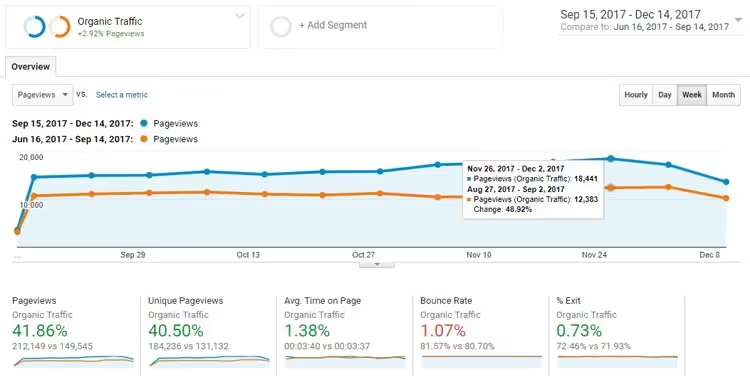
To find internal linking opportunities, simply group together pages of the same topic cluster and order them by page authority (PA) or URL rating (UR). Then, add internal links from relevant pages to the content you’re looking to optimize.
Alternatively, you can use the “Top pages” or “Best by links” reports in Ahrefs:

4. Refresh your content for higher search rankings
Content refreshing is the most powerful optimization tool at our disposal. Done right, you can see an increase in search rankings and conversions just by improving the quality, relevancy, and depth of your content.
There are over a dozen techniques we use to optimize and refresh content. However, the levers that make the biggest impact are:
- Using data-driven tools like Clearscope to improve relevancy and inject important themes
- Improving quality, information gain, and offering a unique angle
Clearscope is a foundational tool for making sure content is relevant. It collects data from IBM Watson and Google Graph Map to determine which themes Google deems most important for a primary target keyword.
Research by Backlinko found that “content with a high ‘Content Grade’ (via Clearscope), significantly outperformed content that didn’t cover a topic in-depth:”
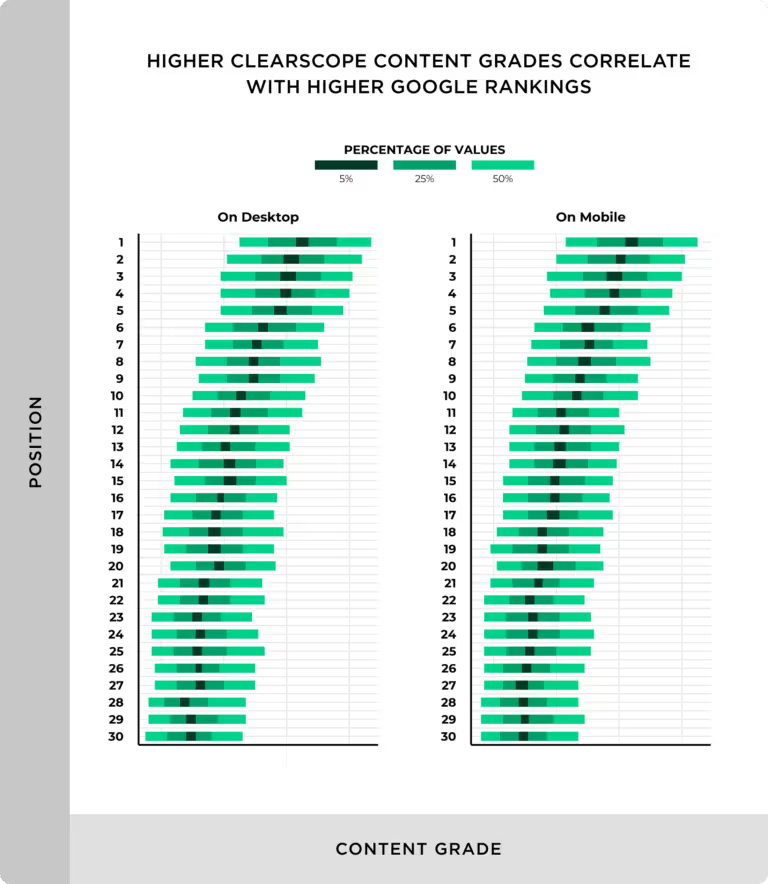
But you can’t simply stuff new terms in your content and expect to see improvements. Instead, use these terms as a litmus for what you should include or expand on in your content. Give readers everything they need to understand and act on the advice you’re providing them.
Take the following subsection for an article on “self assessment statements” in UK:
The highlighted text is what Clearscope deems “important” from an SEO perspective. The following appear in the subsection:
- Self-employed
- PAYE
- Income tax
- National insurance
- PAY
- Tax calculation
- Tax affairs
These terms aren’t “stuffed” into the content carelessly. They add context and value, building a detailed narrative and answering the question; “who needs a self assessment statement?”
When using data-driven tools, ask yourself why a term should be added. Does it need its own subsection to allow for a large enough canvas that explores the topic in as much depth as possible?
Don’t forget to expand on threads. These threads include the topics, ideas, and themes that are presented in the content that needs additional depth.
Close the loops started in your threads by including:
- Examples
- Detailed explanations
- Stats and data
- Actionable takeaways
These elements give your readers everything they need to take action. It also makes sure your content is comprehensive, which strengthens your moat and makes it harder for competitors to outperform you.
5. Boost content engagement by keeping your readers hooked
Low avg. time on page, bounce rates, and even low scroll depth (measured using scroll maps) happen when content fails to:
- Quickly hook the reader in
- Keep them engaged and excited throughout the content
- Deliver on enough value to instill a feeling of empowerment
Most people don’t have low attention spans, they have low consideration spans. You only have a few seconds to capture that attention by proving you have what a reader (or searcher) is looking for. Introductions that pique interest or make a bold promise are key. As are value-driven subheadings.
For example, in CXL’s article on app store optimization (ASO), the first section gives a high-level overview of what ASO is and why it’s important:
We could have just written “What is ASO?” Instead, the subheading communicates the specific outcomes that CXL’s audience of seasoned marketers are yearning for.
Once you have their attention, you must keep them hooked. This means communicating in a clear manner while overdelivering on the value you’ve promised.
Filler and fluff is your worst enemy. Every unnecessary word creates friction that prevents your reader from gliding through your content.
For example, here’s a subsection taken from another article from CXL on storytelling:
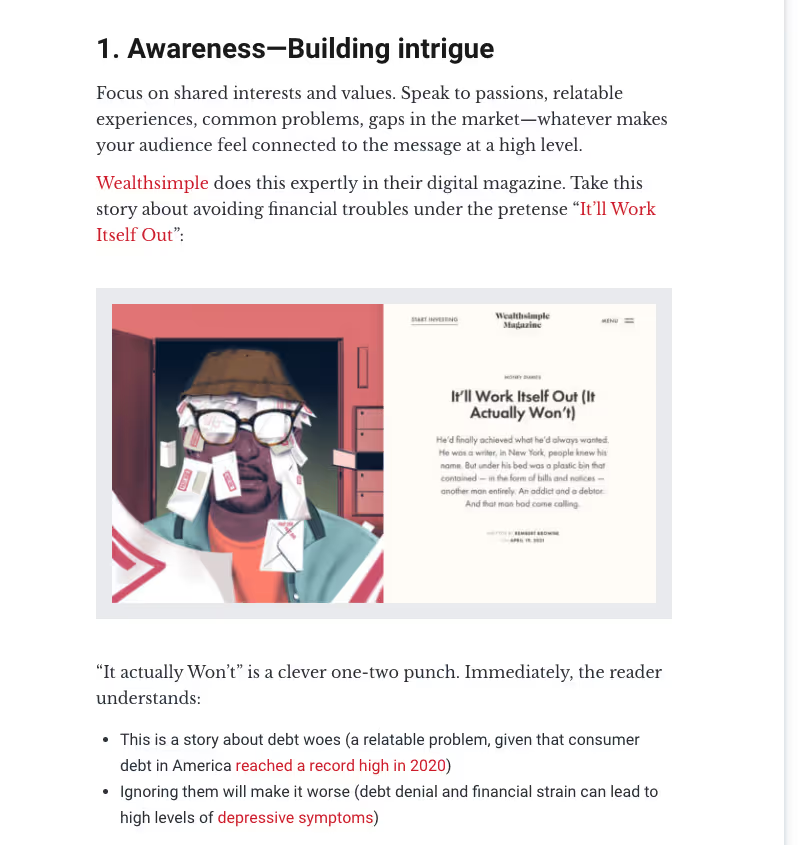
Let’s break this subsection down paragraph by paragraph:
Focus on shared interests and values. Speak to passions, relatable experiences, common problems, gaps in the market—whatever makes your audience feel connected to the message at a high level.
The first sentence of this subsection provides value in no more than six words. It continues by offering how to build intrigue (passions, experiences) and communicates why it’s important (it makes your audience feel connected).
Wealthsimple does this expertly in their digital magazine. Take this story about avoiding financial troubles under the pretense “It’ll Work Itself Out”:
We're then introduced to an example and supporting imagery of this principle in action. This makes our content easier to digest.
“It Actually Won’t” is a clever one-two punch. Immediately, the reader understands:
* This is a story about debt woes (a relatable problem, given that consumer debt in America reached a record high in 2020)
* Ignoring them will make it worse (debt denial and financial strain can lead to high levels of depressive symptoms)
80% of Wealthsimple’s clients are under 45. Because the familiar story is told by a peer and not a faceless brand, it works to build authority.
Here, a perspective of the example is shared, along with two clever components and an analysis on why they’re effective. We're not leaving the reader to connect the dots themselves, we're doing it for them.
Many readers see themselves in this story. Living paycheck to paycheck, even with a good job, saddled by debt, and paralyzed by calls from debt collectors.
This paragraph brings it back to the topic at hand. At the beginning of the subsection we talk about the importance of shared interests, values, and experiences. The way Wealthsimple does this is by sharing customer stories, which delivers a takeaway from the example.
The story pulls the reader in and incites a desire to learn more. What does this company have to offer me? Have they solved the author’s problems?
The section is then concluded while acting as a “bridge” to the next. We’re left wondering, “what’s next?” The answer is in the next section.
In just 190 words, this section provides the following "aha!" moments:
- The "ingredients" we need to build intrigue (values, experiences, etc.)
- Why those ingredients are important (to make the audience feel connected)
- An example of a brand that does this well (illustrating the lesson)
- A breakdown of why the example works so well (debt and financial strain is the shared experience of their audience)
- An additional outcome of this story (Wealthsimple builds authority)
- How this looks from the eyes of Wealthsimples's audience (they see themselves, trying to overcome debt)
- What I can do with this information (build intrigue to pull readers in and entice them to learn more)
As well as an easy reading experience, you must continuously teach users something new. Provide “aha!” moments as often as possible; either by presenting a new idea or reinforcing those ideas with examples, takeaways, and instructions on executing them.
At Grizzle, we call this “Aha! Velocity.” It’s the speed at which new information is shared or the rate at which readers connect the dots between existing ideas.
Increase your “Aha! Velocity,” make your content easy to read, and you’ll have high-performing content that people will read from start to finish.
6. Optimize conversions by testing new CTAs and offers
There’s no point in creating content that people love if it doesn’t contribute to your acquisition, retention, or demand generation efforts.
Low conversion rates from content usually occurs due to a misalignment between the offer and where in the journey your readers are at.
For example, if a user wants to learn the basics of “digital transformation,” it’s unlikely they’ll be interested in a service that does it for them (yet).
Instead, offer them templates, cheat sheets, and resources to make a case with their bosses. Build and nurture an audience and convert them into customers or users when the time is right.
For example, Pipedrive heavily invests in top-of-funnel content as part of an aggressive SEO strategy:
Here, they offer a relevant resource to help readers solve a job-to-be-done (JTBD) presented in the article. Pipedrive could have offered a free trial of their CRM, but understand the value in audience building and serving readers first.
On the flip side, someone looking for an alternative to HubSpot is probably ready to test out a new CRM.
Content should generate ROI. But not at the expense of audience building and brand equity.
Start a relationship with your users. Use your email marketing, social media, and retargeting capabilities to strengthen those connections by nurturing and educating them over time.
Strengthen your content portfolio
For those who have never optimized or refreshed their content, the first step is to conduct an in-depth content audit like the one presented in this guide.
Measure each stage of the content journey to identify issues that need fixing. Improve your CTR, refresh your content to make it more relevant, and you’ll begin to see your organic traffic soar.
[[component]]
Get started with Grizzle.